Tag Archives for " husky "

Do Husky Puppies Ears Stand Up?

There is something magical about a dog’s ears. All the puppies belonging to different breeds have floppy ears when they are born, but husky’s one grows into perked up ears with time.

According to the breed standard, the ears of Huskies do stand up. Normally, ear erection in Husky dogs start from the age of six weeks, but in some cases, it delays up to six months.

It is important to maintain a quality diet and add all the necessary vitamins and minerals into the ration for your husky puppy, as calcium deficiency and lack of other vitally important nutrients tend to be the main reason for huskies to have floppy ears.   

You cannot set a time for the erection process as it varies in different breeds. Similarly, the Siberian Huskies have floppy ears when they are just puppies, but, with time, these ears develop and begin to perk up. The erect triangular ears of the Siberian Huskies can quickly help you to guess what they feel.  

When Do Husky puppies ears stand up?

There a couple of reasons due to which your Husky’s ears tend to stand up, including his age.

The erection starts from the age of 6 weeks.  Before your Husky turns 6 months old, the ears should completely perk up. The erection of ears takes time because initially, the bones and cartilages of the Husky’s ears are in the process of growing. Some dogs have floppy ears, even if they are above six months.

As the dog grows older, these cartilages and bones become firm. The weak cartilages, if not treated properly, can cause long-lasting hearing problems. 

How to tell if your dog’s ears will stand up?

Usually, the ears of all puppies stand up at a certain age. In case you are curious, and you need to figure out that when will your puppy’s ears stand up or will they even stand up at all, you should check your puppy’s ears. If your little one’s ears stand up when he gets excited, they will probably stand permanently by the time he is six months or when the period of eruption of permanent teeth is over

Another way to guess if your puppy’s ears will stand is by noticing where the ears are set on the head. The ears that stand partially tend to be set erect on the head and closer together.

What Influences the Husky’s ear growth?

Several factors influence your Husky’s ear growth, including their diet. Diet is an essential factor for every living creature; the same is the case with Huskies. A Husky’s diet is necessary for his entire body, including his ears. Calcium deficiency also hinders the growth of Husky ears. 

The best way to overcome this deficiency is by adding vitamins and quality supplements to their diet. Calcium will also help to strengthen their muscles around the ears. 

Avoid: [scrubbing the top of your little one’s head with your hands and even snuggling with them can affect their ear’s growth. You should avoid doing this at the early age of your husky puppy because their bones and ear cartilages are still in the process of growing and developing.] 

Is My Husky Has an Ear problem?  

Floppy ears are technically a defect, and Huskies, along with all other breeds, have floppy ears when they are just puppies.

Symptoms of an ear infection include head shaking, lousy odor, itchiness, and pain, swelling, and redness. Complicated and severe infections can take months to resolve, whereas uncomplicated infections take a week or two.  

If the floppy ears of your Husky are not growing into mature erect ears, you should check whether there is any mineral deficiency in them or not. Floppy ears in husky dogs are pretty average and the most vital thing is that you should ensure that you clean them adequately. 

Moreover, ear infections are quite a typical condition in all breeds of dogs. Similarly, huskies also have ear problems, especially when you do not clean their floppy ears properly. The bacteria in the dog’s ear wax causes infection in the ears if not cleaned for a long time. Yeast and mites can trigger ear infections in dogs as well.

Siberian Huskies are less likely to have infections because they have erect ears. The perked up ears allow proper airflow, and this helps in preventing bacteria along with diseases. The time when they have floppy ears, they require more care. 

You should consult your vet if you find any of the symptoms mentioned above. He will clean your puppy’s ears thoroughly by using a medicated cleanser. If he sees something severe, he’ll prescribe proper medication.

How to Clean and Take Care of Puppy Ears?

Husky’s ears require a lot of care and attention. You can also ‘train’ your Husky’s ears to stand up before the due time. Some of the essential points to take into consideration regarding your Husky’s care are:

  • Ensure that you clean them at least once a month, depending upon the dirt stuck inside.
  • You should make sure that you properly dry your Husky’s ears after swimming or bathing. Excess moisture is a cause of ear infections. 
  • Make sure you clip the hair grown inside the ears of dogs; this will help in preventing ear infections. 
  • Take your little pup outside for a walk, fresh air help strengthen the immune system and help relieve stress.
  • In particular, it is best to let your Husky’s ear grow and develop with time. You should ensure that you avoid fondling and caressing your pup around the ears area, to prevent the cartilage from breaking. 

Things to avoid:

  • Some people tend to massage the Husky ears to improve pointedness, but this might prevent them from erecting. 
  • Many people recommend taping until the ears of their puppies do not stand on their own. There is no certainty that this will work. This can lead to paw discomfort and also in weakening the cartilages. Even if you decided to do the taping, remember to cut a bit of the puppy’s ear fur to prevent stickiness and pain.  

Ear Cleaner for Huskies 

Being a Husky owner myself, I completely understand the struggle and fear of identifying the best cleanser for your puppy. I have got my hands on many products and after profoundly analyzing numerous customer reviewed ear cleansers, I found TropiClean Ear Solutions for Dogs on Amazon, which seems the best option in terms of showing effective results for my huskies.

Why Does my Husky Have one ear Up and one Down?

Ears are the most important organ of dogs in terms of communicating. Huskies have erect and perked up ears. The erected ears are a great sign to check your Husky’s mood that your dog is happy and wants to play. On the other hand, if you notice both ears dropped, they may be anxious about a particular thing. 

If one of the Husky’s ears is up and the other is down, you do not need to worry. I’ve been through this when my dogs were puppies.

Research shows that the reasons behind this action were that either the dog is just being submissive and is hearing what you are saying or the dog’s pinna is underdeveloped. The solution to this is to wait and let the dog’s ear grow by itself, without forcing it! 

Conclusion

You do not need to worry if your Husky’s ears are flopping or are pointing downwards. It is normal, and once your pup is a grown-up, the ears will begin to perk up. Of course, there are many ways to train your Husky’s ears to erect up, but the best way is just to let them take time and grow on their own. Make sure that you take good care of your Husky and ensure regular cleaning of their ears. 

Happy Siberian Husky after immunization shot

Best Age to Neuter or Spay your Husky Puppy?

Owning a Siberian Husky puppy is like owning a cute fur-ball. 

Vets suggest neutering and spaying Huskies at 6 to 9 months. However, there is no scientific backing on this age limit. You can get your husky neutered earlier than 3 to 6 months as well. However, According to some experts, early neutering or spaying may increase the risk of hip dysplasia, noise phobias, as well as aggravated sexual behavior in your dog.

But what exactly is neutering or spaying? It’s the removal of reproductive organs of a male or female animal to discourage off-springs. Since it’s a surgical process, many Husky owners find it’s a hard pill to swallow.

The Best Age to Neuter or Spay Your Husky Puppy

No husky owner looks forward to raising an unwanted litter. To curb this problem before it even starts, neutering or spaying is the best option. Now the question arises, how soon should you neuter or spay your husky puppy?

The best age to neuter or spay your husky puppy is 6 to 12 months. Although you can neuter or spay your husky puppy at any age, it’s best if you get it done sooner than later.

Neutering also keeps many health issues at bay and affects your dog’s behavior by making it less aggressive. So, whether you bring home a pup or an adult Husky, you can get them both neutered and spayed. There is a chance that a spayed female husky will still show signs of being in heat like a period or attracting other male dogs. However, it will not be able to reproduce.

Most shelters even neuter their puppies at four months, before they are put up for adoption. The reason behind this practice is that potential pet adopter wants to avoid the hustle and prefer to get an already neutered puppy.

This article will cover all the essential points regarding spaying and neutering, the care after, and how the procedure affects your husky puppy.

What is the Difference between Spaying and Neutering?

Although the term neutering applies to both male and female dogs, it’s most commonly used for castration, a surgical process to remove a male dog’s testicles. Although male dogs can’t reproduce after neutering, they may still exhibit breeding instincts such as humping. However, this depends on the age of the dog.

Similarly, spaying is the surgical process to remove a female dog’s ovaries and uterus; it’s also known as an ovariohysterectomy.

If you have an aggressive female dog, there is a major possibility that after spaying, she will become less aggressive.

How are Dogs Neutered?

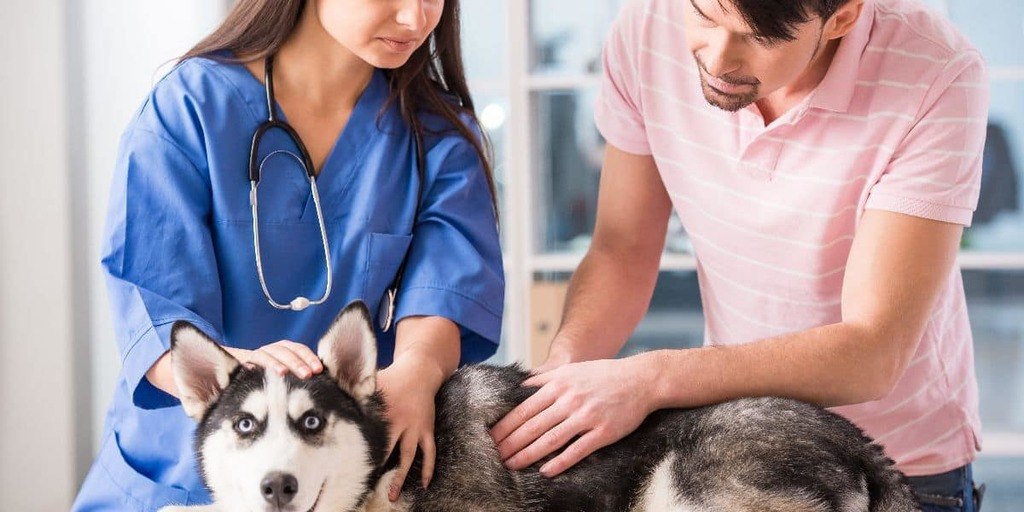
Siberian Husky at the Vet

We know you love your puppy and can’t really see it in pain, but you don’t need to worry as the procedure of neutering is totally safe and painless. Most Vets use injection or inhalation to put the dog under. After that, the procedure is performed without any disruptions.

The incisions during the surgery are made at areas depending on the age and maturity of your Husky. For an adult dog, the incision is made in front of the scrotum, at the base of the penis. For a puppy, however, the incision is done in the scrotal sac. In the case of an undescended testicle, the incision is made in the stomach as well.

The vet will either use skin glue, absorbable stitches, or even surgical staples to close the incisions. All the choice depends on the vet’s reference and also on the age of the puppy. All in all, it’s a procedure that will only help your Husky have a healthier life.

Why Should You Spay/Neuter Your Husky?

Other than the self-evident answer of unwanted litter, there are many other reasons why a puppy should be neutered or spayed. Here are a few to help you understand why you should opt for the procedure sooner than later.

1. Spaying your female Husky decreases the chance of breast cancer and aids your husky to have a healthier life. With neutering, you reduce the risk of testicular cancer in male dogs. Since these diseases are life-threatening, neutering and spaying might just be able to save your puppy’s life.

2. Spaying and neutering also keep uterine infections at bay, giving your Husky a healthier life in general.

3. Reduce aggressiveness. A husky that hasn’t been spayed or neutered is comparatively more aggressive and has territorial issues than one who has been neutered and spayed. By opting for sterilization, you are ensuring that you take home a less aggressive and amiable pet.

4. Unwanted litter. Many shelters and vets euthanize adult Huskies as they can’t deal with unwanted litter. So, neutering saves lives as well as ensures a healthy pup. It also allows you to have uncomplicated and long companionship with your furry friend.

What happens if you neuter/spay your dog too early?

Early neutering and spaying can have an adverse effect; hence the suggested age of 3 to 6 months has been set for neutering Siberian Huskies. These adverse effects may include hip dysplasia, noise phobias, as well as aggravated sexual behavior.

How to Care for a Husky After it’s Neutered/Spayed?

At least two weeks of complete rest is necessary for the dog to heal properly after neutering. The procedure itself is pretty safe and pain-free. But like every surgical procedure, spaying/neutering also comes with its share of precautions after surgery. Here are some care tips for a dog that has just been neutered:

  1. Keep your dog protected and comfortable inside the house, don’t let it roam around outside while it is in recovery.
  2. Keep your Husky as relaxed as you can; keep it from jumping up and down at least for two weeks after the surgery. The length of the rest period may vary from one Vet to another.
  3. Make your dog wear a cone to keep it from licking the incisions. Licking can infect the stitches. I was using  Fezep Dog Cone Collar. It comes in 5 different sizes and is especially useful if you have more than one pet in your house.
  4. Pay attention to the incision; make sure there are healing nicely. Any kind of redness, bad odor, swelling, or discharge should be reported to the vet on a priority basis.
  5. Keep your dog away from water, do not bathe your dog for ten days after the procedure, or as the doctor has prescribed.
  6. Be vigilant and keep your eye out for eating disorders, diarrhea as well as excessive vomit post-surgery.

Siberian Husky puppy with different colored eyes

Advantages of Neutering Your Siberian Husky

Listening to one side of the story, you might want to jump to the conclusion and get your dog spayed or neutered.
Here are the pros of neutering your Siberian Husky:

1. Less Homeless Pets

Let’s face reality; unwanted litter increases the population of stray pets, thus over-populating the local shelters. According to a study, between 6 and 8 million animals get into shelters, and out of that only 50% are euthanized. This population can go considerably down if pet owners own up to their responsibility of neutering their pets if they won’t care for the unwanted litter.

2. Reducing Risk of Cancer or Diabetics

It’s a fact that neutering or spaying can reduce the risk of ovarian, testicular, and mammary cancer in both male and female husky puppies. Having your dog spayed or neutered will also reduce the chance of diabetics.

3. Behavioral Improvement

Hormonal changes can make male dogs aggressive. When a male dog smells a female dog in heat, the surge in testosterone can make the dog act differently. In such conditions, your amiable and docile pet can become dominant and bullheaded. Such a dog is not only hard to train but also hard to control. One simple procedure of spaying and neutering can end this frustrating behavior and bring your amiable husky back.

4. Avoiding the Mess

If you are still not sure about the unborn litter, then think this through. Dog mating comes with a considerable mess. The males ejaculate and the females menstruate. The menstruation cycle starts as early as six months.

5. Pregnancy and its Cost

Did you know: It often takes minutes to impregnate a female dog in heat.

If you think you like a big litter, you must also know the cost of bringing them into the world and caring for the young ones. You can check what is determine the price for a Siberian Husky puppy right here – Siberian Husky Puppy Prices

You start with getting all the required supplements as well as a high-quality diet. There is also the cost of regular checkups at the vet. Then there are the expenses before the litter arrives.

After the puppies are born, the expenses increase due to the delivery as well as the up-keep of the litter. Also, don’t forget that the nursing mother will need a premium diet.

There is also the hassle of finding these puppies a safe home. Think about all these before signing up for the litter.

Disadvantages of Neutering Siberian Huskies

Where there are advantages of neutering, there are also a few disadvantages as well that you need to know before neutering your pup:

  1. Bone cancer

Most people often glorify the benefits of having your puppy neutered. But like every coin has two sides, there are many ill-effects of having your dog neutered as well. According to research, neutering your Husky at an early age can increase its chances of getting bone cancer (osteosarcoma).

  1. Obesity

There is also the fact that you might end up with an obese dog after neutering. Although we believe that a balanced diet and regular exercise will keep you husky in shape. You can check the weight chart and see if your husky puppy is overweight or underweight right here – Is My Husky Puppy’s Weight Normal?

  1. Orthopedic Disorders in Female Huskies

Spaying a female husky puppy at an early age does help with reducing the chances of breast cancer, but it also increases the chances of other orthopedic disorders such as hip dysplasia.

How Much Does it Cost to Spay or Neuter a dog?

Many factors contribute to the cost of neutering and spaying your dog. These include health, age, size as well as geographic location.

Mostly this operation is performed by certified Vets.

The minimum cost of spaying or neutering is around $40 to $150 per dog, but it can be higher depending on the vet. You can also opt for a wellness plan and reduce your costs even lower.

The wellness plan can cover a lot of the procedure and post-procedure vet visits.

Conclusion

It’s essential to know when and at what age you should get your Husky neutered or spay and what the procedure involves. As a responsible pet owner, keeping your Husky healthy and lively is your duty. If you’re not willing to take responsibility for your dog’s litter, then ensure that there’s no chance of it ever coming.

Husky Health Issues

Husky Health Issues

Siberian Huskies are robust dogs and can be expected to live for 12 to 14 years. However, their lifespan may be cut short due to several health problems that we’ll discuss in this section. Some of them are older Husky problems, while many others develop early on.

Hip dysplasia and a number of eye issues are the main ones to look out for when selecting a husky puppy.

Here is a summary of these problems and what you can do to help select a healthy puppy.

Hip Dysplasia in Huskies

Hip Dysplasia is relatively common in larger dog breeds. It is a genetic fault resulting in an abnormal formation of the hip socket. The head (top) of the thigh bone does not fit snugly into the pelvic joint socket, causing pain and arthritis. The effects can be anywhere from mild to debilitating for the animal. Hip dysplasia affects both male and female huskies and can affect either or both hip joints.

Hip dysplasia develops over the husky’s early life, and by 18 months is usually present if it were to occur. Identification in young puppies is not possible, but because it is a genetic defect you can minimize the chances of acquiring a puppy prone to dysplasia.

The good news is that through careful breeding the complaint has had a marked reduction over the past decade and is not the widespread problem it once was.

The Orthopedic Foundation For Animals has a registry with a free search facility on its home page. You can look up information on a dog you are potentially acquiring to see if it might be prone to dysplasia.

A dog that has acquired hip dysplasia will need to be carefully managed via weight control (keeping the dog from growing overweight) and exercise control (not too strenuous to cause discomfort or inflammation). There is medical treatment available, and even surgery, which has good success rates but the costs can be high.Sleeping husky puppies

Eye Issues

There are a number of eye issues affecting Siberian Huskies.

  • Hereditary cataracts (also known as juvenile cataracts) affect puppies as young as three months old and cause anything from a mild decrease in vision to complete blindness.
  • Corneal Dystrophy starts to affect young adult dogs and affects female dogs more than males.
  • Progressive retinal atrophy is another problem that initially decreases the effectiveness of night vision, followed by day vision and blindness ensues.

Detection is not possible for newborn puppies. Eye issues affect a small percentage of huskies (less than 10%) and you can minimize the chance of acquiring a puppy with eye issues by talking to the breeder before adoption.

Related: How to Choose a Husky Puppy From the Litter?

Hypothyroidism

Hypothyroidism in dogs is an autoimmune, genetic disease that reduces the thyroid function in the body. If you’re not aware of that, the thyroid gland regulates the body’s metabolism. So, messing it up can lead to lots of problems.

Dogs that suffer from hypothyroidism show hair loss, dullness in their coat, lethargy, and weight gain. For a Husky that’s supposed to have a beautiful coat with a dynamic personality, Hypothyroidism would be the worst-case possible.

What You Can Do to Avoid Health Problems?

Husky puppies should be acquired from a reputable breeder – one that has a history of producing healthy animals and does not shy away from answering all of your questions. Ask about the health of the animals and what the breeder has been doing to minimize genetic defects.

A good breeder will be upfront and honest and although no breeder can say their animals are 100% perfect, they might be able to provide some sort of guarantee against certain conditions. Any breeder you deal with should be able to supply paperwork to establish the bloodline of your animal as well as genetic test results explaining potential defects present in the puppy.

If you are looking for a husky breeder check out our breeder directory to see if there is a breeder near you. There is a breeder directory for those within the USA, plus another for our international visitors.

Don’t forget the Orthopedic Foundation For Animals free search facility for animals prone to hip dysplasia, but if your animal is not listed you should get in contact with a local Siberian Husky dog club for some local advice. 

Siberian Husky Origin

Siberian Husky Origin

Siberian Husky Origin

The Siberian Husky, as the name suggests, originates from the Siberia region of far north-east Russia. The Chukchi people of this region developed the dog over many hundreds of years. The dog was bred to pull heavy loads over long distances in the extreme cold and wind. A team of Huskies would enable men to head out hunting and fishing many miles from home, and return the same day before dark fall. The dogs were part of everyday family life; friends for the children, and at night keeping the family warm inside living quarters.

How did Huskies come to America

Siberian huskies pulling a sled

The Siberian Husky was introduced to America via way of Alaska in 1909. A fur trader named Gdosak acquired a team of dogs and brought them over from Siberia for dog racing. The Alaskan gold rush of the early 20th century brought people to the region. Racing was a way of adding excitement to the often difficult and gritty work of digging for gold. Over the next two decades, more Siberian dogs were imported until the Soviet Government stopped the trading of dogs in 1930. By then a suitable number of breeding stock was present and the breed thrived. The American Kennel Club officially recognized the breed in 1930.

Over in Europe, the Siberian Husky made sporadic appearances also in the early 20th century, but it was not until the 1960s and 70s that introduction of more dogs and breeding stock established. Further away in places like Australia it took until the late 20th century for Huskies to gain popularity, but are now one of the more popular breeds in the country.

Nowadays most Huskies just pull a leash with the owner behind them :), but if you are keen, you can train your Husky to pull a sled or load. If you are interested in this topic and want to learn basic tips and commands to train your Husky puppy to pull a sled, you really should read this – Pull training for Siberian Husky puppies

More Cool Husky Info!

Husky-Shedding

How To Deal With Coat Shedding of Siberian Huskies?

Siberian Huskies shed a lot! Sometimes constantly, more often periodically through the year. What can you expect and how to deal with it? Here are our tips:

What to Expect

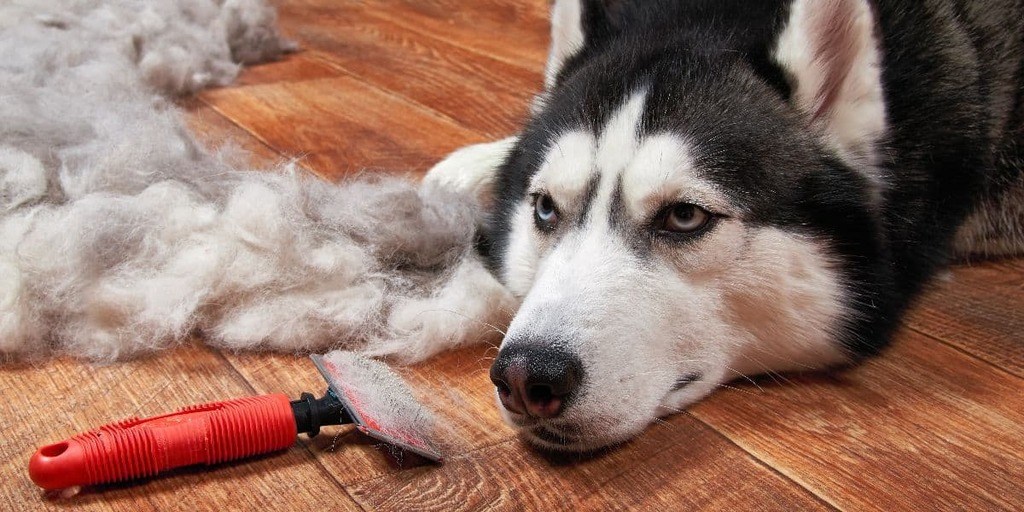
The shedding of the fluffy undercoat is also known as molting or blowing coat. As the new topcoat comes out, the undercoat is pushed out and deposited wherever the Husky goes. This will be in your yard, on the floor, on furniture, and on your hand if you stroke your Husky during molting season.

Typically your Husky will shed twice a year, once between September and February, then again between March and August. However, this isn’t a hard-and-fast rule. Some Huskies might shed just once, and others (particularly in warmer climates) will shed constantly through the year.

Shedding can take anywhere from two to six weeks, typically somewhere in the middle. During this time you will find yourself constantly vacuuming up the hair and fluff around the house. Many Siberian Husky owners suggest investing in a good vacuum such as a Dyson Vacuum to make the job easier.

First Shed

Your Siberian Husky Puppy will start shedding coat early on, from when you bring it home from the breeder, around 8 weeks of age. However, this might just be the odd hair. When the Husky is a bit older, around 6 months, you might experience the first coat blowing. Of course the larger the dog gets, the more coat it has, and more of a problem this will get.

Use the time early on to get the Husky used to be groomed. Even if the coat isn’t shedding, you can still practice combing your puppy and having it get used to the feeling of stroking it and pulling a comb through its fur. You might want to start off with a softer brush, and groom for short periods of time (5 minutes here or there). Have the puppy stand for you while you groom, and reward with a little food treat to help encourage this behavior.

Ongoing Grooming

Once the puppy is used to the sensation of a soft comb you might want to upgrade to one that is specially designed to extract dead hair. The “Furminator” is a very popular choice that is effective and lasts a long time, making it cost-effective. However, there are many brushes around and you can get advice at your local pet store if unsure. Check out our guide on the best brushes for huskies for more info.

Minimizing the Work

Nobody ever suggested owning a Husky would be easy! Grooming is one of the necessary jobs you need to do along with exercising and playing.

Shaving your Husky is a very big “no no”, no matter how warm your climate is. A Husky’s coat actually helps block out harmful sun rays and helps regulate the dog’s temperature. If you shave the coat off your Husky is likely to overheat or get cold very quickly, not to mention look ridiculous!

You can call in a professional dog groomer to help, but the reality is you can’t have them present 24 hours a day. You will just need to accept the build-up of fur around the home and try to deal with it the best you can.

Owners of smaller Husky dogs such as Minis and the Alaskan Klee Kai suggest the problem is more manageable because of the smaller dog size.

Wrapping Up

Owning a Husky comes with special responsibilities in the grooming department. Enjoy a positive attitude that after all the playful mess that your dog will leave during shedding season, you will have a very clean and good-looking dog for another 6 months!

Husky Howling And Barking

How To Control Your Husky’s Howling And Barking?

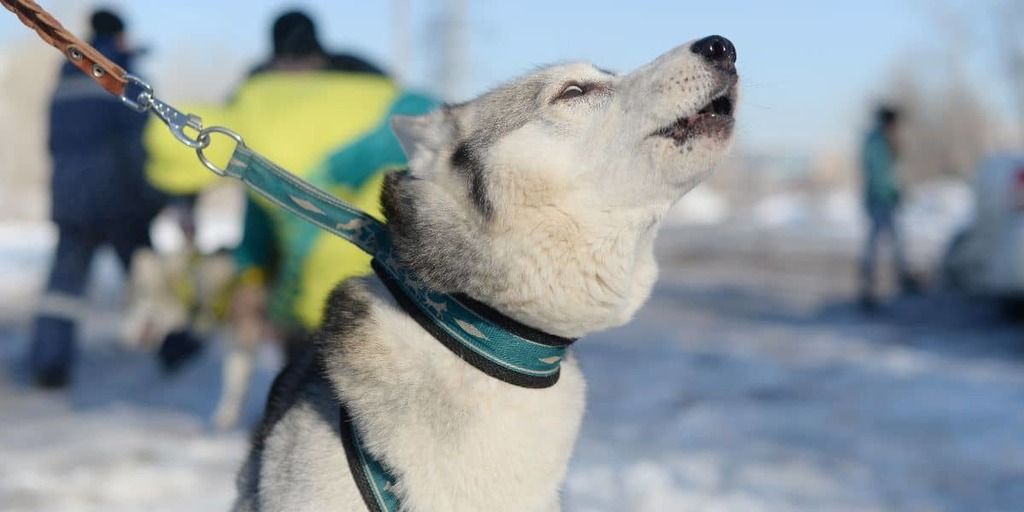
Husky Puppy Howling & Barking

Having trouble keeping a lid on your noisy Husky? Your puppy won’t stop crying? Here are our top tips for controlling the situation and giving you (and your neighbors) some peace.

Try to Figure Out the Cause

When your dog barks, howls, cries, or whimpers he or she is trying to communicate. Your first job should be to try and figure out the cause so that you know what to fix.

Husky puppies barkingAlthough unlikely, your Husky might be injured or have a medical issue and crying out for help. That’s likely to result in whimpering at all times (not just at night) and whether you are around or not. If that’s the case you should, of course, get things checked out as soon as possible.

If, on the other hand, your Husky barks when you or other people are around, could this be a sign that they want something? Probably attention.

Huskies are social dogs that settle better in packs. Left on their own they might get bored and exhibit destructive behaviors. This includes being left alone at night, so you might want to think about bringing the dog inside and closer to others (see Crate Training below).

Another possibility is that something has your Husky’s attention. A squirrel or possum running across the fence? A neighbor’s cat? If your Husky barks and continues to do so when you are present, see if he/she is pointing you to what they are barking at.

Issue a “Quiet” command

Just as you teach your dog other commands, a “quiet” command might work. This would be part of the regular training of your puppy (which I talked about right here)  and require lots of feedback and patience.

You want to issue the command and wait for your dog to quieten down before a reward such as a small treat, praise, and pats. Regardless of the other methods on this page teaching your puppy a command to quieten down can not possibly be a bad thing, even if it doesn’t solve the problem this time.

More ExerciseSiberian Husky getting walked for exercise

To try and tackle boredom, especially if you aren’t around during the day, you should consider giving your Siberian Husky more exercise. Exercise and training start at an early age and are required for the life of a Husky. Go for brisk walks or runs morning and night and see if this changes the barking behavior. If the barking subsides, then you have found the cause and can do something about it.

Introduce a Companion

It might not always be possible but if you believe your Husky does suffer from separation anxiety, another canine companion (particularly another Husky) might be the answer. Huskies tend to get along and keep each other entertained.

You can contact your local Husky rescue organization and see if any animals need a temporary home. This will let you test the theory before taking on board another pet full time. Just make sure they are all spayed and neutered if you are mixing the genders! There is a list of Husky Rescue Organizations, we collected, as well as some tips on how to adopt a husky.

Best Howl & Bark Control Products For Huskies

As mentioned above there are several ways to stop husky puppy howling and barking.

The first approach should always be using training methods and for that, we recommend taking the time to learn more about barking in general so you can have an idea as to why a Siberian husky is barking or howling. To do this in the chart below we recommend a book titled “Barking: The Sound of a Language (Dogwise Training Manual)” which specifically focuses on barking. This book will give you a much deeper understanding of how your Siberian Husky communicates and will help guide you in the direction needed to manage the issue.

Secondly, you could try a device that uses an ultrasonic bark deterrent to keep your dog’s howl under control.

And finally, the third method which is closest to a shock collar is using a vibrating collar. A vibrating collar is a bit more humane than using an electric shock that your puppy won’t enjoy much.

Crate training

This is one of the most effective strategies at reducing howling and barking in any dog, not just Huskies. You can place a crate (a box to enclose an animal) inside your home closer to you, but still, keep your Husky contained so he doesn’t run amuck around the house.

Go for a large metal framed crate, even if it seems too big for your puppy because you will want to keep using this throughout the life of your Husky. Ensure the dog can get up, spin around, and lay down again. A blanket can help soften the environment and add warmth. A water bottle attached to the side is handy.

Please remember that the crate is not punishment. It is not a jail! It is a device, when combined with positive feedback, can help improve the behavior of your dog.

We highly recommend checking out this YouTube video to see how it can be done.

Other ideas

Still, struggling to control your Husky’s howling and barking?

  • You could try your local dog club, whether Huskies or a general one, and see what other people have tried.
  • You can add another toy such as a KONG to keep your puppy busy.
  • Finally, you could try a training collar for your dog. My preference, if you choose to go this route, would be this  Dog Training Collar – Rechargeable. It has a beeping and vibration setting, but also an electric shock, which I don’t recommend using in any case. But mostly, the beeping is enough to warn your husky and if she keeps on, you can use the vibration. I tried it personally and I have never gone further than the vibration setting.

Conclusion

If your Siberian husky puppy’s howling and barking are terrorizing your family and neighbors, don’t despair!

– First, check that your dog is healthy and not suffering from injury or illness. Work on teaching your dog to respond to a “quiet” command.

– Try more exercise or another companion and see if that helps.

– Crate training is also a great method for curbing antisocial behavior in dogs. You can also try devices such as the ultrasonic method, or vibrating collar.

There are lots of options out there and although it might take time and patience, you will be rewarded with persistence in training and feedback.

Husky-Vacation-Shots

Vaccination Shots for Siberian Husky Puppies

Siberian Husky Vaccination ShotsHusky Vaccinations

To keep your Siberian Husky Puppy healthy and out of trouble, you will need to organize vaccination and immunization shots for it, especially before leash training.

Puppies are still building an immune system which is why husky vaccinations are essential to protecting them from harm. These vaccinations start before you pick up your puppy from the breeder, and continue on for at least one year and possibly for the lifetime of your pet.

What are you immunizing against?

Immunizations that puppies get can be sorted into three groups.

These are:

  1. Essentials: Distemper, Hepatitis, Parainfluenza, and Parvovirus (DHPP)
  2. Optional: Leptospirosis, Coronavirus, Bordetella, and Lyme disease
  3. Rabies

Here is how each virus affects dogs:

  • Distemper is a virus that affects the lungs, intestines, and brain and results in a wide variety of problems in these organs, skin complaints, discharge, etc.
  • Hepatitis (also known as Adenovirus) is a virus that affects the liver and kidneys, possibly leading to organ failure.
  • Parainfluenza (also known as Kennel Cough) is an infection of the respiratory system, not unlike the ‘flu’ that humans suffer from.
  • Parvovirus is a highly contagious virus that affects the intestines resulting in a variety of complaints including depression and diarrhea.
  • Leptospirosis is a bacteria affecting the blood and urinary system, causing fever, depression, joint pain, and possible organ failure.
  • Coronavirus is a virus affecting the intestines and causes diarrhea.
  • Bordetella is a bacterial infection that can lead to Kennel Cough.
  • Lyme disease is a disease transmitted by ticks and can result in inflammation of the joints and general lameness.
  • Rabies is a viral disease affecting the central nervous system in both humans and dogs and can be fatal.

Vaccination Schedule

Siberian Husky receiving vaccination shotThis is a general guide as to which vaccinations are administered at what age of the puppy’s life. Your local vet (who will administer the injections for vaccination) might have a slightly different schedule that they standardize to and adapt to local environments where particular diseases might be more prevalent.

6-8 weeks: The essentials (DHPP). Given that most breeders will not release puppies until 9 weeks of age, DHPP should have already been administered.

10-12 weeks: DHPP, again, because immunity is only short-lived from the first round. Leptospirosis, Coronavirus, Lyme disease, and Bordetella are optional, depending on what threats there are in your local area. Your vet will help decide what is required.

14-16 weeks: DHPP again, and those optional vaccinations as required.

12-24 weeks: Rabies vaccination. The actual timing depends on local laws governing mandatory Rabies shots for puppies.

1 – 1.5 years of age, and every 1-2 years thereafter: Rabies, DHPP, and the options may require a booster. Whilst rabies might not be optional, DHPP may be. There is some concern of late that over-vaccinating dogs might not be such a good idea, or at least has minimal benefit. Some critics say ongoing vaccinations is just a way for drug companies to sell more product.

Happy Siberian Husky after immunization shotWhen you pick up your puppy from the breeder or adoption agency, you should find out what vaccinations have already been administered.

If all of the core vaccines have been done on your pup then there isn’t much to worry about. If not, then you should visit your local vet and organize a schedule for future vaccinations.

Many vets will send you reminders when the time comes so you don’t forget, and the procedure is quick and easy when the times do arrive to administer a booster.

So get organized, form out a plan and note it down in your calendar and get those Siberian huskies vaccinated! It’s not a difficult or expensive exercise to complete and will help to give your puppy the best chance at growing into a strong, healthy adult dog.

Socialize Your Husky Before Getting Vaccinations

Key Takeaways:

  • Introduce your new pup to friends so that they will get used to new people and be comfortable and confident at a young age.
  • Before your husky puppy gets vaccinated, keep them off the ground in public places and in the vet offices common area.
  • Bring water, treats, and blanket to keep your husky comfortable.

Let us know how your husky vaccination went!

Siberian-Huskies-in-Apartments

Can Siberian Huskies Live in Apartment?

The complete guide to Siberian Huskies in apartments

Are you considering raising a Siberian Husky in an apartment, or other small dwellings such as a flat, unit, bungalow, or inner-city townhouse? Be careful because you might have problems with noise and howling, exercise requirements, or space limitations. Whilst keeping a large dog in an apartment is not easy, it is possible to achieve harmony between you and your pet. Here are some things to think about before you adopt that cute Husky puppy and bring him or her home.

Can a Husky live in an apartment?

You can raise a Siberian Husky in an apartment. Give your dog a lot of exercises, and make sure the environment inside the apartment is suitable for a medium-large sized animal.

But there are some big challenges ahead. Very big! Not many Husky owners can pull it off.
Husky in apartment cartoon That little puppy you bring home is going to grow up pretty quickly.

Your small living environment might seem large to a 9-week old pup, but by 1 year the dog will be nearing adult size. Huskies can grow quite large, around 50 pounds and 23 inches tall. Key questions you need to ask yourself are:

  • Will my Husky have enough room to stretch and walk around?
  • Do I have shelving, tables, and other furniture resistant to bumps, chewing, and slobber?
  • Have I got the time and patience to clean up after my Husky if he or she makes a mistake? sheds hair? picks up objects and drops them all over the floor?
  • Can I isolate my Husky in a room if he or she is misbehaving, you have guests around or small children?
  • Does my apartment get hot? Huskies prefer a cooler and well-ventilated environment.

Don’t kid yourself, raising a puppy in an apartment is a challenge at the best of times. Huskies have special needs that make the job even more challenging.

Alternatively, you could get a miniature Siberian husky as well. Miniature Huskies are a bit smaller, therefore it will require a bit less space and of course maintenance too. 

Dogs in rental properties

If you are renting your home then you need to check with your landlord about what pet ownership rules apply. If you own your property then you still need to check with your building manager or body corporate. Some landlords are fine with dogs as long as they know in advance, but many places prohibit dogs of a particular breed, of a large size, or all dogs regardless.

Before considering bringing home any dog to a rented home you need to check out the rules that apply to your building. You should find these in your lease agreement, and it wouldn’t hurt to ask your property manager as well.

One reason dogs (and other pets) might be prohibited is the likelihood of complaints from other tenants. Many complaints about pets in apartments boil down to two problems: noise, and property damage.

Noise

Huskies are going to howl or bark if they are bored. It isn’t much you can do about that unless you are going to be around your dog all day long then there is a pretty good chance they will make some noise when you head out the door. And because apartments tend to be in very close proximity to each other, that noise travels easily.

You will want to approach your neighbors and get their feedback before introducing a dog into your complex. Let them know that there might be noise, and invite them to talk to you directly if they have concerns. The last thing you need is a landlord, or worse the local animal police, at your door responding to complaints!

Property Damage

Damage to property is another concern to landlords. Dogs have been known to scratch on walls, bump into things, and chew on anything in reach. Again this behavior is symptomatic of boredom and it will be your responsibility to keep your husky happy, and if necessary, pay for those repair bills.

Exercising Husky in an Apartment

Siberian Husky chilling on the couch in an apartmentHuskies need a lot of exercise. In an apartment, they need even more because they can’t get up and run around easily in the limited space available. You need to be willing to exercise your Husky every day no matter what! Whether rain, hail, or shine, and whether you are tired, sick, or hungry.

This goes for whether you live in an apartment or house of course, except that the chances are your dog will need to be exercised and played with two, maybe three times every day to avoid it turning destructive. Huskies often need more than walking. They like to get up to speed and have a run.

It would be ideal if your apartment is near a large park where your Husky can move around more, chase balls, and experience nature.

Potty Training an Apartment Dog

Housebreaking is an essential training activity for your puppy. We already have some housebreaking tips for Siberian Husky Puppies that you can check out. The same principles apply: get into a routine with meals, look for repeated behavior in your pet to suggest he or she is “about to go”, and head outside if you can.

Because you are unlikely to have a yard to let the Husky out to, and it might not be convenient to head out (e.g. you live up a few floors, or it is snowing outside) you will need to make a space in the apartment where he or she can do its deed.

Out of living and eating areas is a good idea, so hopefully, you have a suitably sized bathroom or laundry where you can lay down a large litter tray. You can use “pee pads” or “puppy pads” which are flat pads, kind of like diapers, that soak up the liquid. I really like this one All-absorb Training Pads on Amazon. You also want to be sure your apartment has sufficient ventilation to keep the air cool and dry.
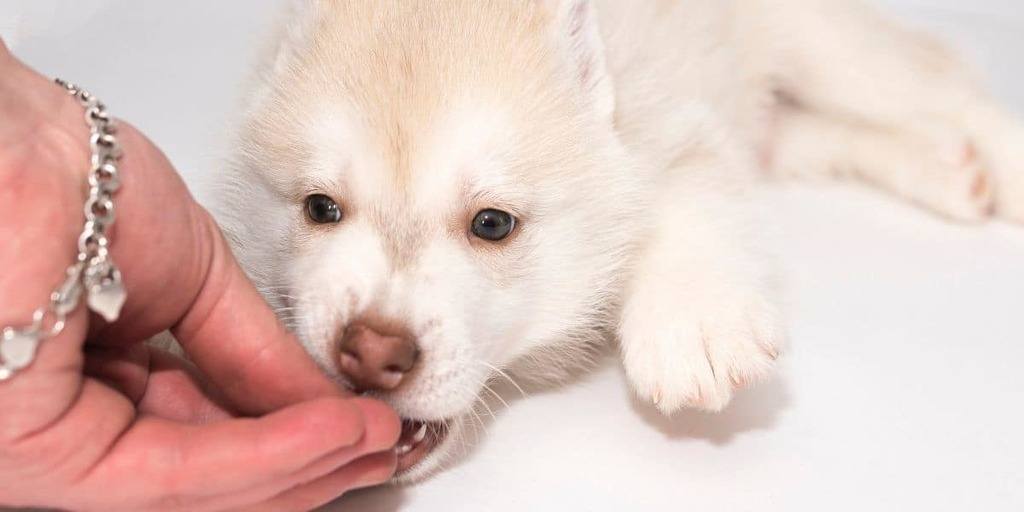
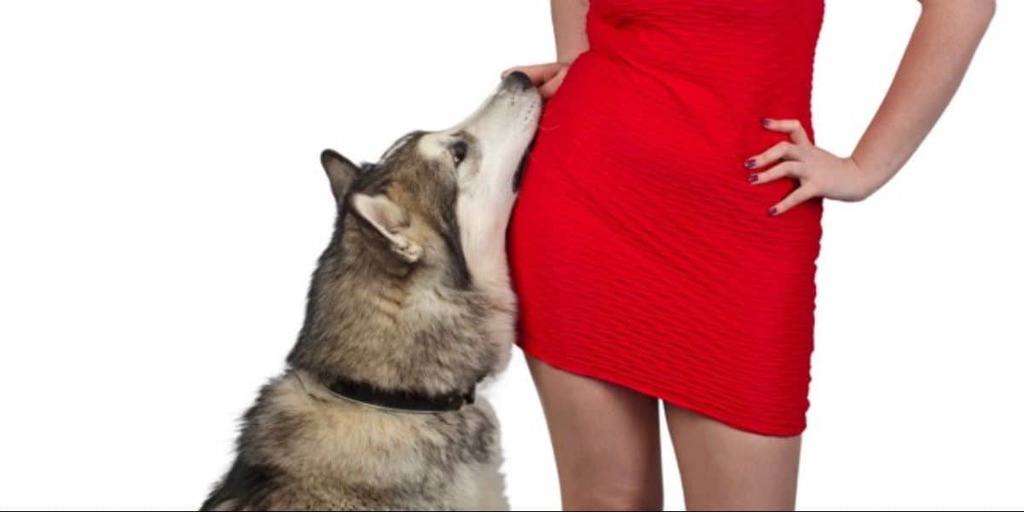
Many apartments have limited options for opening windows and your Husky will suffer if it is left in warm stuffy environments, not to mention the smells that will accumulate.

Can I Leave My Husky Home while at Work?

Sometimes you will need to leave your husky in the apartment while you go to work, head down to the shops, or go out with friends. Hopefully, you are working hard at training your dog, particularly trying to keep him or her out of trouble. If not, just check these general tips on how to train your husky puppy and have an idea of where to start.

That means not wrecking the house! Crate training is likely to play a big part in this as it might be your only effective solution to restraining your dog. A checklist of things to think about when leaving your dog alone is:

  • Does it have clean water?
  • Does it need food?
  • Has it got a toy to play with? A KONG toy is popular and effective.
  • Is there sufficient ventilation?
  • It is not too warm, not too cold?
  • What if your puppy needs to go to the toilet?
  • Is he or she likely to howl, and which neighbors will be affected?

You also might want to consider starting with shorter ‘trial’ trips out of the home to see how your Husky behaves. Even as something as sneaky as head outside your door and sit in the hallway for half an hour to see what happens. Or if you need to go out for longer, get a friend or neighbor to drop in and check that everything is ok.

If you plan on leaving your husky home all day while you head out to work… well… good luck! It can be done but you will probably need a very well-trained and exercised dog. A long walk or jog in the morning, and another one when you get home, is probably what you need to give your dog to keep them stimulated.

And if you aren’t sure…

If you think you are up for bringing a Siberian Husky Puppy home to an apartment but want to make sure you can handle the responsibility, you could contact a local dog rescue organization. You might be able to foster care of a dog for a short period of time to see how you both go. If nothing else you will be doing your bit to help unwanted pets end up in the pound.

Keep these tips in mind if you live in an apartment and considering a Siberian Husky. 

It is not an impossible feat, but you want to be sure you are up for the challenge and special commitment that will be required of you. Still unsure? Check out this Q&A video from a Husky owner:

Feeding-Husky-Puppy

Feeding Siberian Husky Puppies

Husky Feeding Guide

So you are about to, or already have picked up your Siberian Husky puppy from the breeder. What food do you feed it? And what feeding practices are best to ensure the puppy grows up healthy? Here are our tips for feeding your puppy...

Take the breeder's advice

Hopefully you have taken our advice on finding a good Husky breeder and have been given a sheet of information with feeding instructions. The puppy's digestive system takes a little while to develop so it is important you follow the directions.

Typically you will engage in the same feeding rituals with the same food that the breeder has been using, at least until the puppy has settled in to his or her new home. Once settled you can then slowly begin to experiment with different foods and feeding habits.

As easy as 3-2-1

When the puppy is small it will not have a large stomach to eat meal sizes typical of an adult dog. You will want to start with three small meals a day, and move to two, then one.

Up to the age of 3 or 4 months, your puppy should eat in the morning, early afternoon, and early evening. Between 4 and 8 months (give or take a month) cut back to two meals, then by 9 months your puppy will be large enough to get through on one meal a day. 

Watch the weight

Siberian Huskies have a metabolism different from many other dogs. They are bred for harsh conditions and being able to work over periods of time with little food. For that reason you should hold back a little on the recommended meal sizes printed on the packaging of food.

 If your puppy appears to be getting overweight you can cut back some more.  If the ribs are pronounced then maybe increase meal size.  Check this weight chart by weeks/month,  to know  if your puppy on a right path. Also, do not hesitate to ask  your vet  to give specific advice on the feeding and health of your puppy. 

Consider feeding your puppy a premium food mix. Don't let the price fool you: cheaper mixes often have "filler" that requires a greater amount of food to be fed to achieve the required nutrition. Plus you want to make sure your puppy gets all the required protein, vitamins and minerals required for it to grow up healthy. Choosing a high-quality dog food to ensure a well-balanced diet will only help that. 

What to avoid

Like all dogs you want to stick to meat and vegetables. Avoid table scraps, cooked bones, onions and significant amounts of dairy. These can make dogs ill. For example cooked bones can splinter and cause significant damage to your dog's internals. Chocolate is also a no-no, it is very toxic to dogs. For more specific advice on foods to avoid click here for some specific advice on foods to avoid.

Also avoid having the dog hang around the kitchen. It will be easier in the long run if your dog has its own dinner time, separate from your family's dinner time.

Treats

The good news is you can treat your dog occasionally. Perhaps a biscuit every now and again, and little treats during training. See our advice on snacks and treats for more information.

Meal time behavior

Try to stick to meals at similar times each day, so that your puppy can get used to the behavior. After your puppy eats it might be time to take him or her outside to poop. Check out our advice on housebreaking your Husky puppy for further tips on this. Don't forget that your puppy needs fresh clean water AT ALL TIMES, and especially in that hour after a meal. The water helps digest the food and keep your puppy hydrated.


Feeding your Siberian Husky puppy is easy if you use common sense. Take your breeder's advice, start with small frequent meals and over the first year of growth pull back to just one meal a day. Treats are fine. If you think your dog is over- or under-weight, get it checked out by your vet. Shedding pounds off an overweight Husky can be a big challenge!

Husky Feeding Guide Video


Husky Raw Diet

Feeding your husky raw food is possible, though is recommended to be done all at once. If you choose to go this route it is recommended not to mix kibble with the raw meat as their bodies will digest it differently. Check out this video below about Gohan the husky who was switched over and is now raw feeding.  In the video his own discusses his meals, his health, and the changes he noticed after the change over.

Conclusion

We hope that this has helped you in figuring out how to much to feed your husky puppy and if you need some help in choosing food, check out this guide to the best dog food for huskies.

Let us know what worked for you below in the comments! We always love hearing from fellow siberian husky owners!

siberian_husky_big

How Big Do Siberian Huskies Get?

Siberian Huskies can be so small and cute as puppies, but how big does a Siberian Husky get?Small, Medium, Large Siberian Husky

The AKC Siberian Husky Standard quotes an acceptable range for an adult male to be between 21 and 23.5 inches tall (53 to 60cm) and weighing 45 to 60 pounds (20 to 27kg). Females are a little smaller, between 20 and 22 inches tall (51 to 56cm), and weight between 35 and 50 pounds (16 to 23kg).

However this is the AKC standard, and of course, dogs sometimes exceed this. Some people report Huskies growing to 100 pounds (45kg) although this would be an extreme and could suggest an overweight and under-exercised dog! If you are not sure about your husky normal weight, check the weight chart for Siberian Husky

In comparison, a male Golden Retriever is 23-24 inches tall and 65-75 pounds, and a male Labrador Retriever is 22-24 inches tall and 65-80 pounds. That is to say, the Husky is a touch shorter and lighter, but not by much.

A Siberian Husky big enough to reach a woman's waistHuskies can expect to live for 12 to 15 years, but they have reached adult height more or less by the end of their first year. From then on, they increase mass as muscle builds up around their frame. That means the little cute puppy you see at the breeder is going to grow really fast in the coming months.

Also, consider the size as it relates to grooming. Being a larger dog with a double coat, Huskies will shed a LOT of fur each year and leave it EVERYWHERE around your house and garden! Keep this in mind if considering a Husky puppy for your household and you like your place to be spotless. If you want to know, how to deal with a coat shedding of your husky, here you can find some tips –  How to deal with Coat Shedding of Siberian Husky

Miniature Huskies

Some selective breeding has developed a smaller Siberian Husky called the Alaskan Klee Kai. These range from toy size (9 pounds in weight, 13 inches tall) to miniature (10-15 pounds, 15 inches) to a standard (16-23 pounds, 17 inches). Because they are a relatively new breed from a smaller gene pool, the breed is still being developed and is relatively rare to see out and about.

They share many of the traits that full-sized Siberian Huskies exhibit: shedding, an abundance of energy, and a life span of around 14 years. Expect prices from breeders to be at a premium because of the rarity – think $1000+ for a puppy. The smaller size is likely to increase in popularity over time but it will take a number of years of experienced breeding to develop a population of healthy Klee Kais.

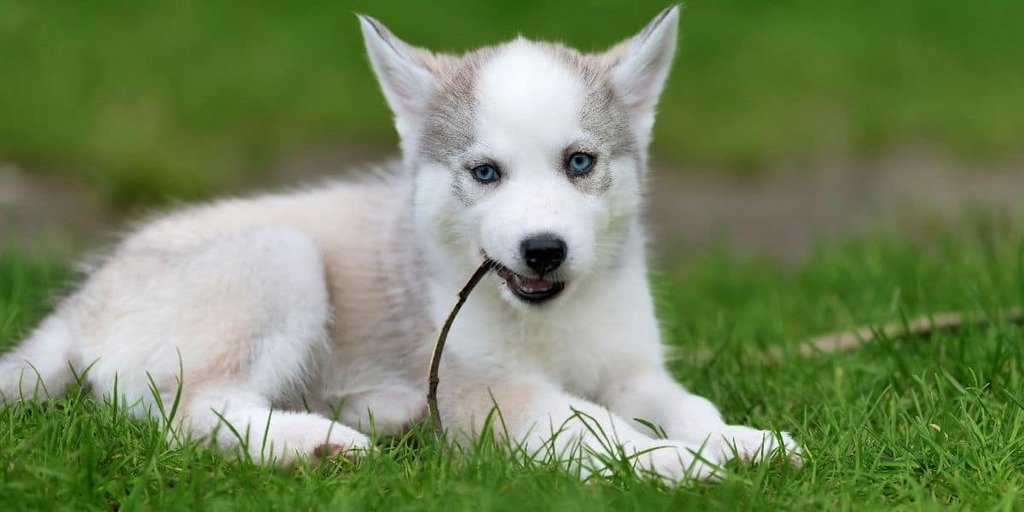
Siberian Husky puppy chewing on a toyIn addition, there is a Miniature Siberian Husky which you can read about in detail in a separate article. These are essentially a smaller Husky, sharing similar behavior and temperament to a standard husky, bit much smaller!


So there you go – Siberian Huskies will grow almost to the size of a Golden or Labrador retriever, and they will grow very fast in their first year of life. Keen to learn more about the breed? Check out our breed information articles that cover all you need to know about Huskies and their characteristics.

1 2 3