Tag Archives for " husky "

Husky-Training-General-Tips

Training Siberian Husky Puppies – General Tips

Siberian Huskies are intelligent dogs, but can also be stubborn, and grow bored easily. Training a Husky puppy is not easy. You will need a lot of patience and dedication to properly train a Siberian Husky. Are you up for the challenge?

How difficult is it to train a Husky?

Cute husky puppy outdoors on the grassIf you are new to the breed then you need to assess yourself first. Sure, Huskies look all cute and pretty, but are you prepared to train and exercise your dog every single day?


Siberian Huskies are difficult to train. Rewarding in the long run, but difficult. If you haven’t owned a dog before then you might want to consider adopting an older, trained, and socialized Husky or consider a different breed. 

Before acquiring your first Husky you might also want to get in touch with your local Siberian Husky club where you can meet owners, play with the animals, and get a feeling for whether this is the breed that is right for you in your current lifestyle.


 Top Training Tips for Your Husky

1. Be the leader of the pack

As any Husky training guide will suggest, you need to be the leader of the pack. Be the “alpha dog”, so to speak. That does not mean you will be aggressive, loud, or violent. It does mean you need to exert dominance over your dog. Huskies will not obey if they view their owner as passive or weak.

Being the leader means firm commands, with consistent wording, and applied consistently. No bending the rules, ever! If one rule can be bent then your dog will think all rules can be bent!

For example, when passing through a gate or doorway, you lead and the puppy follows. When playtime is up, you remove the toys from the puppy’s possession. You decide when and where the puppy sleeps. Crate training is also likely to be an appropriate activity. In short: you lead, and your Husky should follow.

2. Start early

As soon as you bring the puppy home you want to settle into a routine. Each day you and your puppy will need to sleep, eat, poop, play, and exercise. The great thing about routine is that it helps build trust with your puppy, plus helps you remember to get through all the activities that need to happen each day.

Training is not something that necessarily stops at a certain age. As your puppy grows up certain behaviors and routines will become second nature, only to be replaced with more advanced training and exercise. Thankfully some training such as housebreaking your Husky puppy will settle down and not require constant attention.

3. Give Feedback  (immediate, clear, and consistent)

You will be well equipped to take on the challenges of raising a Siberian Husky puppy if you are armed with these three feedback concepts: 

Immediacy

Feedback needs to be given as soon as the dog exhibits a behavior worthy of it, whether that be good behavior (demanding positive feedback) or bad behavior (demanding negative feedback). By ‘soon’, we mean within 5 seconds – straight away!

Why so soon? Because you want the puppy to connect its own behavior to your response. The puppy is constantly exhibiting different behaviors: playing with this, wandering over there, lying down, getting up, and on it goes all day long.

Siberian Huskies can get bored easily. If you wait just a few moments too long your puppy is probably already doing something else! Your response will either encourage the puppy to repeat the behavior or discourage it.

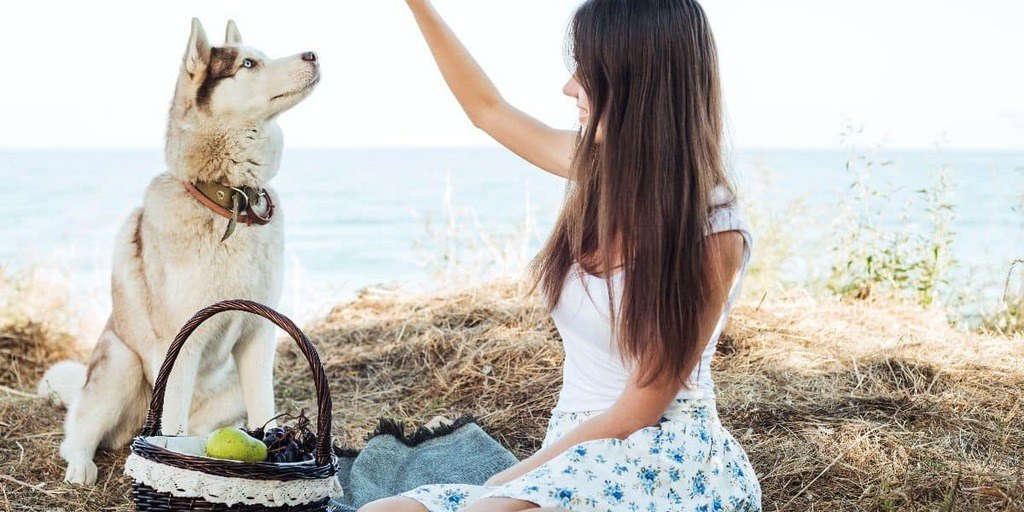
black and white husky getting a treat as a reward for good behavior

Clarity

The words you say and the actions you take when issuing feedback should not leave any doubt as to the purpose; positive or negative. How you verbalize positive feedback (“Good boy”, “Good Girl”) should be distinctly different in sound to how you verbalize negative feedback (“Bad Dog”, “No”). Some trainers recommend using special words and avoid “Yes” and “No”, which are commonly said in everyday conversation.

For example, your Husky is likely to only hear “Good Boy” in the context of its own behavior unless you also have a young child and using Good Boy to him as well! In which case an alternative phrase should be picked for the dog such as “Atta Boy”, “Yup-Yup”, or whatever you choose. Pick something and go with it for the life of the dog!

“No” comes up often in everyday human speech that it would be wise to pick an alternative. Shibashake recommends “Ack-Ack” instead. By saying “Ack-Ack” instead of “No” your dog will associate that command exclusively with its own behavior and adjust accordingly.

Consistency

Siberians are smart dogs, but you still want to be consistent to remove any doubt as to the type or purpose of feedback. By using the same words each time your Husky will associate them with good or bad behavior.

Just as important is to give the same feedback every single time. If your puppy likes chewing on your shoes, then never once let him or her get away with it! Repeat the same negative feedback words every single time. Don’t leave any doubt in the puppy’s mind that the behavior will be tolerated!Feeding Your Siberian Husky Puppy

Similarly, if your puppy does good by sitting still while you plate up the food bowl, you can and should give positive, reinforcing feedback each time. Even if the puppy seems to have mastered self-control at feeding time, there is no reason to stop loving your dog for behaving!

If you are using more than words for feedback, and you probably are, such as scratching behind the ears or giving the puppy a cuddle, make sure that is consistent as well. You don’t want to cuddle the puppy for positive feedback on one occasion, but then on another after negative feedback also cuddles because you feel sorry for the puppy. Consistency is the key.

4. Don’t give up!

Training is going to take time. Not just a few days here or there, but consistent training, every day, for many months. Don’t give up! If something isn’t working over a period, try something else. Ask other Siberian Husky owners at your local club what has worked for them. Check out our other tips on training Husky puppies for advice on specific issues.

Training a Siberian Husky puppy requires effort, dedication, and persistence, but please don’t let that put you off! Training can be fun, enlightening, and rewarding for puppy and trainer alike. Improved relationships between your pet and yourself, your family, the general public and other animals is the secret to successful pet ownership!

Conclusion

Husky puppies can be a handful at times but with patience and dedication, you will get there and very much enhance the bond between owner and pet

Choosing-Husky-Breeders

Choosing A Siberian Husky Breeder

How do you choose a Siberian Husky breeder to acquire your new puppy from? What separates bad breeders from good ones, and good ones from great ones? Here are the things you need to consider when dealing with breeders of Husky puppies and looking for a new pup.

Initial Research

First, look for breeders in your area. You can use our Breeder Directory as a starting point, or the SHCA Referral Directory, and also consider breeders in your neighboring states if there aren’t many local to you. You want to be able to visit the breeder, on at least two occasions, so it makes sense to choose from breeders you can easily visit. Buying from a breeder that will freight the dog to you, without checking you out first, is a sign of a breeder who is more interested in selling puppies than finding the right one to match your requirements.

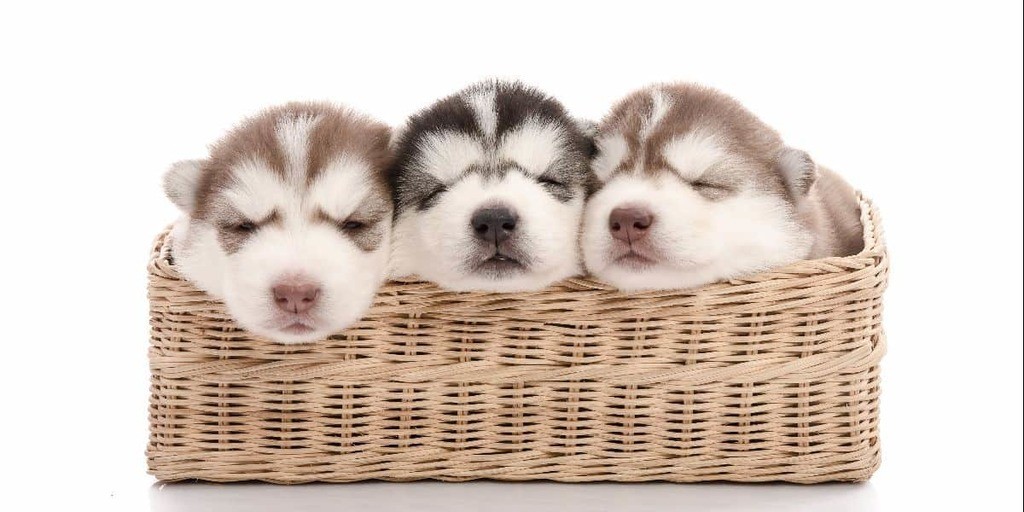
Sleeping husky puppies

It should go without saying (but we will say it anyway) you should avoid pet stores, puppy farms and any other party who you suspect is not breeding for the betterment of the Siberian Husky breed. By working with a responsible breeder you are likely to get a healthier puppy that is socialized, pay less for the puppy (no retail margins), and are helping to stamp out poor breeding practices.

You should also start forming a relationship with your local vet and ask him or her for referrals to local breeders, breeding clubs, or Siberian Husky clubs that can help you locate a breeder.

Before visiting a Husky breeder always give them a call first – nobody likes unannounced drop-ins! They might out presenting their dogs at a show (another good sign they are working on improving the breed). You should ask them if they are members of any breeding clubs, and/or who mentored them: either of which is a sign of a dedicated breeder. You should ask about their history with the breed: why did they choose to breed Siberian Huskies and how long have they been doing it for? This will help avoid inexperienced breeders.

The breeder is also likely to ask questions of you and what kind of puppy you are looking for, what environment you live in, and other questions to help decide that you will be a responsible pet owner. Beware of any breeder that encourages you to rush your decision without checking you out.

Responsible breeders do not breed every year, and it is likely that you talk to kennels that do not have any puppies available at all. You can ask for referrals to other breeders: good breeders know other breeders in the vicinity. You might even need to be patient and wait a number of months until new litters are born. The breeder will most certainly be able to keep your details on hand for that event and contact you in the future.

First Visit

Three Siberian Husky puppies from a litterOn your first visit, your aim is to evaluate the breeder and the premises and start forming a relationship. A good breeder will show you around and let you inspect where the puppies spend most of their time. A clean and maintained environment is what you are looking for.

Also, do the puppies seem happy to have you around? Responsible breeders will socialize dogs early and get them used to new sights, smells, sounds, and experiences. If most or all the puppies run away at your sight it could be a warning sign that this socialization has not occurred.

The size of the property, the number of dogs on site, website, advertising, and other promotional material from the breeder is not an indication of the quality of the dogs being bred.

Resist the urge to make a decision on this first visit, no matter how cute and adorable the puppies are! You and the breeder should be working together to find a puppy with a temperament suited to your lifestyle. The breeder should be asking lots of questions about you in order to suggest potential puppies for you. In turn, you should feel comfortable talking to the breeder, asking the hard questions such as the health of the breeding line, documentation demonstrating the parents are healthy and resistant to Siberian Husky health issues such as eye and hip disorders. Registration papers are good but just remember they only demonstrate the parents were registered, and do not indicate the overall health prospects of the pups.

A breeder should be respectful of your decision to visit other breeders and find a dog that suits you. Any breeder who puts the ‘hard sell’ on you is most likely in it for the money, and not the long term future of the dog.

Second Visit and Collection

Siberian Husky PuppyNow you want to start getting serious about making a decision – asking more questions that might have been raised when you visited other breeders. If it takes you a third, fourth, or further visit to help make the right decision then so be it. Breeders are generally very happy to have responsible pet owners visit them, and not let their puppy leave as the result of a rushed decision.

A good breeder will not let a puppy go until at least 8 weeks of age, after the first round of vaccinations and worming treatments. They should be able to provide you with a schedule of future health activities you need to undertake, plus written information on diet and care for your puppy. Desexing (‘spaying’ or ‘neutering’) is also likely to be a discussion point and may have already been taken care of for you. Responsible breeders don’t want to encourage future breeding of inexperienced owners.

Most good breeders, if not all, will be able to provide some sort of guarantee as to the health of the puppy. Responsible breeders will also be willing to take the dog back if you are unhappy, or unable to care for it. If convenient you should be able to get the puppy checked out by your preferred veterinarian just to make sure there are no hidden surprises.

Finally

Congratulate yourself for taking the time and effort to find a responsible breeder! Enjoy your new family member and the years of good times ahead you will have with your Siberian Husky. Be sure to join a local club and also get into training and grooming habits early, because Huskies grow up very quickly!

Eight shades of husky coat collage

Husky Colors: 8 Colors a Siberian Husky’s Coat Can Be

Looking at Instagram feeds that feature huskies, you cannot help but notice that the colors of their coats add to the "aww!" factor or their overall appearance and demeanor. 

A Siberian husky's coat can have all colors from pure white to mostly black, with a variety of markings and patterns. In addition to black and white, common colors found on Husky coats include agouti, tan, brown, grey, red, and sable. 

Read on as we describe eight most common standard colors there are and learn about some of the rare husky colors that you can find on a Siberian husky.

What Are the Different Colors of Siberian Huskies?

From coats that make them look like a wolf to something softer in tones and hues, you can expect to see Siberian huskies in a wide array of different colors. 

According to the American Kennel Club, standard colors of Siberian Huskies include:

  • Agouti and White
  • Black 
  • Black and White
  • Black Tan and White 
  • Brown & White
  • Gray & White
  • Red & White
  • Sable & White
  • White

The Federation Cynologique Internationale writes that all colors from white to black are found on Siberian huskies. They have a double coat that can grow to medium length without obscuring the outline of your dog. Siberian huskies also have markings on the head, including striking patterns that you can only find in this particular breed of canines.

Siberian huskies have coats with two layers: the topcoat and the undercoat. Their coats can have different colors, such as black, white, gray, brown, red, and cream, or a combination of any of these colors.

Huskies usually have white paws and legs, a wide variety of facial markings and color patterns, white-tipped ears and tails. Which together withNot to mention their striking eyes, which also contributes and make this dog one of the most desirable to own 

Black and white is the most common combination of coat colors for Siberian huskies. Copper red and white, as well as grey and white, are also quite common. Agouti-colored coats are rare. 

Let’s take a look at these notable coat colors and combinations:

Agouti

 While it is common for mammals such as wild rodents to have this color, agouti is rather rare in huskies. It involves a dominant dark mask that can make your dog's face look dirty. The agouti hues can reach down a husky’s entire body. It is caused by the agouti gene and usually gives the dog a wolf-like and wild appearance. 

Related article: Are Huskies Related To Wolves?

Siberian husky agouti color on the leash lying down on the ground

via Instagram: @vesterelva_viddashusky

Agouti is generally grayish in appearance, but it also has a salt and pepper look. Agouti usually has a mixture of tan, gray, red, and black colors.

Husky puppy agouti color collage

via Instagram: @agouti_logan

Mostly Black

A pure black color of the Siberian Husky is considered rare. The color allows scattering of white patches, mostly on the legs, face, chest, and tip of the tail. To be classified as this color, the dog's body must have a minimum of 75% black. Many huskies that are close to pure black will still have some markings in white. Pigmentation of the nose, lips and eye strokes should be strictly black.

Jet black husky with white paws resting in the living room

via Instagram: @satoris

Black and White

You can find three shades of black on Siberian Huskies:

  • deep jet black
  • black 
  • diluted black

Other huskies have more colors accentuating their black coat. Some have an undercoat of white, beige, or any shade of gray, and there are also some with red hues. 

Black and white husky in natural habitat
1 month 8 days old white and black husky puppy

Black, Tan, and White

Black and tan coloring is extremely rare, but it does exist. You’ll usually need to visit a breeder who specializes in this color combination if you want a Husky with this collection of hues.

Black tan and white husky with blue eyes

via Instagram: @hellerkantri.huskypark

Black, tan and white husky in snow

Brown 

When you say brown in terms of Siberian husky colors, it can mean two different shades of brown: copper and sable.

Copper

Copper has tinges and shades ranging from yellow to brown. It might be monochromatic or banded, with liver-colored points. The undercoat may be copper, brown, or light red, while creme is also found in banded dogs. Copper may be:

  • Chocolate copper, which has a deeper and darker brown color
  • Red copper, which has a tone that is more red than yellow
  • Orange copper, which is more yellow than red
Red copper husky wearing harness

via Instagram: @hellerkantri.huskypark

three shades of copper husky color: chocolate copper on the lest, red copper in the center and yellow copper husky on the right side

Chocolate (on the left), red (at the center) and yellow (on the right) huskies

Sable

Sable coats in Huskies are always banded and have black points and tips. The undercoat may be orange, chocolate, or red. One difference between this and wolf-gray is that the undercoat is never beige.

Sable colored husky outside winter time

Red and White

Red and white coloration is related to the liver points, or the nose, eye rims, and lips. It's also characterized by the total absence of black hair.

Red husky with white undercoat in snow

Gray and White

Gray and white Siberian huskies have three possible shades of gray: wolf-gray, silver, and darker shades of gray.

Wolf-gray mixes a warm shade of gray with red, tan, or beige colors around the ears, back, and legs. The gray topcoat mixes very well with the beige undercoat.

Wolf grey husky standing on the side of the road

Silver gray is the result of restricting the agouti gene, and you have coats with a tinge of silver or blue, or any of the colder shades, unlike wolf-gray, which has warmer brown to red hues. What's more, silver huskies have white undercoats.

Grey silver husky stand in snow

Medium to dark gray, on the other hand, is the most common among gray Siberian huskies. It can have a tinge of warm hues and tones, but it's most muted. The undercoat is a combination of silver and beige.

Dark grey almost black husky

White

While most Siberian huskies have white markings and undercoats, it is very rare to have one that is pure white in color, but it does not indicate albinoism. Having a pure white topcoat and undercoat means that the hues were completely restricted.  

white husky resting next to the flowers

Markings and Patterns

When it comes to markings, black points and piebald are standard. Meanwhile, merle coat patterns are not permitted when breeding Huskies due to the health issues the associated genes can cause.

Pinto patterns are when there is an overabundance of white where other colors should be, especially over the front legs and shoulders.

white and black pinto husky in snow

Piebald Siberians will have mostly white fur with some irregular patches of color.

merle, piebald and splash coat husky markings and pattern

Merle Coat Patterns

Merle is a pattern gene, according to the Siberian Husky Club of America. The presence of this gene alters the base coat color that results in lighter patches. The Merle coat pattern either has a mottled look or a combination of spots or color smears, like on the picture below.

merle husky wearing yellow colar shedding

Photo via Instagram by Spatails

The SHCA says that Merle patterns can only come from impure breeding. The main issue with Merle patterns is that they can signify that the dog may have problems with its sight or hearing. The problem becomes more pronounced when two Merle dogs are bred, where there is a one in four chance that there will be a double Merle dog.

Double Merle puppies may be born deaf, blind, or both. Others may have smaller than normal-sized eyes, or they may not have eyes at all. In other double Merle dogs, there would be eccentric pupils, underdeveloped iris, or irregularly shaped pupils. Double Merle dogs may also have other vision-related problems.

Why Are Huskies have Different Coat Colors?

The varied colors you see on huskies are brought about by genetics. Genes can produce a certain color in their coats or restrict the formation of other colors. 

These genes are usually denoted by symbols. Here are some examples of genes and their effect on coat colors include:

  • Ag, which gives a husky their agouti color
  • ach, which restricts red and yellow, giving your dog a silver coat
  • ay, which restricts dark colors and produces tan or sable coat colors
  • B, which is required for black colors to appear anywhere
  • Cc, which results in total albinism
  • D, which can intensify coat color or give the dog's coat a full color
  • T, which gives the husky a single color throughout
  • Ty, which gives your husky a yellowish or sable coat
  • Sw, which gives the dog a pure white coat

What is the Best Color for Husky?

Just like the hair on humans, there is no best!

When huskies are responsibly bred, their color is of least importance to good breeder. The same goes for eye color. The AKC Standard states that any color is acceptable, and indeed their color codes for registration cover a broad spectrum of shades.

Any breeder who places more attention on coat color instead of the overall health and wellbeing of the animal might be a sign that they are a backyard breeder or puppy mill and to be avoided. 

  When selecting a puppy you should be on the lookout for a healthy animal that has passed vet checks and is likely to meet your family's lifestyle.

Can Husky Puppy's Coat change color?

When a husky is born the general coat color is apparent but can change over time. There is no way to predict if, when or how the coat will change color.

Change is often natural and unavoidable. It can happen during shedding, as a topcoat may be different color to the undercoat. Of cource, this is nothing to be concerned about! It is to be expected of any animal that sheds hair. Also exposure to sunlight, or simply the physical growth of the animal. 

Why Focus on Siberian Huskies?

When you talk about huskies, two different breeds come to mind: Alaskan and Siberian huskies. 

There are noticeable differences such as Alaskan huskies being shorter and more lightweight, as well as differences in temperaments. 

However, Alaskan huskies are mixed breeds between Alaskan malamutes and Siberian huskies, and they can have any color. Unlike Siberian huskies, breeding Alaskan huskies is not regulated by organizations such as the American Kennel Club.

Conclusion


Whether you are purchasing a puppy from a breeder or adopting from a rescue organization, Siberian Huskies come in all sorts of colors, markings, and patterns. It isn't something you should be concerned about because color has no indication as to temperament or behavior. Just keep an open mind and take your time selecting a companion that will fit you and your family!

P.S. If you want to make sure your Husky’s coat maintains a healthy sheen, I recommend reading an article on the Best Shampoo for Huskies. Using the right shampoo is essential in keeping your Husky’s coat as beautiful as possible. You can also read Best Brush for Huskies if you’re invested in keeping your pup’s coat maintained at the highest level of quality. 

Husky-Grooming

Siberian Husky Puppy Grooming

Siberian Huskies are surprisingly good at taking care of themselves, licking themselves clean much like cats. However they do need particular attention paid to the coat when they molt, plus a regular grooming session once a week can help keep your Husky puppy looking fabulous. And who doesn’t want a fabulous-looking Husky?

Grooming For Young Husky Puppies


It is really important to start grooming Siberian Huskies early in the puppy stage. Their coats develop within weeks of birth. Also in the first 12 weeks of their life, they are most accommodating in learning new behaviors and routines that will last a lifetime. However if you have adopted a dog that has grown out of its younger puppy stage, it is never too late to start!

How often should you groom your Husky?

Once a week, for the life of the dog, you should do some basic grooming. It is important to stand the dog up to get it used to be groomed in this fashion. A standing dog makes it much easier for you to get through your grooming tasks efficiently and effectively.

A weekly brush of the coat will help keep it neat and tidy and dislodge any loose hairs or dirt that might be stuck in there. Brushing also helps avoid matting. Matting is likely to occur if you don’t brush your dog, and he or she likes getting wet in the rain, snow, and ice. You can find more tips about brushing, as well as our favorite tools we use right here – “The Best brush for Huskies

Molting

The molting (hair shedding) process usually happens once a year as the weather starts to warm up in spring and summer. Some dogs might shed twice a year, and some none at all, depending on the environment. A young Husky puppy is unlikely to fully shed in its first summer but might drop a few hairs around. When your puppy reaches 10-14 months old a major shedding will occur as the “baby” coat makes way for a thicker adult coat.

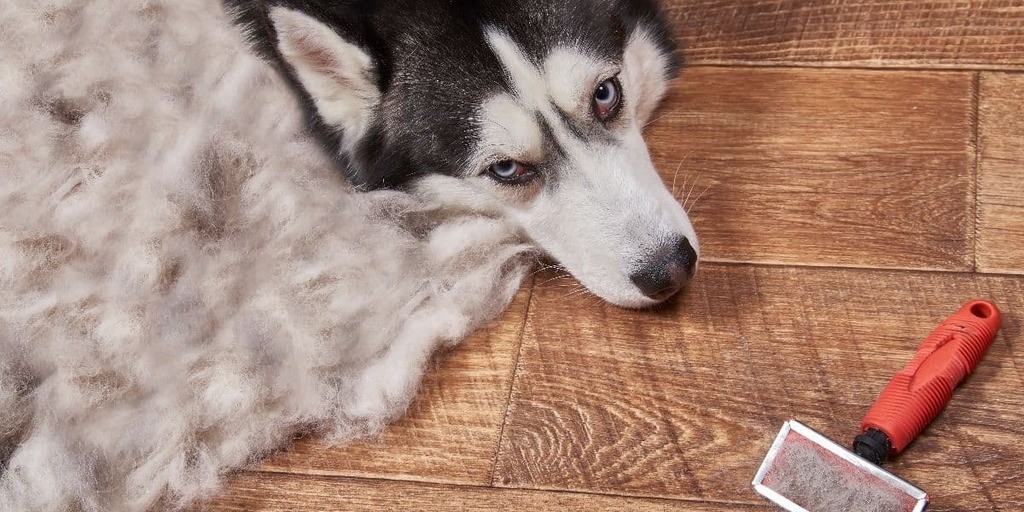
The molting process will typically start with a few sprinkles of fur dropping loose before the real action begins. A Siberian Husky will shed a lot of hair. A LOT. The bigger the Husky is, the more hair it will shed. If you have ever seen how much wool a sheared sheep gives, you are on the right track.

You will need out your Husky with some brushing. You can start with a larger, wide-toothed comb and brush out as much loose hair all over the body. Look for a comb or rake with rounded teeth (like this one  –PawsPamper Extra Wide Undercoat Rake) to avoid scratching the dog’s skin. You can use a fine-toothed comb for the head and neck areas where the fur is thinner.

Here is a video that shows just how much effort is needed to keep your Siberian Husky looking good, and how much hair can be shed in just one grooming session:

Washing

Most owners will only give their dog a bath once a year, after shedding. You could get your dog professionally washed, or you could take your dog down to a local hydro-bath to do it yourself.

If you have the space you can do it at home – just make sure you use a shampoo formulated for pets and follow the directions on the bottle. After washing you may towel-dry your Husky and, if you feel it is necessary, a light blow dry with a hairdryer at its weakest heat setting.

After the dog tries this is a great time to apply any flea, tick, and other parasite controls that dogs in your area require.

Other Grooming Activities: Eyes, Ears, and Nails

For the eyes simply grab a damp cloth to wipe the area clean of excretions, dirt, etc.

For the ears check once a month for signs of infection, mites, or other parasites. Any redness, discharge, or unusual odor will require a visit to the vet to check it out. There are also ear-cleaning lotions available that you can apply yourself if you want your Husky to look its best.

Nail clipping needs only be done from time to time. Once a month have a look and see if the nails need a trim. It really depends on the environment your dog is into whether nails are under control or not. Like all grooming, the earlier you start the better. You can start clipping the nails of a puppy at just 4 weeks old to help it get used to the sensation of the clippers.

Things To Avoid 

  •   Over-washing your Siberian Husky is a no-no. Oils secreted by the skin help protect the dog. Bathing will wash those oils away. A bath just once or twice a year is fine, or of course if your dog finds its way into something really messy and needs a helping hand.
  • Shaving the coat of your Husky is also to be avoided. The outer coat helps repel water, whilst the inner softer coat insulates the dog from both the heat and the cold. Let the coat do its job and you will have a happy Husky.

Finally, like all pets, clipping whiskers is not necessary. The dog doesn’t like it.

Your lovely young cute Siberian Husky puppy is going to molt. You can not avoid it, so get used to it! Importantly, start with some basic grooming as early as possible so that your puppy gets used to being handled. You might have to brush and vacuum up the hair left behind, but think of it this way: at the end of the molting process you are going to have a dog with a lovely coat to protect him or her for months!

Siberian-Husky-Puppy-for-Christmas

So You Want A Husky Puppy For Christmas?

Are you are looking for a totally unique gift that will surprise your family, bring everyone together, and make this the best Christmas ever? A Siberian Husky puppy will sure do that! But before you rush out to the pet store let’s look over all the things you need to know, how to approach the purchase, and how you might do things a better way to make life easier for you, your family, and of course your future four-legged friend.

Why a Husky Puppy for Christmas can be a good thing

Before we dwell on the negatives, let’s consider the positives of bringing an animal in to your life around the holiday season.

First, a pet can greatly enrich you and your family’s life. Whether you are living alone, with a partner, perhaps have kids as well, a dog can give you all unconditional love for many years ahead. If you have had a particularly difficult year the introduction of a new family member might be the change you need to focus on the positives of life and enjoy the simple pleasures of companionship.

The exercise requirements of a dog (and especially Huskies) might be the kick-start you need to implement a better health regime. A pet for Christmas can reward your children for maturing and showing compassion, empathy, and responsibility throughout the year.

These are all great reasons to justify a puppy for Christmas. Before we start looking let’s just be sure you know what you are getting in to…

Why a Husky for Christmas might be a bad idea

There are many articles on the internet, particularly from animal welfare organizations, that will tell you that giving a pet for Christmas, or as a gift at any time of the year, is a bad idea. They are right: over 20% of abandoned or relinquished animals into shelters were given as gifts. Dogs need a lot of attention: feeding, training, exercise, and play. They are not a toy that can be put back in the cupboard for later. Every day they need to be tended to and this continues for many years to come. In the weeks and months after Christmas, many dogs are given up because the impulse purchase and excitement in December have worn off in January.

Siberian Huskies are particularly challenging, especially for those new to the breed. They need more exercise than most other dogs. Their temperament means they can get bored easily. Like most dogs, they grow large fast, and that puppy will quickly become an adult-sized dog. We suggest you check out our articles on the Siberian Husky breed, grooming, training, and health issues to make sure you know what you are getting in to. Even simple family activities such as a vacation or weekend away will require you to either transport your animal or look for carers while you are away.

Introducing a puppy to the family during the holiday season is particularly challenging. You might not be at home at regular times, and at others, you might have many visitors around interrupting family routines. You could be stressed and tired as well. Puppies need a stable environment and constant attention. They might need a dozen small feeds each day, and another dozen toilet training drills. Do you have that much free time and patience at this time of year?

Christmas Husky Puppy Playing in TinselFinally, let’s debunk the myth that introducing a pet to your children will help them become more responsible. The fact is that a pet should be a reward for showing responsibility during the year. Rarely the introduction of an animal changes the behavior of a child to become more responsible. If your kids are not able to clean up their toys, or their mess at the dinner table, will they suddenly start cleaning up after your dog? Probably not.

We aren’t suggesting here that a Siberian Husky is a bad idea. What we are asking is that you carefully consider the timing of a puppy purchase and maybe consider an alternative approach.


A better approach to giving the family a puppy for Christmas

Want to make the introduction of a puppy easier for you and your family? Here are our tips for making life easier, and who wouldn’t want that at Christmas time?

Timing

Trying to make a puppy a surprise on Christmas morning is going to be difficult. From the moment you pick up the puppy you are going to have to:

  • get it home,
  • feed it,
  • start training,
  • exercise it,
  • potty train it,
  • clean up after it,
  • get it checked out by your vet,
  • get it registered with the local authorities,
  • …and the responsibilities continue.

Do you really need that overhead just before Christmas?

Furthermore, if you really want a Siberian Husky puppy there might not be any available, at least from responsible breeders. Mommy Huskies are not machines that pop out babies on demand! Responsible breeders will only breed every second year, or much less. Responsible breeders also breed when the mother and father are ready, and not to meet seasonal demand.

Conversely, bad breeders, also known as backyard breeders or puppy farms, will purposefully time the birth of puppies to coincide with the lead up to Christmas. They capitalize on the emotion of the season, breeding to maximize monetary returns and not the love of the animal. If you start seeing puppies in pet shops, or ads in the paper for popular breeds such as Siberian Huskies, there is a good chance there is an unscrupulous breeder behind the scheme. Do you really want to encourage this kind of behavior?

Instead, you should consider acquiring a Siberian Husky at another time of the year. At least a few weeks after Christmas when the joy of gift unwrapping has worn off, family routines are back to normal, and you can discuss how you will introduce a puppy into your family. Start talking to breeders. Use our Breeder Directory to help find one in your area. Talk to them, visit them, find out when they will next breed and release puppies. We have some specific guidance in approaching a breeder.

Siberian Huskies For DummiesA teaser present

If you are not going to unwrap a puppy on Christmas day, provide a teaser or proxy in its place. A Kong Toy, a Huskies for Dummies Book, a natural dog food, and a leash for puppies, or a dog crate all these recommended items make for intrigue and interest on Christmas morning! If the excitement in the family lasts into the New Year that’s a good sign that the puppy wasn’t just a passing fancy.

Adopt, don’t shop

Millions of pets are abandoned each year in the USA alone. Try contacting your local animal shelter in the weeks after Christmas and let them know what you are looking for. The popularity of Siberian Huskies (and the demands they place on unsuspecting owners) means they turn up in pounds especially after the holiday season. Local Husky rescue organizations are always looking for new homes. Our rescue organization directory is growing to help you find a Husky in need near you!

Old dogs are not bad dogs

Yeah we know – a Siberian Husky puppy is just sooooo cute! But will you consider an adult dog instead? First, they are likely to be trained to some extent and socialized. Potty training a Husky puppy can take weeks and require attention many times a day. Are you up for the challenge? Plus an older dog might be more moderate in behavior, better socialized, and less anxious. This can make training easier especially if you have not got experience in training Huskies.

You might also not be sure about making such a long commitment to raising a puppy and owning it for many years. Perhaps you want to try out a Husky for a shorter period of time to see how you go? An adult dog is a great way to introduce yourself to the breed.

So you still want a dog for Christmas day. How do you make it happen?

Start Early

Start looking NOW! As in from October onwards. Use our breeder directory to find someone local to you who you can talk to and visit. At this time a breeder will know if a female Husky is going to give birth leading up to Christmas and you can start expressing an interest in puppies. If you leave it late you might be forced to buy from a pet shop or puppy farm, which we strongly recommend you avoid! If you find yourself in mid-December and have not got a puppy organized you have left it too late, unless….

… adopt or rescue

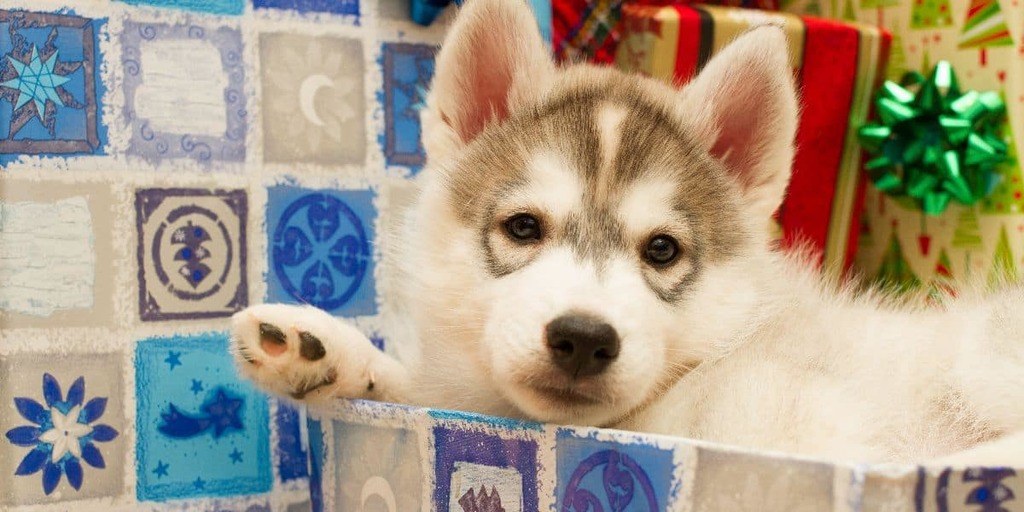
Siberian Husky with Christmas GiftPounds, animal shelters, and specialist Husky Rescue organizations are always looking for loving homes. Christmas is a great time to help out animals that would otherwise be left alone while the rest of us are home with family. Local rescue shelters might also let you take a dog home on a temporary basis to see how things work out. Many shelters actually require this before adoption.

Whilst the idea of handing back a ‘Christmas Present’ dog might seem an awful tease, it’s in the animal’s best interest. Plus it is a good test to see if your family can rally together to look after a potential new family member. If things work out well you can ask to adopt the animal outright.

Even if the intention all along was to simply foster a dog for a few weeks over the holidays, and hand back later, this gives your family a taste of what to come. You will also learn about the Husky breed and be in a better position to consider what you are looking for in a puppy. You can see how well your regular routines change, especially with respect to exercise.

Work out logistics

Are you going to surprise the family with a dog on Christmas day? It’s going to be hard to keep a puppy under wraps for the days and weeks leading up to Christmas. Do you have someone else who can help you out? This can be a double-edged sword: you might surprise the family, but that bonding between puppy and owner is going to be weaker if somebody else does it for you. Huskies are looking for a pack leader: how are you going to provide that model if you aren’t there to train and command him or her?

And don’t even think about hiding the puppy in the garage or back shed! Even small puppies need attention and exercise. Confining a puppy in a closed indoor environment is not a healthy way to start the puppy’s new life with your family. Suspicions also will arouse when your puppy is out back howling out of loneliness!

Food

Be sure to have appropriate food for the holidays. Human food from the table is definitely out, as are many other foodstuffs that are toxic to Siberian Huskies. With the rush of the holidays, you want to be organized in advance. Your breeder will recommend a menu to follow. Make sure you have enough food to get you through the days when shops (or online deliveries) are closed around Christmas and New Year. If you are curious about what would be the best food for your future Siberian Husky, you can find some information here – The Best dog food for Huskies

Bed, crate, and toys

Siberian Husky Puppy Underneath the Christmas Tree

Your Husky puppy will need a bed of course, in a not-so-cold environment. A crate for training is a good investment. Some toys for mental stimulation will be needed, plus you can wrap more up under the Christmas tree. You will need a leash so you can take your Husky outdoors and walk him/her.

These initial investments need not be expensive and you might find bargains at your local thrift store or simply buy it at Amazon.

Training

Puppies need training from birth to help them socialize and behave better. We recommend starting with Doggy Dan Training course which is very comprehensive, affordable, and most importantly it gets results.

And a few more things…

Registration or licensing with your local council, a vet check-up, and immunizations are all essential for young Husky puppies and should not be forgotten about.

Conclusion

If you are new to Huskies we recommend delaying the purchase or adoption of a puppy until after the Christmas season. However, don’t let that stop you from buying a present or two to put under the tree as a sign that you are committed to the idea.

If you really must have a Husky around Christmas you need to get organized early. Puppies are allocated from breeders around their birth so you don’t want to miss out. Try and avoid pet stores or opportunistic breeders who might be looking for a quick buck, and not operating in the animal’s best interest.

Also, consider fostering an animal in December to see how your family goes with it. Think of it as a trial run and should it work out, you can consider adopting the foster pet, or at least know more about the breed before you commit to raising a puppy.

Like all dogs, looking after a Siberian Husky is a rich and wonderful experience. Long after the toys are unwrapped, played with, and forgotten about, a dog will continue to be a part of your life. Take your time in working out what you want, and how to make it happen. It will make a big difference in the months and years ahead.

Marry Christmas!


Introduce-a-husky-puppy-to-a-cat

How to Introduce a Husky Puppy to Your Cat?

You got a new Siberian husky puppy and bring him home with his irrepressible temperament, and are worried about how a kitten or an adult cat will react to it? Or maybe you want to know how to make a kitten friend with a husky dog, that has been living in your house for a long time? Befriend animals with different psychology of behavior is not so easy as you think.

Siberian Huskies, despite being domesticated, still have a natural prey drive. They want to chase and capture smaller animals. However, with careful, disciplined training you might just be able to make your Husky get along with a cat at home. Here’s how…

1. Set realistic expectations

The training you will need to give your Husky is not going to be easy. It will require time, patience, and your watchful attention for many weeks, if not months. Despite this effort, you might not win. Some dogs can’t shake that prey drive even for family cats. You need to think about a Plan B, such as physically separating kittens from puppies full time. And although we hope it would never happen, Huskies can and do kill cats, should the two of them cross paths. It might not be a pleasant thought but you need to be mindful of the potential consequences of cohabitating a Siberian Husky with a cat.

2. General Tips

It isn’t all gloomy though. Here are some ideas of how to get off to a good start and give everyone a chance at living happily together:

  • Siberian Husky Puppy Surrounded By Kittens / CatsStart training early in the dog’s life. There are lots of training articles on Husky Puppies Info with general advice on what to do and how to do it. The earlier you start the easier it will be to form good habits in the dog’s mind.
  • Ensure you can physically separate the cat and the dog, each having resting, feeding, and pooping areas. In the beginning, only a short amount of time will be spent together so they need a space to feel comfortable in when not training.
  • Exercise your puppy first, before letting him or her spend time with your cat. Exercise can dampen the boisterous nature of puppies, who might be inclined to jump or trample over your cat.
  • Keep your Husky on a leash until you are absolutely, positively, 100% positive he/she will not attack or chase your cat. You probably already know it is risky to send your dog off-leash at the park, and the same applies indoors with smaller animals.
  • Give lots of positive feedback when your Husky “plays fair”. This is the key to helping your Husky understand the cat is part of your “pack” and not a foreigner.

3. Start by setting up your home

The introductions will require your Siberian Husky on the leash, and the cat free to come and go. Ensure the cat can escape to a safe place that he/she already frequents. If you have a small pet door, or a barrier (such as a child gate you jam in a hallway or stairwell) that the cat can squeeze through but not the dog, that’s great! Otherwise, just a room that can be closed off will do.

4. Introductions

It will help if you have a partner so that one of you can manage the Husky, and the other the cat. However, if you are on your own that’s ok, just try to encourage the cat to visit the Husky and have a sniff around.

Set the dog up so that he or she is in an area that the cat can approach without surprise – visibility for the cat is important. Whilst the dog is on the leash, encourage the cat to come up and say hello. It would be natural for the dog to get excited and that’s ok. The important thing is that you have control of the dog, and are willing to repeat this process many times until he exhibits calmer and restrained behavior.

The first encounter might only last a few seconds before the cat runs away. Don’t forget that cats are curious and are likely to come back for more.

5. Develop the relationship

Work your way up to 5-minute encounters, and then try for 6, 7, 8 minutes, and longer. Keep this up for a month until you can have substantial sessions together (such as 30 minutes) without any major problem. If your Husky jumps for the cat or displays other predatory behavior, issue feedback with a firm “no”. No need to punish the dog, rather issue praise and positive feedback when he shows restraint.

6. Monitor closely

At one point you will have the husky off-leash. Still, make sure you have the cat’s safe place open so they have somewhere to run to if frightened. Otherwise, keep close to your Husky and be prepared to grab the collar if he or she gets rough.

With a bit of luck, your cat and dog are starting to get along nicely! Of course, it might take many weeks or months of supervision to gain the confidence that they won’t hurt each other. It is quite ok to have the two separated every time you are out of the house, just in case something does happen.

7. Warning signs

Aggressive behavior by either animal is a sign that the relationship needs further work. Cats tend to wave their tail when anxious, take swipes with their paw, and stare intently at their foe. Huskies tend to get excited and move a lot, maybe try to pick the cat up in his/her jaw.

However, there is a fine line between play and fight. In this video the animals get along ok, despite the slightly aggressive behavior:

Conclusion

With patience and a bit of knowledge, you might just pull it off – introducing two natural foes to each other and have them get along. It’s not an easy process and given the choice, not one most Husky owners want to deal with. Just remember to take things slow and give lots of positive feedback to your Husky when he or she behaves nicely around your cat.

Husky-Pet-Insurance

Is Pet Insurance Worth It For A Puppy?

Although pet insurance might sound like an unfamiliar concept to you, it’s getting popular with every passing year. For example, the number of people that bought pet insurance in the UK increased from 2.8 to 3.8 million from 2013-2017, with about 2.1 million GBP being paid daily in insurance claims.

Rising vet bills in recent years have given popularity to insuring your pet. But before you jump in, there are some things you need to know to answer the main question: “Is insuring your husky puppy really worth it?”

Pet insurance basics

When shopping around for pet insurance you will come across some terms which are key to understanding and comparing insurance options:

  • Recurring cost – which is your cost-per-month for insurance. Most insurers will offer a yearly payment option that offers a discount over the monthly rate.
  • Deductible – known as the excess in some countries, this is the minimum amount in dollars that you contribute to a claim. If your deductible is $500 then you must pay the first $500 of a claim, regardless of whether your claim is for $550 or $5000, and regardless of the reimbursement rate.
  • Reimbursement – this is usually presented as a percentage such as 80% and represents how much of the total bill you will get back from the insurer. So if the reimbursement is 80%, and the cost of treatment is $10,000, you will get a check from your insurer for $8000 if the claim was approved. Note that there might be different rates for different treatments so be careful.
  • Maximum claim – You might be limited to a maximum amount (in dollars) claimable in the pet’s life, in a year, or even for a single accident or illness. You should look through the insurance policy fine print to find this information because it might not be presented upfront when shopping.
  • Exclusions – Again you need to look at the fine print. These are the services or treatments not covered by insurance. Hereditary conditions are commonly excluded.

Pet insurance price differences

Many factors influence price differences between insurers. These include:

Sick Siberian Husky Puppy

  • Differences in deductible and reimbursement rates. Often you can tweak these numbers to lower your monthly insurance cost, such as raising the deductible.
  • What services, treatments, and products are excluded.
  • The breed and age of the dog: older dogs tend to cost more for insurance, and some breeds are more prone to injury or health issues than others.
  • Your location.
  • The insurer itself: their reputation, their costs, who underwrite them, and many other factors that you have no control over. Simply put: some insurers cost more than others, even for the same policy.

Unfortunately, when comparing pet insurance it is very difficult to compare options. It might help to draw up a chart (or use a spreadsheet) when comparing potential insurers, taking note of what each policy is offering. If you can reduce the policy features to just the ones you are interested in it will make it easier to narrow the choice down.

What to look out for when choosing pet insurance?

If you buy pet insurance, you’ll have to pay a monthly fee. But in case your Husky gets sick, the insurance company will pay for its treatment according to its terms and conditions. But we wish it would be as simple as it sounds. 

Pet insurance Exclusions are probably should be your biggest concern, and this information is likely to be in very fine print and not well advertised. Some typical exclusions include:

  • Certain tests or diagnostics are not included.
  • Pre-existing health conditions that the animal had prior to taking out insurance, whether or not you knew of those conditions.
  • Hereditary issues with the breed. Common health problems with huskies such as hip dysplasia and eye issues may not be covered.
  • Dental work may be totally excluded.
  • Different treatments may have different rates of reimbursement, and even different deductibles.
  • After-hours and weekend emergency care may be excluded.
  • Choice of vet might also be an issue.
  • The amount paid for specific treatments. Some policies have a schedule of treatments and payout amounts, which might be substantially less than what your local and trusted vet might charge you.

Furthermore, when making a claim on pet insurance, almost all insurers will require you to pay your vet first, and you claim the money back from the insurer. It is of little use to take out an insurance policy if you can’t obtain funds in a hurry to pay a bill. It may take a number of weeks for your insurer to accept your claim.

With so many variances between insurance policies, how can you expect to make the best decision?

How to choose the right pet insurer?

As with any insurer, the primary consideration is will they pay out if I make a claim?

You can and should talk to other Siberian Husky owners in your local club, or talk to your vet, or even dog-owning friends and relatives, to find out if they have made a claim and how easy or difficult it was. Search the internet for reviews of insurance policies – just be aware that you tend to only read about the horror stories, not the many thousands of successful claims that happen each year.

Price is also a factor to consider and balance off between the deductible and reimbursement rates. What price you are comfortable with depends on your own personal financial situation.

However, if you have 5 policies in front of you and 1 is abnormally cheaper than the others, you might want to try and figure out why. It could be some key features are missing. Similarly, if a policy is unusually expensive it could be there are features you may never need such as pregnancy care for a female pet.

Alternatives to pet insurance

If insurance seems expensive, and it can be especially if you have multiple pets, there are some alternatives you might want to consider:

Savings FundSick Siberian Husky puppy with collar

For some, the cost of pet insurance is too much, and they prefer to keep a savings fund for that ‘rainy day’. This can often work out cheaper than insurance. If your husky is kept in a secure yard all day, and when out is restrained and not let off-leash, then the chances of him or her being involved in an accident are quite low.

Furthermore, if you did your homework when selecting your puppy from a reputable breeder, who gave assurances as to the health of the animal, there is a good chance you will never incur any significant vet bill for the life of the dog.

There are two big problems with savings accounts that you need to be aware of:

  1. It starts at $0. If your pet develops a problem early in life then the savings account is unlikely to cover all the bills. A pet insurance policy is likely to have a very short or no waiting period.
  2. You have to be disciplined to keep topping it up, each and every week. If you forget, or can’t afford to keep depositing, then the fund may not be there when you most need it.

If you are already a disciplined saver then this option might work out for you.

Other fund types

There are lower insurance levels that cover injuries but not conditions, however as we just mentioned the chance of injury might be very low for your husky. Sometimes these policies are offered almost like a guilt trap if you can’t afford the full-priced policy, and offer little benefit to your dog.

Cheaper services

There might be lower-cost vet clinics in your area, possibly not-for-profit and/or tied to rescue organizations. Universities can also be looked into – some offer services cheaper in return for providing training for students (under supervision of course!).

Euthanasia

It might not be a popular option but it is one we need to mention. For some it might just make more sense to put your pet down instead of paying expensive vet bills, only to have the animal continue to live in discomfort.

Conclusion

Pet insurance is a booming industry – and is it any wonder with vet bills running into $100s or $1000s for a single incident? When shopping around take note of the deductible, the reimbursement, and especially the exclusions in the fine print that will affect your claim. So is it worth purchasing pet insurance for a husky puppy?

  • If you can afford the monthly fees and have spare cash to pay the vet bills right away, and your husky might have some health issues, AND your insurer will pay out for these issues, then YES! Insurance could save you money.
  • In all other cases, we suggest NO! You are better off saving money and accepting the risk. The general health of the Siberian Husky population is getting very good and if you take care of your pet, there is no reason he or she can’t live a long and happy life. You can always take out insurance later in life if your husky seems accident-prone, and spend the first few months saving for a rainy day.


Husky-Puppy-Mill

How To Identify A Husky Puppy Mill

With the tremendous rise in Siberian Husky registrations (AKC quote Huskies as the 14th most popular breed in 2013, and still rising) comes a wave of interest in the breed, and a desire to own one. Unfortunately that also means unscrupulous breeders are profiteering from this popularity, operating puppy mills to maximize profit rather than improve the breed. Here we look at puppy mills, and how to identify one, so you can avoid supporting such businesses.

What is a puppy mill?

A puppy mill, or puppy farm, is a breeder that aims to profit from the breeding of dogs, rather than improve the breed. Typically they minimize costs and cut corners on animal welfare to maximise their profit. Animals are sometimes bred frequently and recklessly. The term backyard breeder means much the same thing, and might refer to an individual operating on the same principles.

The ASPCA quotes there could be as many as 10,000 puppy mills in the USA alone. Note that some of them are licensed breeders – but are still in it for the money, not the love.

Why you should avoid puppy mills?

When the primary goal of the puppy mill operator is to make money, corners are cut such as:

  • Breeding a female too frequently.
  • Not taking care to match dogs suitable for breeding, based on temperament or genetic traits that cause health issues.
  • Supplying minimal accommodation to the dogs that might not be particularly sanitary.
  • Not getting dogs checked out by vets (which cost money, of course), and not getting the proper vaccinations.

Warning signs

Although there is no single warning sign that indicates you are about to purchase a Husky through a puppy farm, some or a combination of these factors might come in to play:

Siberian Husky puppy with different colored eyes

  • A large number of dogs on site; 30 or more is a warning sign.
  • The breeder has different breeds for sale; Huskies and something else. Genuine breeders tend to specialize in one breed.
  • The parents of the puppies are not on site, or not able to be presented.
  • The breeder advertises heavily in newspapers and other classifieds. Advertising increases around holiday times such as Christmas.
  • The breeder is willing to let puppies go before 8 weeks, and perhaps before vaccinations have been administered.
  • The breeder is known to supply pet shops.
  • There appears to be a constant supply of puppies from this breeder, all year round.
  • The breeder will bring the puppy to you in another location, and/or avoid showing you around his property.
  • The property is not sanitary, or dogs are kept in confined cages.

Finally the biggest warning sign: the breeder does not ask you questions about your environment, lifestyle, reason for a buying puppy or the breeder tries to let you take the puppy home right away. Responsible breeders do not let their puppies go “nobodies”. They try to match puppies with suitable and similarly responsible homes.

Questions to ask to identify puppy mills

A lot of the above issues can be questioned over the phone. If not directly, then indirectly with questions such as:

  • We might not be ready now, when do you expect the next litter of puppies to become available?
    Many breeders do not plan ahead until the current litter is all taken care of.
  • We are not sure what dog food we should be buying. What do you feed the puppies?
    To keep costs down, puppy mills feed the cheapest dog food available.
  • Are the puppies vaccinated and checked out by a vet?
    If the answer is ‘no’, be very suspicious.
  • Is there any guarantee on the health of the puppy?
    Responsible breeders always provide a guarantee that the puppy is healthy, and will detail any potential long term health issues.

A word about pet shops

Pet sExercising a Siberian Husky with toys and playtimehops are notorious ‘front ends’ to puppy mills. We recommend going directly to the breeder rather than paying a premium to the retailer and encourage the practice. You can locate breeders in our breeder directory, and also the SHCA Referral Directory. In either case, there is no guarantee you are dealing with somebody responsible so keep your eyes and ears open for suspicious behavior!

What you can do to avoid puppy mills?

Ask a lot of questions, and if you are unsure, be prepared to walk away. We know puppies are irresistible, and Siberian Husky puppies are frighteningly cute, but you have to be strong enough to walk away and not support this terrible industry.

If you suspect you have spotted a puppy mill you can report it. The Humane Society provides advice on what steps to take.

By keeping your ears and eyes open for certain behaviors of a puppy mill operator, you can avoid them and instead buy your Husky puppy from a genuine, responsible breeder. Even better you can consider adopting a Husky instead – perhaps from a rescue shelter. We also have some tips on adoption and what to expect.

Exercising-a-Siberian-Husky

Exercising A Siberian Husky Puppy

Siberian Husky puppies desire a lot of attention to prevent boredom. Exercising them is a great way to help them stay entertained, not to mention grow up healthy, but how much exercise should they get? Here are our top five tips on exercising your Husky puppy.

1. Exercise every day

It is really important that Huskies, particularly younger ones, exercise every day. This is a form of training where you teach your puppy healthy habits, discipline, and encourage socialization. Doing it every day keeps the routine up: if you miss a day you will ‘feel’ it and not lapse into more than a day of inactivity. Your puppy will love you for it as well. Exercise helps build their strength and endurance – characteristics that Siberian Huskies are bred for.

2. Go slow for the first year

Your Husky grows rapidly during its first few months, reaching adult size after about a year. The joints, ligaments, and muscle mass of your puppy need time to develop, so don’t overdo it early on. If you push too hard, especially with repetitive-motion activities such as walking and running, you might put too much stress on the puppy’s ligaments which can lead to soreness, tiredness, and inflammation.

3. The 5-minute-month rule for walking

Walking is a great exercise activity: it is free, easy, and good for both your puppy and yourself! We recommend the ‘5-minute-month’ rule:

Walk your puppy each day, increasing 5 minutes each month.

For example, if your puppy is three months old, walk him or her for up to 15 minutes every day. If your puppy is six months old, walk up to 30 minutes every day. If you follow this simple formula you will build up the necessary walking exercise gradually and in sync with your puppy’s natural growth over the first year.

After your puppy reaches his or her first birthday, you will be up to an hour of walking each day and can stay at this level. You might also graduate to jogging or running, or go for longer sessions, but only if your dog is used to walking and ready for the extra effort.

Exercising a Siberian Husky with toys and playtime4. Any time is playtime

15 minutes for a puppy does not sound like much, and it isn’t. However, you can take on other exercises in the form of playing games. Simply ‘playing ball’ with your puppy will mix up the physical movements: starting, sprinting, slowing, stopping, turning, etc. You can easily squeeze a few minutes in here and there of play to fill out the day and tackle boredom. Check out my Five Play Time Ideas for Husky puppies, to help fight the boredom of your dog. 

5. Stay cool

You know already that all dogs need clean drinking water available at all times to stay hydrated. The coat of the Siberian Husky might be dense but this also acts as an insulator in warmer weather, helping to regulate body temperature. So although the Husky might have originated in arctic climates, they should do fine in warm weather. Just make sure water is on hand, and if your Husky shows any signs of tiredness, take it easy. If you live in a hot environment you might want to consider walking your puppy in the morning before the heat builds up, and makes everyone just want to laze back and go to sleep.

If you start slow and build up exercise over the first year of life, mix in lots of play, and remember to keep your puppy hydrated, you will give your puppy a great start to a long healthy life. Just as important, you will get some exercise out of the deal as well!

Free-Huskies-A-Warning

Free Husky Puppies – A Warning

Sounds too good to be true? You are after a Siberian Husky puppy and see an advertisement in the local paper or online classifieds giving them away for free or a nominal charge. What could the catch be? Read on…

There is no catch

First, and we hope probably, there is no catch. Puppies of all breeds are adopted out all over the country for little or no charge. Owners change lifestyle, can not afford to keep the pet, or move. Rescue organizations pick up animals and are looking for homes. Check out our advice on adopting a Husky for what you should be looking for.

An unwanted offspring

Cross-breeding can create wonderful new and ideal variations on a breed, but only by experienced breeders who understand the genetics and health issues, they are trying to encourage or suppress.

Three Siberian Husky PuppiesMany thousands, if not hundreds of thousands of dogs and cats each year are born to owners unable to care for them. Often this is a result of a lack of birth control through spaying and neutering. You can read more about this problem at the Peta website.

While not a reason itself to avoid taking on board an unwanted pet, you should be aware of potential false claims being made about the bloodline of the pet or its ancestry. This is particularly true if the person giving the animal away does not show signs of being a competent breeder. You should avoid taking pets from unscrupulous breeders who might be encouraged to continue the practice if you do.

Health Issues

You must always get a dog checked out by somebody trained to identify current and potential health issues in Siberian Huskies. Your local vet is your friend when it comes to assessing the health of a dog. Anyone trying to offload a puppy for free who refuses to let your vet check out the dog is likely to be hiding something, so beware!

Socialization issues

It can be difficult to assess how social a puppy is, but there are some clues. If the puppy is “scared to death” of strangers that isn’t a good sign. Conversely, if the puppy is aggressive towards you (or your shoes!) that can indicate some mishandling or lack of supervision on the owner’s side. Again, neither is necessarily a bad thing if you have the patience and dedication to train the puppy. If you like to know more about husky training, check out our articles to learn more on how to manage your husky in your home – Husky Training.

Those new to the Siberian Husky breed, however, are likely to find it a better option to go with a well-socialized puppy that is inquisitive, playful, and has a temperament likely to match the owner’s lifestyle.

Still looking for a cheap or free Siberian Husky puppy?

Why not try rescuing one? There are Siberian Husky rescue organizations in many US states and countries across the globe. They are committed to matching the puppy to the right home and you can trust they are not simply offloading problems on to somebody else. A small fee might be involved which covers the survival of the organization, and maybe some basic health checks, vaccinations, flea treatments, etc.

Free or cheap Huskies advertised in the paper or online should be treated with caution, just as you would be careful in selecting a puppy from a breeder. Try not to be dazzled by the cheap price: in the long run, with pet food and vet bills for the life of the dog, any savings upfront are going to be relatively insignificant. Ask a lot of questions, take your time, and get some assistance from your vet. With this advice, you should be able to find a Siberian Husky puppy that matches your lifestyle and is going to be a healthy, happy friend for a long time.