Tag Archives for " husky "

Tips-for-adopting-a-siberian-husky

Adopting A Siberian Husky

As an alternative to buying a Siberian Husky puppy from a breeder you might want to consider adopting one from another owner, animal shelter or rescue operation. Each year millions (yes millions! according to the Humane Society) of dogs and cats are housed in shelters each year. You help to reduce this number when you adopt a Husky in need of a new home, but there are things you need to know first…

Why dogs are adopted out?

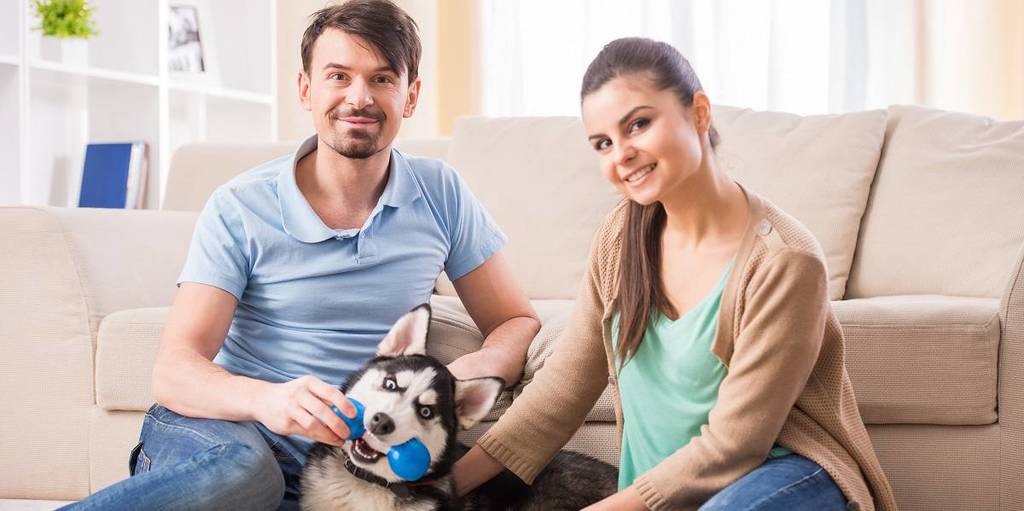
There are a number of reaSiberian Husky puppy chewing on a toysons why animals are in need of a new home, some of which include:

  • Pets lost and not claimed
  • Owners who can no longer care for the pet by way of lifestyle change: moving location, family growth or split, etc
  • Owners who are unable to afford to keep the pet
  • And unfortunately, some pets are neglected and forcibly taken away from their owners

Keep an open mind when researching available adoptions. If a pet was abandoned it doesn’t necessarily mean that the animal is unhealthy or troublesome. Focus on the positive of trying to help an animal in need!

Availability

You can probably imagine that choice might be limited if you are looking to adopt a Siberian Husky. There simply might not be any of the breeds in need of rescue in your area. When you do find one, it might have been cross-bred and not look or behave exactly like the breed standard. Just like finding a puppy through a breeder, patience is the key.

Furthermore, the age of the dog will vary. You might find a puppy, a growing dog, or an older dog. This can be a good thing! Perhaps you are new to the breed and would like an older dog that has already undergone some training? Then adoption could be a convenient alternative to raising and training a puppy.

Health issues

Pretty much all rescue agencies and animal shelters will already have had the dog checked out for you. Vaccinations, de-worming, flea treatments, and de-sexing (neutering / spading) are likely to be part of the service. You can always get your own vet to check the animal out before committing.

Of course, some Siberians have been let go because of health issues, and these are likely to be identified to you when being introduced to a potential adoption animal. No particular health issue should stop you from adopting a Husky, but you might want to consider present and future costs if surgery is required. Again, your vet can help advise you on such issues.

Training issues

Siberian Huskies can be difficult to train at the best of times. If you are adopting a Husky puppy then you will have more control over training than if adopting a dog already trained (or not, or poorly trained, as the case may be). This shouldn’t stop you from adoption, but you do need to be aware that re-training an older Siberian with bad habits will require attention. But this is not that much different from training Husky puppies! Either way, your persistence will be rewarded with a well-behaved dog.

Where to adopt?

Firstly check your local animal welfare organizations, animal pounds, council rescues, etc. These are the places that sometimes struggle to adopt out animals and need your help. We have started putting together a list of Siberian Husky Rescue Organizations to help find one in your area.

Ask your local dog clubs, particularly Siberian Husky dog clubs, who will be able to recommend places to check out. Some dog clubs even run their own rescue service, helping to place Siberians into new homes.

One month old Siberian Husky PuppySiberian Husky breeders should also be able to give you some advice on where to visit. Some breeders might also give away pets if they are struggling to find homes for a litter.

Finally, you can ask your vet for advice. They will have contact with local shelters and be able to give specific advice on what you should be looking for.

How much does it cost to adopt the dog?

Whilst some private owners might be willing to part with their dogs at no charge, organizations such as clubs, shelters, and rescue agencies are likely to charge a fee of between $50 and $200. This is to cover health checks, vaccinations, the de-sexing of the animal, microchipping, and of course help the organization’s survival. The fees charged are very reasonable for the service they give to your community.

Trial adoption agreement

Many times you will be able to take your adopted Siberian Husky home on a trail basis. In fact, some organizations require it, to ensure the animal is placed in the right home. The trial might last for a month and during this period you will be visited to see how well the animal is doing. We want to see if the Husky is warming up to your family and lifestyle, and a good “fit” is made. Sometimes matches don’t work out, or the trial extended. Keep in mind the agency is doing this for both your benefit, and the animal’s. If the animal is taken back it doesn’t mean you “failed”, it just means the match wasn’t a good one this time, but you can try again with another dog.


So there you go. We covered many issues to keep in mind when searching for a Husky to adopt, or as an alternative to purchasing a new Husky puppy.  Be patient with your search, spread yourself out to make contact with lots of organisations, and consider a trial placement once you think you have found your new family pet. By taking time at the start you will find an appropriate Husky for your lifestyle and share a great life together!

Alaskan-Malmute

Siberian Husky vs Alaskan Malamute: Similarities and Differences

Siberian Huskies and Alaskan Malamutes; both look similar, and as their names suggest, originate from colder northern areas, but how similar or different are they? Read on…

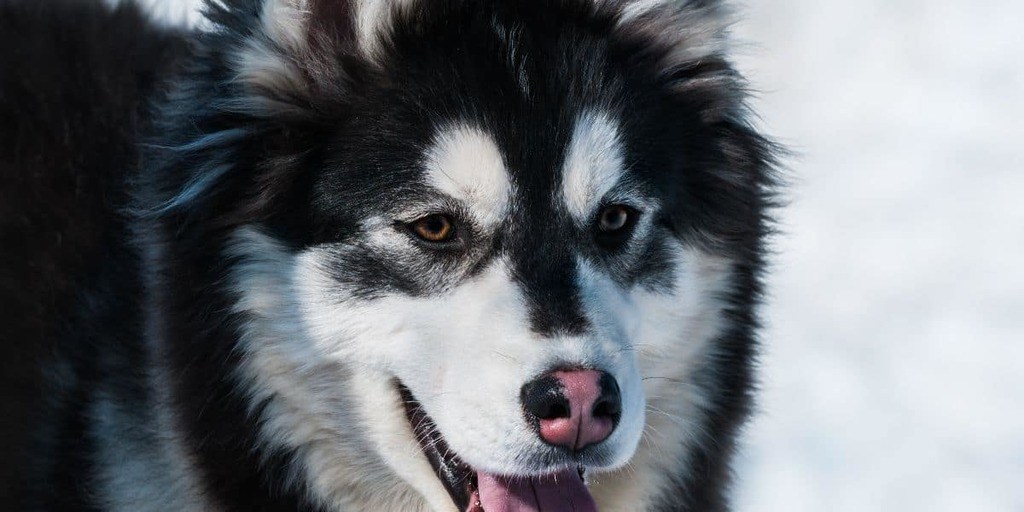
Alaskan Malamute, 2 years old

Alaskan Malamute

The fundamental difference between Huskies and Malamutes are their size. Malamutes are true sled-pulling dogs, built larger, with more muscle mass, and bred for pulling heavier loads over long distances. Huskies, on the other hand, are a medium sized dog that are better at pulling lighter loads over shorter distances. The AKC breed standard for Alaskan Malamute puts males at around 85 pounds in weight and females at 75 pounds. In contrast the Siberian Husky standard puts males between 45 and 60 pounds, females 35-50 pounds, and a couple of inches shorter. For more information on how large a Husky can grow check out our previous research on this topic.

For this difference in size and function you would expect Huskies to be a little more energetic, and Malamutes a little more laid back.

Siberian Husky

Siberian Husky

In other physical characteristics both have similarly colored and similarly patterned coats; thick to repel snow and ice. Malamutes will tend to have brown eyes but Huskies might have brown, blue, or a mixture of both. The Malamute tail is going to curl more and the Husky is straight, but both can be bushy in nature to help them curl up and keep their faces warm in the cold snow at night.

Both the Husky and the Malamute are born to run and be outdoors. They are both “pack” animals meaning they need firm direction. As an owner you will need to be the “alpha dog” and command them through solid training from an early age, or they might run amuck.

Also in similarities is their loveable nature. Neither will make a good guard dog (unless the intruder is afraid of being licked to death). Neither will bark so much as howl, whine, or moan to attract attention. Groomed appropriately both can be very attractive and pretty.

So if you are considering adopting or acquiring a Siberian Husky or Alaskan Malamute, you now know how to tell them apart and their differences. Malamute puppies will grow in to a larger, stronger dog, built for pulling heavier loads over long distances. Husky puppies will grow in to a medium sized dog, less bulk, and more energetic over shorter distances. Whichever breed you choose both are loveable dogs who will test your training skills!

Red-Siberian-Husky

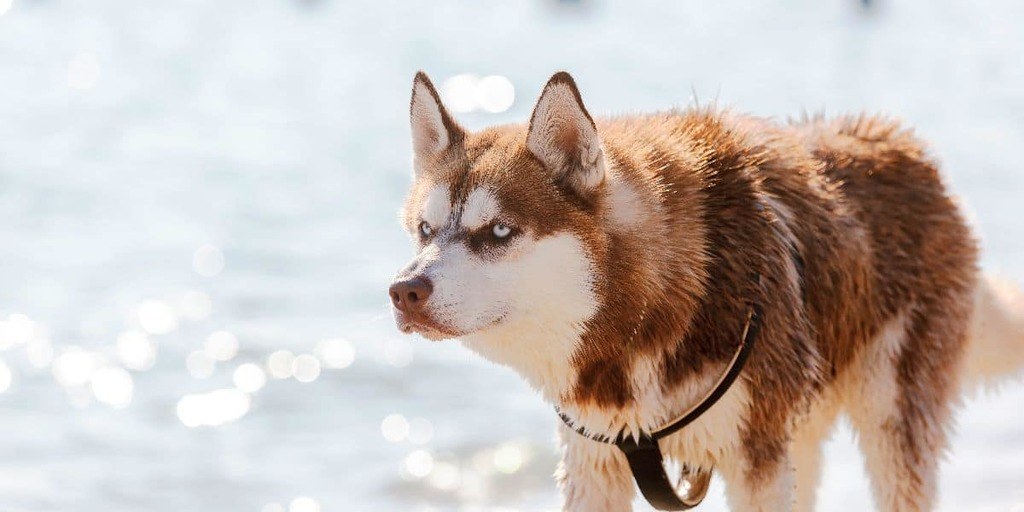
Red Siberian Huskies

Red Huskies

Siberian Huskies come in a variety of colors, from black/grey and white, to red and white, to pure white. Whilst the darker colors are more common, red Huskies are increasing in popularity. Here is the lowdown on the red coloring and what it means if you are considering adopting a Husky puppy.

4 month old red Siberian Husky puppyFirstly there is not one definitive red color out there. You will find that ‘red’ covers everything from a lighter orange color to a darker chocolate color. In puppies the color that the coat will end up as might not be apparent. However, like many dogs, you can look at the color around the ears to get an idea of how dark the coat will get in an adult dog.

The red color itself is the result of a recessive gene passed through generations of Huskies. Whilst the black coloring is caused by a dominant gene, and hence more common, parents may be carrying the “red gene” and pass it on to their pups. If at least one of the parents is carrying this gene then the pups produced may be colored red, even if both parents are black.

It is important to note that color is not considered in the AKC standard for Siberian Husky coats. The AKC standard recognizes all coat colors from black to red to pure white. Color is of least importance when judging Huskies at dog shows. For these reasons, responsible Siberian Husky breeders will not breed for a particular color and rather breed to eliminate health issues such as eye and hip problems. Any breeder that breeds to encourage a red color should be avoided.

So if you are searching for a Husky puppy, or simply observing Huskies in clubs and at shows, the red coloring can be quite striking. But in the bigger scheme of things the coat color is not as important as a healthy dog resistant to longer term health issues.

For a more technical description of the genetics involved, you can read about it in Todd Wood’s article.

Husky-Potty-Training

Housebreaking A Husky Puppy

If you would like to keep your Siberian Husky puppy indoors at times, then housebreaking is an early and essential training activity to perform. Whether you call it housebreaking, toilet training, or potty training, all Husky puppies can be trained to do their business outside, and not all over your nice clean floors.

When to start potty training husky puppy?

You are probably going to start housebreaking your Husky puppy at around 8 weeks old (2 months old). It is about this time that puppies develop muscle behavior to control themselves. Attempting to train younger puppies could prove futile. This will be amongst the first formal training you will do with your puppy and if you can get this right, you will earn his or her trust for future training.

Find a spot

Head outside and find a spot in the garden where you would prefer your dog to do its business. Your puppy will prefer to return to a spot that it has already ‘marked’. Make sure it’s out of the way of human foot traffic so that you don’t start stepping in things you don’t want to!

Have realistic expectations

Housebreaking can take a little time. You should hopefully start seeing results after a couple of weeks, but if not do not give up! Siberian Huskies are independent dogs and can be a little stubborn to train.

Once the routine is setting in there is likely to be occasional accidents for a little while longer. You need to be patient.

Also be aware that puppies are growing in their first few months – which means lots of food going in, and a lot has to come out!

Crate Training

A Siberian Husky Puppy on the grass outdoorsA dog crate is a closed container (typically plastic) that the dog can be confined to. Think ‘cage’ but use the more politically correct term ‘crate’. Don’t worry, crate training is recognized by the Human Society as an effective aid to housebreaking a pet.

The crate will be used as a training device for short periods of time. It is most definitely not a jail used to punish your puppy! The purpose of the crate is to confine your dog when you can not keep an eye on it, such as doing a chore around the house or ducking out for an errand. Because of the likelihood of the dog resting or sleeping in the crate, they are unlikely to do their business in there. If you let your puppy roam the house they could make their ‘deposits’ anywhere they feel like it.

Obviously you need to get a crate large enough for your puppy to fit in to, with room to grow. For a Siberian Husky that might mean going for an extra-large sized crate. You also might want to floor the crate with newspaper or absorbent material to aid in any little mistakes. A small amount of water and a toy could help comfort your pet. Huskies might be used to the cold but if you have a spot in the house that isn’t too drafty that would be ideal. They prefer a relatively warm and still place to rest.

Initially, you might only keep your puppy in the crate for 30 minutes. Over time, say from 8 weeks to 18 weeks of age, you can build up the maximum confinement from 30 minutes to 5 hours. That is approximately an extra 30 minutes each week.

After opening the crate, put a leash on your puppy and take him or her out to ‘their spot’ in the garden. They might not need to use it but they will learn the routine of restraining themselves while indoor and relieving outdoors. If you would like to know more read our full article on How to Crate Train A Siberian Husky Puppy.

Positive feedback only

If you see your puppy begin positioning itself to do its business, a firm ‘NO!’ will grab the dog’s attention. You can pick your puppy up and move him to the spot outdoors to complete the job.

After your puppy does its business be sure to give strong positive feedback – ‘good dog!’ with scratches behind the ear and cuddles. This should be done immediately (within seconds) so that the encouragement is linked to the behavior.

Avoid negative feedback – the added attention will confuse the dog. If a mistake is made, never push your dog’s face into a ‘mistake’ made indoors. The puppy doesn’t know any better while it is learning. Just take your dog outdoors to remind him or her of their place, and in your own time quietly clean up the mess indoors. You can check a more detailed explanation on positive feedback right here – Feedback When Training Husky Puppy

Watch the schedule

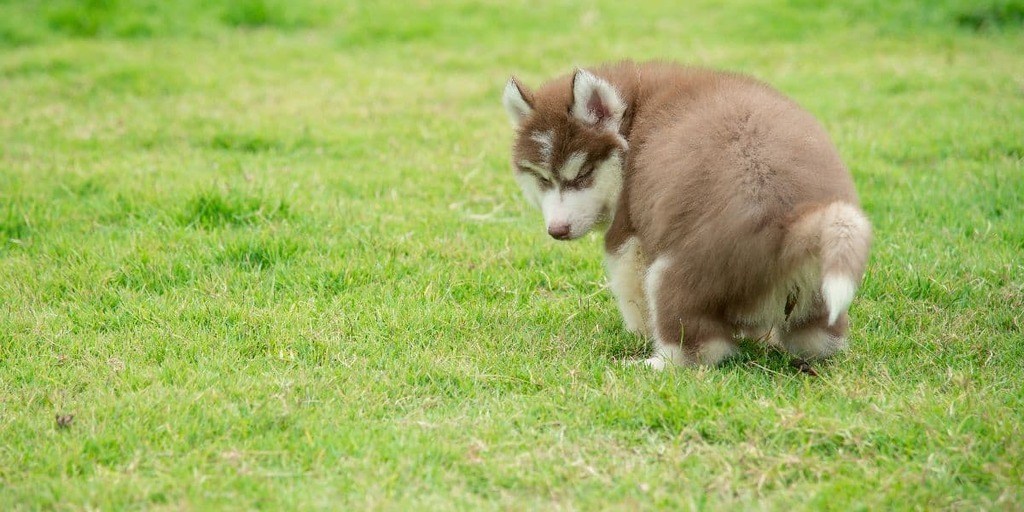
Cute husky puppy outdoors on the grass

You will probably notice that your puppy likes to relieve him/herself when it wakes up, after meals, and perhaps after exercise. You can aid in the training by taking the puppy out to its spot after these times to encourage routine behavior.

If your puppy shows signs he/she wants to head outside, that’s great! They are learning. So take them out, let them do their thing, and again lots of positive encouragement. You might need to do a few trips out at night but rest assured, as the puppy grows larger and behaviors are learned, they will be able to restrain themselves for longer periods of time.


That’s pretty much all there is to it! Start at around 8 weeks, and use a crate for 30 minutes at a time, adding 30 minutes each week up to 5 hours. Give lots of positive feedback, no negative feedback, and most of all, be patient. The effort you put in now will pay off for the life of your Siberian Husky puppy.

Still need more help?  Check out Doggy Dan’s online training course. We found it is very easy to implement and perfectly suitable for our huskies. They currently offer a variety of options, starting from 1$ trial for 3 days and also a yearly subscription for nearly 190$. Here’s one of his training video to give you more ideas of how to effectively potty train a puppy: