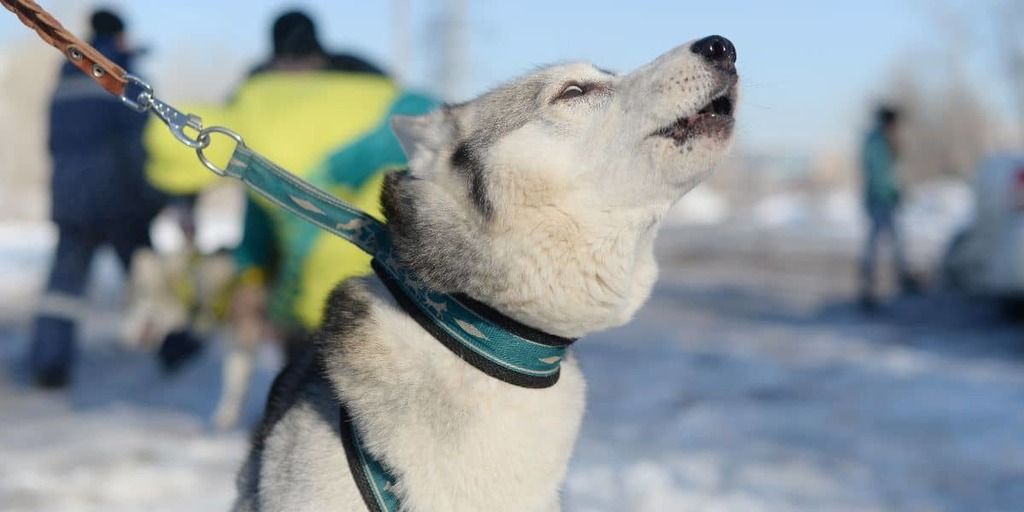
Husky Puppy Howling & Barking
Having trouble keeping a lid on your noisy Husky? Your puppy won’t stop crying? Here are our top tips for controlling the situation and giving you (and your neighbors) some peace.
Try to Figure Out the Cause
When your dog barks, howls, cries, or whimpers he or she is trying to communicate. Your first job should be to try and figure out the cause so that you know what to fix.
 Although unlikely, your Husky might be injured or have a medical issue and crying out for help. That’s likely to result in whimpering at all times (not just at night) and whether you are around or not. If that’s the case you should, of course, get things checked out as soon as possible.
If, on the other hand, your Husky barks when you or other people are around, could this be a sign that they want something? Probably attention.
Huskies are social dogs that settle better in packs. Left on their own they might get bored and exhibit destructive behaviors. This includes being left alone at night, so you might want to think about bringing the dog inside and closer to others (see Crate Training below).
Another possibility is that something has your Husky’s attention. A squirrel or possum running across the fence? A neighbor’s cat? If your Husky barks and continues to do so when you are present, see if he/she is pointing you to what they are barking at.
Issue a “Quiet” command
Just as you teach your dog other commands, a “quiet” command might work. This would be part of the regular training of your puppy (which I talked about right here) and require lots of feedback and patience.
You want to issue the command and wait for your dog to quieten down before a reward such as a small treat, praise, and pats. Regardless of the other methods on this page teaching your puppy a command to quieten down can not possibly be a bad thing, even if it doesn’t solve the problem this time.
More Exercise
To try and tackle boredom, especially if you aren’t around during the day, you should consider giving your Siberian Husky more exercise. Exercise and training start at an early age and are required for the life of a Husky. Go for brisk walks or runs morning and night and see if this changes the barking behavior. If the barking subsides, then you have found the cause and can do something about it.
Introduce a Companion
It might not always be possible but if you believe your Husky does suffer from separation anxiety, another canine companion (particularly another Husky) might be the answer. Huskies tend to get along and keep each other entertained.
You can contact your local Husky rescue organization and see if any animals need a temporary home. This will let you test the theory before taking on board another pet full time. Just make sure they are all spayed and neutered if you are mixing the genders! There is a list of Husky Rescue Organizations, we collected, as well as some tips on how to adopt a husky.
Best Howl & Bark Control Products For Huskies
As mentioned above there are several ways to stop husky puppy howling and barking.
The first approach should always be using training methods and for that, we recommend taking the time to learn more about barking in general so you can have an idea as to why a Siberian husky is barking or howling. To do this in the chart below we recommend a book titled “Barking: The Sound of a Language (Dogwise Training Manual)” which specifically focuses on barking. This book will give you a much deeper understanding of how your Siberian Husky communicates and will help guide you in the direction needed to manage the issue.
Secondly, you could try a device that uses an ultrasonic bark deterrent to keep your dog’s howl under control.
And finally, the third method which is closest to a shock collar is using a vibrating collar. A vibrating collar is a bit more humane than using an electric shock that your puppy won’t enjoy much.
Crate training
This is one of the most effective strategies at reducing howling and barking in any dog, not just Huskies. You can place a crate (a box to enclose an animal) inside your home closer to you, but still, keep your Husky contained so he doesn’t run amuck around the house.
Go for a large metal framed crate, even if it seems too big for your puppy because you will want to keep using this throughout the life of your Husky. Ensure the dog can get up, spin around, and lay down again. A blanket can help soften the environment and add warmth. A water bottle attached to the side is handy.
Please remember that the crate is not punishment. It is not a jail! It is a device, when combined with positive feedback, can help improve the behavior of your dog.
We highly recommend checking out this YouTube video to see how it can be done.
Other ideas
Still, struggling to control your Husky’s howling and barking?
- You could try your local dog club, whether Huskies or a general one, and see what other people have tried.
- You can add another toy such as a KONG
 to keep your puppy busy.
- Finally, you could try a training collar for your dog. My preference, if you choose to go this route, would be this Dog Training Collar – Rechargeable. It has a beeping and vibration setting, but also an electric shock, which I don’t recommend using in any case. But mostly, the beeping is enough to warn your husky and if she keeps on, you can use the vibration. I tried it personally and I have never gone further than the vibration setting.
Conclusion
If your Siberian husky puppy’s howling and barking are terrorizing your family and neighbors, don’t despair!
– First, check that your dog is healthy and not suffering from injury or illness. Work on teaching your dog to respond to a “quiet” command.
– Try more exercise or another companion and see if that helps.
– Crate training is also a great method for curbing antisocial behavior in dogs. You can also try devices such as the ultrasonic method, or vibrating collar.
There are lots of options out there and although it might take time and patience, you will be rewarded with persistence in training and feedback.
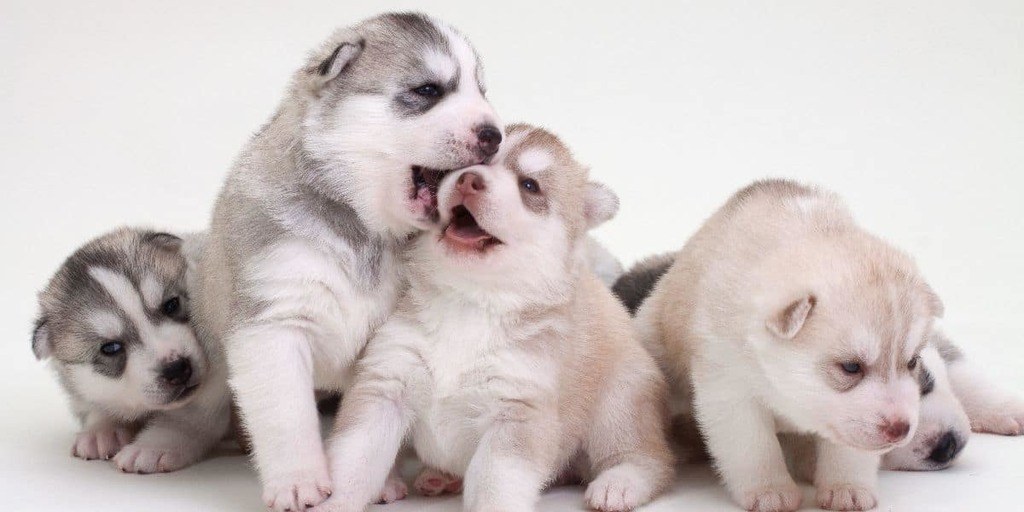
Sounds too good to be true? You are after a Siberian Husky puppy and see an advertisement in the local paper or online classifieds giving them away for free or a nominal charge. What could the catch be? Read on…
There is no catch
First, and we hope probably, there is no catch. Puppies of all breeds are adopted out all over the country for little or no charge. Owners change lifestyle, can not afford to keep the pet, or move. Rescue organizations pick up animals and are looking for homes. Check out our advice on adopting a Husky for what you should be looking for.
An unwanted offspring
Cross-breeding can create wonderful new and ideal variations on a breed, but only by experienced breeders who understand the genetics and health issues, they are trying to encourage or suppress.
 Many thousands, if not hundreds of thousands of dogs and cats each year are born to owners unable to care for them. Often this is a result of a lack of birth control through spaying and neutering. You can read more about this problem at the Peta website.
While not a reason itself to avoid taking on board an unwanted pet, you should be aware of potential false claims being made about the bloodline of the pet or its ancestry. This is particularly true if the person giving the animal away does not show signs of being a competent breeder. You should avoid taking pets from unscrupulous breeders who might be encouraged to continue the practice if you do.
Health Issues
You must always get a dog checked out by somebody trained to identify current and potential health issues in Siberian Huskies. Your local vet is your friend when it comes to assessing the health of a dog. Anyone trying to offload a puppy for free who refuses to let your vet check out the dog is likely to be hiding something, so beware!
Socialization issues
It can be difficult to assess how social a puppy is, but there are some clues. If the puppy is “scared to death” of strangers that isn’t a good sign. Conversely, if the puppy is aggressive towards you (or your shoes!) that can indicate some mishandling or lack of supervision on the owner’s side. Again, neither is necessarily a bad thing if you have the patience and dedication to train the puppy. If you like to know more about husky training, check out our articles to learn more on how to manage your husky in your home – Husky Training.
Those new to the Siberian Husky breed, however, are likely to find it a better option to go with a well-socialized puppy that is inquisitive, playful, and has a temperament likely to match the owner’s lifestyle.
Still looking for a cheap or free Siberian Husky puppy?
Why not try rescuing one? There are Siberian Husky rescue organizations in many US states and countries across the globe. They are committed to matching the puppy to the right home and you can trust they are not simply offloading problems on to somebody else. A small fee might be involved which covers the survival of the organization, and maybe some basic health checks, vaccinations, flea treatments, etc.
Free or cheap Huskies advertised in the paper or online should be treated with caution, just as you would be careful in selecting a puppy from a breeder. Try not to be dazzled by the cheap price: in the long run, with pet food and vet bills for the life of the dog, any savings upfront are going to be relatively insignificant. Ask a lot of questions, take your time, and get some assistance from your vet. With this advice, you should be able to find a Siberian Husky puppy that matches your lifestyle and is going to be a healthy, happy friend for a long time.