Tag Archives for " origin "

Huskies-in-hot-climate

How to Care for Huskies in Hot and Tropical Climate?

Although the Siberian Husky's origin is in the incredibly cold, icy environment of Siberia, they can and do live in warmer environments. Whether it be a tropical environment such as Singapore and the Philippines, or a dry heat such as outback Australia, a Siberian Husky can live a long and happy life.

There are a few things you first need to know before raising a Husky in such an area to maintain the health of your dog:

1. Keep the coat

Whatever you do, keep the Husky's coat and do not shave them! The hairy coat, although thick, actually insulates the animal from direct heat. If you remove it, your dog will not be able to regulate its own temperature and become very sensitive to the warmth of the sun.

Siberian husmy on the boat in Dubai, wearing red lifejacket

Siberian Husky in Dubai

2. Regular brushing

Regular brushing of the coat will evenly distribute oil secreted by the skin, along the length of the coat, which will remove dust and dirt and also clear away dead and stray hairs. This will ensure effective circulation of the air in the skin, which will keep your puppy happy and not overheat. In a lot of cases, an increase in body temperature is the result of poor hygiene, matted, and dirty hair. To get a clear idea about which brush to use and how to groom a husky, we have more information available at our grooming guide.

3. Exercise out of the sun

In warm environments, the day can heat up quickly in the morning, and remain hot until sunset. You should consider exercising your husky early morning and later after sunset when it is coolest. Be mindful of the intensity of exercise, especially for puppies and mini huskies who can not sustain long playtime sessions without a rest. Your Husky might find it easier to have two shorter walks a day, rather than one long walk.

4. Stay cool during the day

Whether you are at home or not, your husky needs to stay cool. In hot environments that might mean a room that is cooled or air-conditioned, or at least very well insulated from the heat. It is probably not enough to leave a Husky in a shaded area if that is only marginally cooler than a sunny area. Take the hint: if your dog howls to be let inside to where it is cooler, then that could be a sign is too hot outside for your husky.

5. Other things to keep in mind

  • Concrete and brick floors and walls can absorb a lot of heat and radiate it out for days. Your dog might feel better lying on wooden or some insulating material that will not retain so much heat. This especially goes for the dog's sleeping area or kennel.
  • Don't leave your dog in the car! A car's temperature can escalate to extreme levels in just minutes. If you wouldn't leave your child in the car then it's no place for a dog either.
  • If you live in a hot climate, you better purchase a husky puppy from a local breeder, as they already adapted to the local climate. Yes, there are even husky breeders in Hawaii where you think Huskies might struggle. Check out Facebook where some groups are being formed such as the Siberian Husky Owners of Hawaii to gain more information.
  • Keep in contact with your local Siberian Husky club or breeder who can give you some further advice specific to your environment

How to Cool Down a Husky?

Cooling mats

The cooling mats seem to be very helpful for those who live in a hot weather environment. I found Arf Pets Pet Dog Self Cooling Mat Pad work the best and our huskies love to chill on one of those. For the best results, place the cooling mat under the air conditioner.

Frozen treats in ice

Tip: ice cream containers are great to freeze large ice blocks.

I found KONG  to be a great toy for our huskies, to keep them entertained and cool at the same time. Just stuff it with your dog's favorite treats, like bananas and peanut butter, and keep it in the freezer for a few hours.

Kiddie pool

Fill it up and position it in a shady area or you can add some ice to keep water cold. Dogs love to jump in and out for a quick cool-down. There are plenty of options on Amazon and I was looking for something that I can use not only as a dog pool but outdoor water pond, sandbox, or kidlle pool. lunaoo Foldable Dog Pool is what serves the purpose for me and my pooch. 

Clean, cool drinking water

Seems like obvious advice, but a lot of people keep forgetting to keep the water cool. Keep it in a shady place so that it doesn't heat up.

Conclusion

Raising a Siberian Husky puppy in a warm or tropical climate is not difficult and just requires some common sense. Shade and cool during the day, exercise on the fringes of daylight, and lots of water to cool down. It might not be the environment the Husky was bred for, but your dog can and will survive if you give them a helping hand.

two husky being vocal

Why Are Huskies So Vocal?

Huskies are some of the most friendly, joyful, and loving animals to keep at home despite their vocal nature of howling like wolves or jackals. Their natural howls are what makes them unique from the other dogs.

Huskies are vocal for many reasons, including their ancestry, separation anxiety, for defense, injury or illness, environment, boredom, attention, and much more. Knowing the root cause of their howling can help you take necessary measures to reduce or prevent the howling altogether.

But before deciding to keep them at your home, you need to understand why they’re vocal and how to train them to stop. 

Why Huskies Are So Vocal

As mentioned above, huskies can be vocal for various reasons. They may howl because they’re lonely, want attention, are bored, hungry, excited, and feel playful, among many other reasons.

Huskies Have Sensitive Hearing

Unlike human beings, dogs have sensitive hearing. For this reason, your husky might be reacting to something you are unable to hear. Huskies also get distressed by everyday noises like power drills, vacuum cleaners, and high pitched sounds. These sounds are much louder to them, compared to human beings, hence the distress. 

They Might Be in Pain or Discomfort 

Some howls can be due to discomfort or in pain. Huskies howl when in pain or have an injury; however, this howl is different than normal. They might also act strangely from the discomfort. In such a case, ensure you see the vet.

Boredom

Due to their active nature, huskies might be noisy because they are bored. Your dog needs to get enough stimuli from the environment. It could be howling because it needs to be active.

They Are Descended from Wolves

light coated wolf being vocal in the woods

Photo by Ramiro Marquez from Canva.

Huskies and wolves share similar traits. It is in their nature to be vocal and active. However, with a little training, it will get used to the domestic environment.

The howling of a husky can be too noisy for you to tolerate, especially if it’s a habit. If this is the case, a little bit of taming can do wonders for your pet. By tracking their behavior, you can stop this behavior and create a quiet, enjoyable home environment.

However, getting huskies to stop howling is not an easy task, since they are vocal by nature. It may take months of patience and persistent training to make them stop and allow yourself a quiet lifestyle.

If you are yearning for peace, quiet, and a good relationship with your huskies, you should spend plenty of time with them, assess their needs, and teach them to respond to your instructions. Exercise and rewards (treats and snacks) can go a long way to making your four-legged friends docile. 

How to Deal With Vocal Huskies

3 month old cute husky puppy in nature howling

 Here are a few ways you can deal with your vocal husky:

1. Find Out the Cause

When huskies are howling or whimpering, they're trying to tell you something. The first thing you should do is to figure out what's making them howl, so you know how to fix it.


It’s possible that the dogs have a medical issue or have been injured and are crying for help. This is likely to make them howl at all times. Get them checked out by a vet.


On the other hand, if the huskies bark when people are around, they probably are looking for attention or warning you of what they perceive to be potential danger. 


They may have also spotted a cat, possum, squirrel, or other wild animal near the house. If this happens, look around to see what is making them howl.

2. Tire Them Out With Exercise

Generally, huskies are quite active, and they'll love it if you take them out to exercise. You can walk them around the neighborhood or the park several times every day, or engage them in games like fetch, frisbee, rally obedience, agility, or flyball.


Have a daily schedule in place, with different exercises for each day. Let exercise be a routine they will adjust to easily. You can also give them a job, like pulling sleds and other heavy objects such as wheeled boxes and wagons.


Following a regimen after discovering what is triggering the howls can help you change the huskies’ routine and keep them preoccupied until they forget the howling. When you see no changes, tweak the schedule until they adjust properly.

3. Train Them to Obey Commands

Dogs are easy to train, and they'll listen keenly to your instructions if you take time to train them. However, you will need to put in a lot of patience and dedication to make them obey you.


You can start by making them stop howling. This you can do by commanding them to "QUIET" down when you catch them howling or about to howl. It will show them that howling is unwanted behavior that needs to stop.

4. Only Reward Them for Obeying Commands

One of the best ways to indulge your huskies is to reward them with treats when they don’t howl. Whenever they start howling, you should stop the rewards and ignore them completely. They’ll realize that you don’t condone bad behavior and stop howling.


Once they quiet down, you should continue with the rewards and provide playtime and affection. With time, they'll know that staying quiet attracts good things and adjusts to good behavior.

5. Try Changing Their Routine

When your huskies constantly howl during the day or night, you should try to eliminate all possible causes. 


For instance, they may be howling because they're under-exercised. If this is the case, you will need to increase their workout and see if they'll change their behavior or change the routine. Doing things differently can help you discover if their being too vocal is a response to their environment. 


If they stop or minimize the howling, you’ll know that your tactic of altering their routine and increasing exercise levels has worked. 

6. Train Them to Overcome Separation Anxiety

Huskies howl a lot when they suffer from separation anxiety. Being naturally social animals, separating them from their pack to keep them isolated at home triggers the barking. So whenever you leave them alone at home, they’ll howl all day. 


To calm them down, you can leave the television or an audiobook on and provide enough food and water supply for the day. This way, it’ll seem as if the house is occupied. If you are interesting to try, we recommend you to check "A Dog's Purpose" (You can play it on Audible for free if you get their free 30 day trial) 

7. Employ Systematic Desensitization and                  Counter-conditioning

Sometimes huskies howl when something triggers them, like a nearby siren, the barking of a dog, or some other kind of noise. They only stop when the sound stops. Such vocal behavior can be excessive when the trigger is frequent. To curb this, you can employ desensitization and counter-conditioning techniques on the dogs. 


Systematic desensitization and counter-conditioning involve changing the huskies' underlying reasons for their current behavior problem, such as their feelings and motivation. It includes treating the anxiety, fears, aggression, phobias, and any other behaviors that arouse the howling. Involve a certified professional to help you address this condition.

8. Spend Quality Time With Your Huskies

Sometimes those four-legged pals just need some companionship to shut up. They need to interact regularly with their new human families. If they are too vocal when left alone, just create time to spend with them. 


Take them out for a walk, jog, sprint, or some sports. Bring them inside at the end of the day or take them to their training classes and have fun. When you have to leave them at home for any reason, provide plenty of chew items and toys to keep them busy.

Conclusion

Huskies can be extremely loud and stressful, but they are amazing companions. They are relatable and emotional which makes them a perfect addition to your family.

With the correct training strategy, you can easily tame and turn them into indispensable members of the family. All you have to do to make them adapt to their new environment is to:

  • Determine their needs
  • Solve their problems
  • Train them to obey your commands
  • Reward them for their obedience
  • Get friendly


Siberian Husky Origin

Siberian Husky Origin

Siberian Husky Origin

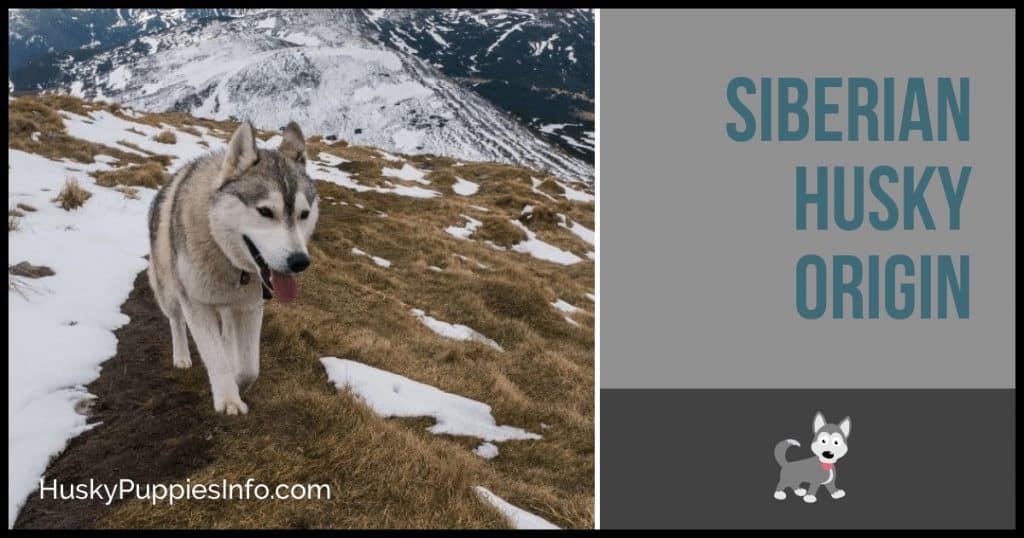
The Siberian Husky, as the name suggests, originates from the Siberia region of far north-east Russia. The Chukchi people of this region developed the dog over many hundreds of years. The dog was bred to pull heavy loads over long distances in the extreme cold and wind. A team of Huskies would enable men to head out hunting and fishing many miles from home, and return the same day before dark fall. The dogs were part of everyday family life; friends for the children, and at night keeping the family warm inside living quarters.

How did Huskies come to America

Siberian huskies pulling a sled

The Siberian Husky was introduced to America via way of Alaska in 1909. A fur trader named Gdosak acquired a team of dogs and brought them over from Siberia for dog racing. The Alaskan gold rush of the early 20th century brought people to the region. Racing was a way of adding excitement to the often difficult and gritty work of digging for gold. Over the next two decades, more Siberian dogs were imported until the Soviet Government stopped the trading of dogs in 1930. By then a suitable number of breeding stock was present and the breed thrived. The American Kennel Club officially recognized the breed in 1930.

Over in Europe, the Siberian Husky made sporadic appearances also in the early 20th century, but it was not until the 1960s and 70s that introduction of more dogs and breeding stock established. Further away in places like Australia it took until the late 20th century for Huskies to gain popularity, but are now one of the more popular breeds in the country.

Nowadays most Huskies just pull a leash with the owner behind them :), but if you are keen, you can train your Husky to pull a sled or load. If you are interested in this topic and want to learn basic tips and commands to train your Husky puppy to pull a sled, you really should read this – Pull training for Siberian Husky puppies

More Cool Husky Info!