Having trouble keeping a lid on your noisy Husky? Your puppy won’t stop crying? Here are our top tips for controlling the situation and giving you (and your neighbors) some peace.
Try to Figure Out the Cause
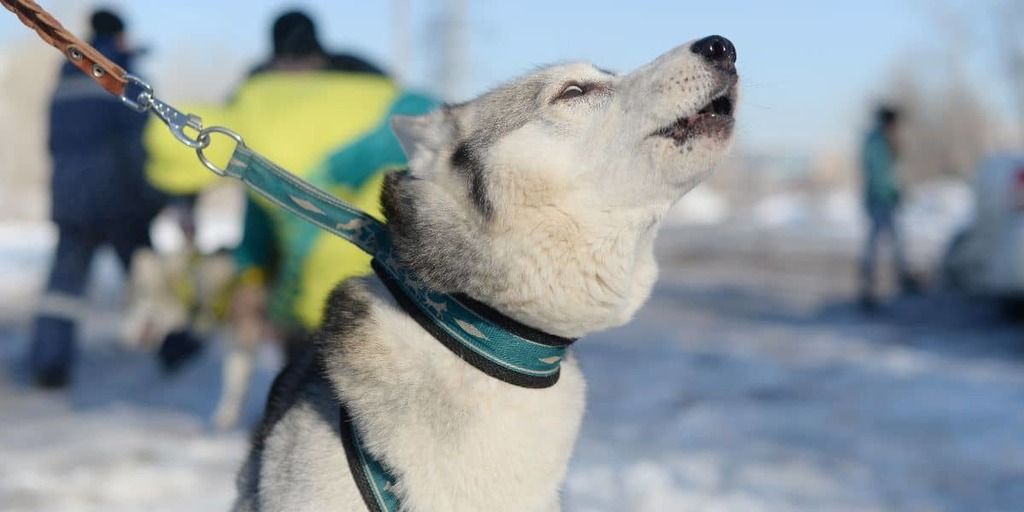
When your dog barks, howls, cries, or whimpers he or she is trying to communicate. Your first job should be to try and figure out the cause so that you know what to fix.
Although unlikely, your Husky might be injured or have a medical issue and crying out for help. That’s likely to result in whimpering at all times (not just at night) and whether you are around or not. If that’s the case you should, of course, get things checked out as soon as possible.
If, on the other hand, your Husky barks when you or other people are around, could this be a sign that they want something? Probably attention.
Huskies are social dogs that settle better in packs. Left on their own they might get bored and exhibit destructive behaviors. This includes being left alone at night, so you might want to think about bringing the dog inside and closer to others (see Crate Training below).
Another possibility is that something has your Husky’s attention. A squirrel or possum running across the fence? A neighbor’s cat? If your Husky barks and continues to do so when you are present, see if he/she is pointing you to what they are barking at.
Issue a “Quiet” command
Just as you teach your dog other commands, a “quiet” command might work. This would be part of the regular training of your puppy (which I talked about right here) and require lots of feedback and patience.
You want to issue the command and wait for your dog to quieten down before a reward such as a small treat, praise, and pats. Regardless of the other methods on this page teaching your puppy a command to quieten down can not possibly be a bad thing, even if it doesn’t solve the problem this time.
More Exercise
To try and tackle boredom, especially if you aren’t around during the day, you should consider giving your Siberian Husky more exercise. Exercise and training start at an early age and are required for the life of a Husky. Go for brisk walks or runs morning and night and see if this changes the barking behavior. If the barking subsides, then you have found the cause and can do something about it.
Introduce a Companion
It might not always be possible but if you believe your Husky does suffer from separation anxiety, another canine companion (particularly another Husky) might be the answer. Huskies tend to get along and keep each other entertained.
You can contact your local Husky rescue organization and see if any animals need a temporary home. This will let you test the theory before taking on board another pet full time. Just make sure they are all spayed and neutered if you are mixing the genders! There is a list of Husky Rescue Organizations, we collected, as well as some tips on how to adopt a husky.
Best Howl & Bark Control Products For Huskies
As mentioned above there are several ways to stop husky puppy howling and barking.
The first approach should always be using training methods and for that, we recommend taking the time to learn more about barking in general so you can have an idea as to why a Siberian husky is barking or howling. To do this in the chart below we recommend a book titled “Barking: The Sound of a Language (Dogwise Training Manual)” which specifically focuses on barking. This book will give you a much deeper understanding of how your Siberian Husky communicates and will help guide you in the direction needed to manage the issue.
Secondly, you could try a device that uses an ultrasonic bark deterrent to keep your dog’s howl under control.
And finally, the third method which is closest to a shock collar is using a vibrating collar. A vibrating collar is a bit more humane than using an electric shock that your puppy won’t enjoy much.
Crate training
This is one of the most effective strategies at reducing howling and barking in any dog, not just Huskies. You can place a crate (a box to enclose an animal) inside your home closer to you, but still, keep your Husky contained so he doesn’t run amuck around the house.
Go for a large metal framed crate, even if it seems too big for your puppy because you will want to keep using this throughout the life of your Husky. Ensure the dog can get up, spin around, and lay down again. A blanket can help soften the environment and add warmth. A water bottle attached to the side is handy.
Please remember that the crate is not punishment. It is not a jail! It is a device, when combined with positive feedback, can help improve the behavior of your dog.
We highly recommend checking out this YouTube video to see how it can be done.
Other ideas
Still, struggling to control your Husky’s howling and barking?
You could try your local dog club, whether Huskies or a general one, and see what other people have tried.
You can add another toy such as a KONG to keep your puppy busy.
Finally, you could try a training collar for your dog. My preference, if you choose to go this route, would be this Dog Training Collar – Rechargeable. It has a beeping and vibration setting, but also an electric shock, which I don’t recommend using in any case. But mostly, the beeping is enough to warn your husky and if she keeps on, you can use the vibration. I tried it personally and I have never gone further than the vibration setting.
Conclusion
If your Siberian husky puppy’s howling and barking are terrorizing your family and neighbors, don’t despair!
– First, check that your dog is healthy and not suffering from injury or illness. Work on teaching your dog to respond to a “quiet” command.
– Try more exercise or another companion and see if that helps.
– Crate training is also a great method for curbing antisocial behavior in dogs. You can also try devices such as the ultrasonic method, or vibrating collar.
There are lots of options out there and although it might take time and patience, you will be rewarded with persistence in training and feedback.
Siberian Huskies are intelligent dogs, but can also be stubborn, and grow bored easily. Training a Husky puppy is not easy. You will need a lot of patience and dedication to properly train a Siberian Husky. Are you up for the challenge?
How difficult is it to train a Husky?
If you are new to the breed then you need to assess yourself first. Sure, Huskies look all cute and pretty, but are you prepared to train and exercise your dog every single day?
Siberian Huskies are difficult to train. Rewarding in the long run, but difficult. If you haven’t owned a dog before then you might want to consider adopting an older, trained, and socialized Husky or consider a different breed.
Before acquiring your first Husky you might also want to get in touch with your local Siberian Husky club where you can meet owners, play with the animals, and get a feeling for whether this is the breed that is right for you in your current lifestyle.
Top Training Tips for Your Husky
1. Be the leader of the pack
As any Husky training guide will suggest, you need to be the leader of the pack. Be the “alpha dog”, so to speak. That does not mean you will be aggressive, loud, or violent. It does mean you need to exert dominance over your dog. Huskies will not obey if they view their owner as passive or weak.
Being the leader means firm commands, with consistent wording, and applied consistently. No bending the rules, ever! If one rule can be bent then your dog will think all rules can be bent!
For example, when passing through a gate or doorway, you lead and the puppy follows. When playtime is up, you remove the toys from the puppy’s possession. You decide when and where the puppy sleeps. Crate training is also likely to be an appropriate activity. In short: you lead, and your Husky should follow.
2. Start early
As soon as you bring the puppy home you want to settle into a routine. Each day you and your puppy will need to sleep, eat, poop, play, and exercise. The great thing about routine is that it helps build trust with your puppy, plus helps you remember to get through all the activities that need to happen each day.
Training is not something that necessarily stops at a certain age. As your puppy grows up certain behaviors and routines will become second nature, only to be replaced with more advanced training and exercise. Thankfully some training such as housebreaking your Husky puppy will settle down and not require constant attention.
3. Give Feedback (immediate, clear, and consistent)
You will be well equipped to take on the challenges of raising a Siberian Husky puppy if you are armed with these three feedback concepts:
Immediacy
Feedback needs to be given as soon as the dog exhibits a behavior worthy of it, whether that be good behavior (demanding positive feedback) or bad behavior (demanding negative feedback). By ‘soon’, we mean within 5 seconds – straight away!
Why so soon? Because you want the puppy to connect its own behavior to your response. The puppy is constantly exhibiting different behaviors: playing with this, wandering over there, lying down, getting up, and on it goes all day long.
Siberian Huskies can get bored easily. If you wait just a few moments too long your puppy is probably already doing something else! Your response will either encourage the puppy to repeat the behavior or discourage it.
Clarity
The words you say and the actions you take when issuing feedback should not leave any doubt as to the purpose; positive or negative. How you verbalize positive feedback (“Good boy”, “Good Girl”) should be distinctly different in sound to how you verbalize negative feedback (“Bad Dog”, “No”). Some trainers recommend using special words and avoid “Yes” and “No”, which are commonly said in everyday conversation.
For example, your Husky is likely to only hear “Good Boy” in the context of its own behavior unless you also have a young child and using Good Boy to him as well! In which case an alternative phrase should be picked for the dog such as “Atta Boy”, “Yup-Yup”, or whatever you choose. Pick something and go with it for the life of the dog!
“No” comes up often in everyday human speech that it would be wise to pick an alternative. Shibashake recommends “Ack-Ack” instead. By saying “Ack-Ack” instead of “No” your dog will associate that command exclusively with its own behavior and adjust accordingly.
Consistency
Siberians are smart dogs, but you still want to be consistent to remove any doubt as to the type or purpose of feedback. By using the same words each time your Husky will associate them with good or bad behavior.
Just as important is to give the same feedback every single time. If your puppy likes chewing on your shoes, then never once let him or her get away with it! Repeat the same negative feedback words every single time. Don’t leave any doubt in the puppy’s mind that the behavior will be tolerated!
Similarly, if your puppy does good by sitting still while you plate up the food bowl, you can and should give positive, reinforcing feedback each time. Even if the puppy seems to have mastered self-control at feeding time, there is no reason to stop loving your dog for behaving!
If you are using more than words for feedback, and you probably are, such as scratching behind the ears or giving the puppy a cuddle, make sure that is consistent as well. You don’t want to cuddle the puppy for positive feedback on one occasion, but then on another after negative feedback also cuddles because you feel sorry for the puppy. Consistency is the key.
4. Don’t give up!
Training is going to take time. Not just a few days here or there, but consistent training, every day, for many months. Don’t give up! If something isn’t working over a period, try something else. Ask other Siberian Husky owners at your local club what has worked for them. Check out our other tips on training Husky puppies for advice on specific issues.
Training a Siberian Husky puppy requires effort, dedication, and persistence, but please don’t let that put you off! Training can be fun, enlightening, and rewarding for puppy and trainer alike. Improved relationships between your pet and yourself, your family, the general public and other animals is the secret to successful pet ownership!
Conclusion
Husky puppies can be a handful at times but with patience and dedication, you will get there and very much enhance the bond between owner and pet
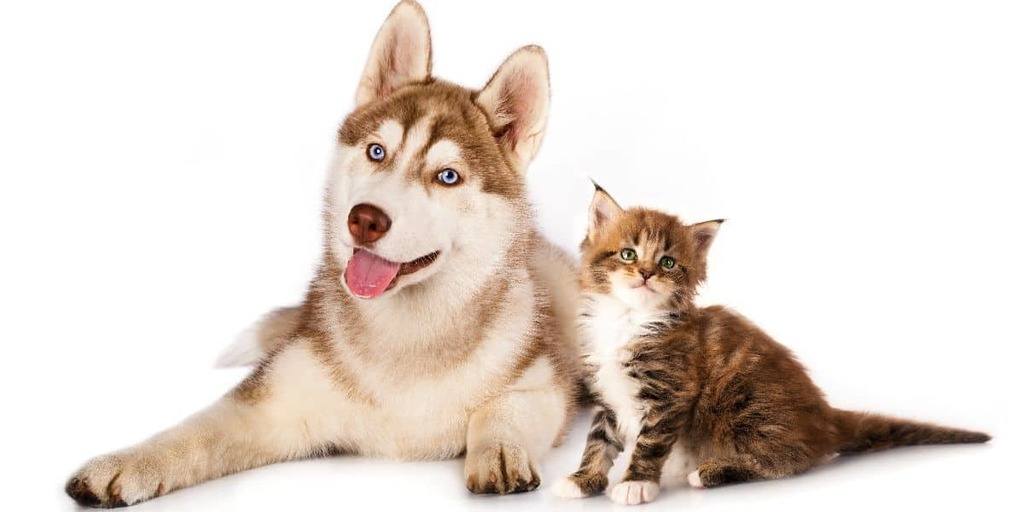
You got a new Siberian husky puppy and bring him home with his irrepressible temperament, and are worried about how a kitten or an adult cat will react to it? Or maybe you want to know how to make a kitten friend with a husky dog, that has been living in your house for a long time? Befriend animals with different psychology of behavior is not so easy as you think.
Siberian Huskies, despite being domesticated, still have a natural prey drive. They want to chase and capture smaller animals. However, with careful, disciplined training you might just be able to make your Husky get along with a cat at home. Here’s how…
1. Set realistic expectations
The training you will need to give your Husky is not going to be easy. It will require time, patience, and your watchful attention for many weeks, if not months. Despite this effort, you might not win. Some dogs can’t shake that prey drive even for family cats. You need to think about a Plan B, such as physically separating kittens from puppies full time. And although we hope it would never happen, Huskies can and do kill cats, should the two of them cross paths. It might not be a pleasant thought but you need to be mindful of the potential consequences of cohabitating a Siberian Husky with a cat.
2. General Tips
It isn’t all gloomy though. Here are some ideas of how to get off to a good start and give everyone a chance at living happily together:
Start training early in the dog’s life. There are lots of training articles on Husky Puppies Info with general advice on what to do and how to do it. The earlier you start the easier it will be to form good habits in the dog’s mind.
Ensure you can physically separate the cat and the dog, each having resting, feeding, and pooping areas. In the beginning, only a short amount of time will be spent together so they need a space to feel comfortable in when not training.
Exercise your puppy first, before letting him or her spend time with your cat. Exercise can dampen the boisterous nature of puppies, who might be inclined to jump or trample over your cat.
Keep your Husky on a leash until you are absolutely, positively, 100% positive he/she will not attack or chase your cat. You probably already know it is risky to send your dog off-leash at the park, and the same applies indoors with smaller animals.
Give lots of positive feedback when your Husky “plays fair”. This is the key to helping your Husky understand the cat is part of your “pack” and not a foreigner.
3. Start by setting up your home
The introductions will require your Siberian Husky on the leash, and the cat free to come and go. Ensure the cat can escape to a safe place that he/she already frequents. If you have a small pet door, or a barrier (such as a child gate you jam in a hallway or stairwell) that the cat can squeeze through but not the dog, that’s great! Otherwise, just a room that can be closed off will do.
4. Introductions
It will help if you have a partner so that one of you can manage the Husky, and the other the cat. However, if you are on your own that’s ok, just try to encourage the cat to visit the Husky and have a sniff around.
Set the dog up so that he or she is in an area that the cat can approach without surprise – visibility for the cat is important. Whilst the dog is on the leash, encourage the cat to come up and say hello. It would be natural for the dog to get excited and that’s ok. The important thing is that you have control of the dog, and are willing to repeat this process many times until he exhibits calmer and restrained behavior.
The first encounter might only last a few seconds before the cat runs away. Don’t forget that cats are curious and are likely to come back for more.
5. Develop the relationship
Work your way up to 5-minute encounters, and then try for 6, 7, 8 minutes, and longer. Keep this up for a month until you can have substantial sessions together (such as 30 minutes) without any major problem. If your Husky jumps for the cat or displays other predatory behavior, issue feedback with a firm “no”. No need to punish the dog, rather issue praise and positive feedback when he shows restraint.
6. Monitor closely
At one point you will have the husky off-leash. Still, make sure you have the cat’s safe place open so they have somewhere to run to if frightened. Otherwise, keep close to your Husky and be prepared to grab the collar if he or she gets rough.
With a bit of luck, your cat and dog are starting to get along nicely! Of course, it might take many weeks or months of supervision to gain the confidence that they won’t hurt each other. It is quite ok to have the two separated every time you are out of the house, just in case something does happen.
7. Warning signs
Aggressive behavior by either animal is a sign that the relationship needs further work. Cats tend to wave their tail when anxious, take swipes with their paw, and stare intently at their foe. Huskies tend to get excited and move a lot, maybe try to pick the cat up in his/her jaw.
However, there is a fine line between play and fight. In this video the animals get along ok, despite the slightly aggressive behavior:
Conclusion
With patience and a bit of knowledge, you might just pull it off – introducing two natural foes to each other and have them get along. It’s not an easy process and given the choice, not one most Husky owners want to deal with. Just remember to take things slow and give lots of positive feedback to your Husky when he or she behaves nicely around your cat.
Microchipping is the process of implanting a very small electronic tracking device into a dog, for the purposes of identification should the animal ever go missing. Microchipping can increase the chances of your lost pet being reunited up to 5 times! It is so effective that in some places around the world microchipping is mandatory. Even if it isn’t required in your state, it is a very wise idea to get your Husky puppies microchipped. Whereas collars and tags can come off or be removed, the chip stays under the skin of the dog permanently.
Chip Insertion
The microchip itself is very small – around the size of a grain of rice. It is implanted with a needle in to the loose skin on the back of a dog’s neck. The dog feels little pain and does not require any anesthetic. It is not unlike getting a vaccination, and typically at the first vaccination, a puppy receives this would be an ideal time to get microchipped. It is a very safe and extremely common procedure that any vet can administer.
Cost
Microchipping should not cost more than $50 for insertion and activation of the tracking number. Some local councils, agencies, and shelters will do it for as low as $15. There is a chance that if you are adopting your Siberian Husky from a shelter, or purchasing from a breeder, the chip has already been implanted for you. Be sure to ask when you pick up your dog so that they can help you update the tracking information.
Tracking
Microchipping uses a very small electric device that is known as an ‘RFID’ tag. This is not a GPS device. You are not able to look up your pet’s current location on a map! However, the RFID will emit a number back to a scanning device (similar to a handheld barcode scanner) and that number can be used to retrieve information on various microchip registers. Registers include Anibase, RFID-USA, Microchip ID Systems, and others.
If there are multiple registers how do you know which one your Husky is registered at? Shelters and pounds will check as many registers as they can to find the owner. When the chip is inserted the vet probably has a preferred register that is well recognized in the local area.
Just remember to update your details with the register should you ever relocate your pet. Often this is as simple as updating details on a website or giving them a call. They will need to know where you live and what phone number to call you on should your pet ever be retrieved without a collar and tag.
Is it safe to microchip a dog?
Yes. With millions of pets chipped safely each year you shouldn’t need to worry about any ill-effect. The chips do not raise any allergic reactions, cause any new allergic sensitivities, or cause any tumors or cancers.
Even if your Husky is confined to a yard and never let off-leash, you should still get him or her microchipped. The cost is minimal and the benefits are valuable. You never know when that lead will break in your park, or your Houdini Husky puppy will find its way out into the street. Still unsure? Check out this ABC News video of a Husky that ended up hundreds of miles from home, but still reunited thanks to microchip identification.
Siberian Husky puppies desire a lot of attention to prevent boredom. Exercising them is a great way to help them stay entertained, not to mention grow up healthy, but how much exercise should they get? Here are our top five tips on exercising your Husky puppy.
1. Exercise every day
It is really important that Huskies, particularly younger ones, exercise every day. This is a form of training where you teach your puppy healthy habits, discipline, and encourage socialization. Doing it every day keeps the routine up: if you miss a day you will ‘feel’ it and not lapse into more than a day of inactivity. Your puppy will love you for it as well. Exercise helps build their strength and endurance – characteristics that Siberian Huskies are bred for.
2. Go slow for the first year
Your Husky grows rapidly during its first few months, reaching adult size after about a year. The joints, ligaments, and muscle mass of your puppy need time to develop, so don’t overdo it early on. If you push too hard, especially with repetitive-motion activities such as walking and running, you might put too much stress on the puppy’s ligaments which can lead to soreness, tiredness, and inflammation.
3. The 5-minute-month rule for walking
Walking is a great exercise activity: it is free, easy, and good for both your puppy and yourself! We recommend the ‘5-minute-month’ rule:
Walk your puppy each day, increasing 5 minutes each month.
For example, if your puppy is three months old, walk him or her for up to 15 minutes every day. If your puppy is six months old, walk up to 30 minutes every day. If you follow this simple formula you will build up the necessary walking exercise gradually and in sync with your puppy’s natural growth over the first year.
After your puppy reaches his or her first birthday, you will be up to an hour of walking each day and can stay at this level. You might also graduate to jogging or running, or go for longer sessions, but only if your dog is used to walking and ready for the extra effort.
4. Any time is playtime
15 minutes for a puppy does not sound like much, and it isn’t. However, you can take on other exercises in the form of playing games. Simply ‘playing ball’ with your puppy will mix up the physical movements: starting, sprinting, slowing, stopping, turning, etc. You can easily squeeze a few minutes in here and there of play to fill out the day and tackle boredom. Check out my Five Play Time Ideas for Husky puppies, to help fight the boredom of your dog.
5. Stay cool
You know already that all dogs need clean drinking water available at all times to stay hydrated. The coat of the Siberian Husky might be dense but this also acts as an insulator in warmer weather, helping to regulate body temperature. So although the Husky might have originated in arctic climates, they should do fine in warm weather. Just make sure water is on hand, and if your Husky shows any signs of tiredness, take it easy. If you live in a hot environment you might want to consider walking your puppy in the morning before the heat builds up, and makes everyone just want to laze back and go to sleep.
If you start slow and build up exercise over the first year of life, mix in lots of play, and remember to keep your puppy hydrated, you will give your puppy a great start to a long healthy life. Just as important, you will get some exercise out of the deal as well!
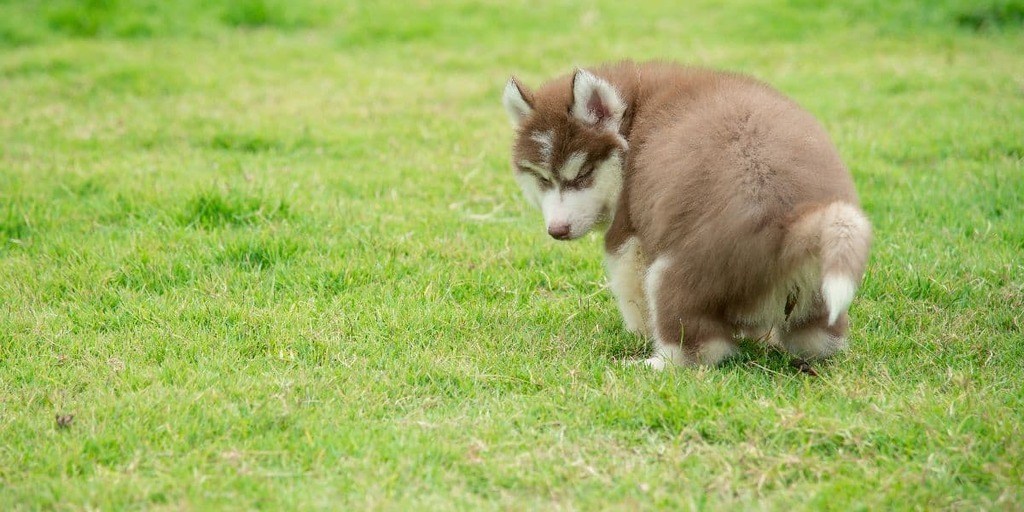
If you would like to keep your Siberian Husky puppy indoors at times, then housebreaking is an early and essential training activity to perform. Whether you call it housebreaking, toilet training, or potty training, all Husky puppies can be trained to do their business outside, and not all over your nice clean floors.
When to start potty training husky puppy?
You are probably going to start housebreaking your Husky puppy at around 8 weeks old (2 months old). It is about this time that puppies develop muscle behavior to control themselves. Attempting to train younger puppies could prove futile. This will be amongst the first formal training you will do with your puppy and if you can get this right, you will earn his or her trust for future training.
Find a spot
Head outside and find a spot in the garden where you would prefer your dog to do its business. Your puppy will prefer to return to a spot that it has already ‘marked’. Make sure it’s out of the way of human foot traffic so that you don’t start stepping in things you don’t want to!
Have realistic expectations
Housebreaking can take a little time. You should hopefully start seeing results after a couple of weeks, but if not do not give up! Siberian Huskies are independent dogs and can bea little stubborn to train.
Once the routine is setting in there is likely to be occasional accidents for a little while longer. You need to be patient.
Also be aware that puppies are growing in their first few months – which means lots of food going in, and a lot has to come out!
Crate Training
A dog crate is a closed container (typically plastic) that the dog can be confined to. Think ‘cage’ but use the more politically correct term ‘crate’. Don’t worry, crate training is recognized by the Human Society as an effective aid to housebreaking a pet.
The crate will be used as a training device for short periods of time. It is most definitely not a jail used to punish your puppy! The purpose of the crate is to confine your dog when you can not keep an eye on it, such as doing a chore around the house or ducking out for an errand. Because of the likelihood of the dog resting or sleeping in the crate, they are unlikely to do their business in there. If you let your puppy roam the house they could make their ‘deposits’ anywhere they feel like it.
Obviously you need to get a crate large enough for your puppy to fit in to, with room to grow. For a Siberian Husky that might mean going for an extra-large sized crate. You also might want to floor the crate with newspaper or absorbent material to aid in any little mistakes. A small amount of water and a toy could help comfort your pet. Huskies might be used to the cold but if you have a spot in the house that isn’t too drafty that would be ideal. They prefer a relatively warm and still place to rest.
Initially, you might only keep your puppy in the crate for 30 minutes. Over time, say from 8 weeks to 18 weeks of age, you can build up the maximum confinement from 30 minutes to 5 hours. That is approximately an extra 30 minutes each week.
After opening the crate, put a leash on your puppy and take him or her out to ‘their spot’ in the garden. They might not need to use it but they will learn the routine of restraining themselves while indoor and relieving outdoors. If you would like to know more read our full article on How to Crate Train A Siberian Husky Puppy.
Positive feedback only
If you see your puppy begin positioning itself to do its business, a firm ‘NO!’ will grab the dog’s attention. You can pick your puppy up and move him to the spot outdoors to complete the job.
After your puppy does its business be sure to give strong positive feedback – ‘good dog!’ with scratches behind the ear and cuddles. This should be done immediately (within seconds) so that the encouragement is linked to the behavior.
Avoid negative feedback – the added attention will confuse the dog. If a mistake is made, never push your dog’s face into a ‘mistake’ made indoors. The puppy doesn’t know any better while it is learning. Just take your dog outdoors to remind him or her of their place, and in your own time quietly clean up the mess indoors. You can check a more detailed explanation on positive feedback right here – Feedback When Training Husky Puppy
Watch the schedule
You will probably notice that your puppy likes to relieve him/herself when it wakes up, after meals, and perhaps after exercise. You can aid in the training by taking the puppy out to its spot after these times to encourage routine behavior.
If your puppy shows signs he/she wants to head outside, that’s great! They are learning. So take them out, let them do their thing, and again lots of positive encouragement. You might need to do a few trips out at night but rest assured, as the puppy grows larger and behaviors are learned, they will be able to restrain themselves for longer periods of time.
That’s pretty much all there is to it! Start at around 8 weeks, and use a crate for 30 minutes at a time, adding 30 minutes each week up to 5 hours. Give lots of positive feedback, no negative feedback, and most of all, be patient. The effort you put in now will pay off for the life of your Siberian Husky puppy.
Still need more help? Check out Doggy Dan’s online training course. We found it is very easy to implement and perfectly suitable for our huskies. They currently offer a variety of options, starting from 1$ trial for 3 days and also a yearly subscription for nearly 190$. Here’s one of his training video to give you more ideas of how to effectively potty train a puppy:

 Although unlikely, your Husky might be injured or have a medical issue and crying out for help. That’s likely to result in whimpering at all times (not just at night) and whether you are around or not. If that’s the case you should, of course, get things checked out as soon as possible.
 to keep your puppy busy.


 Start
Start 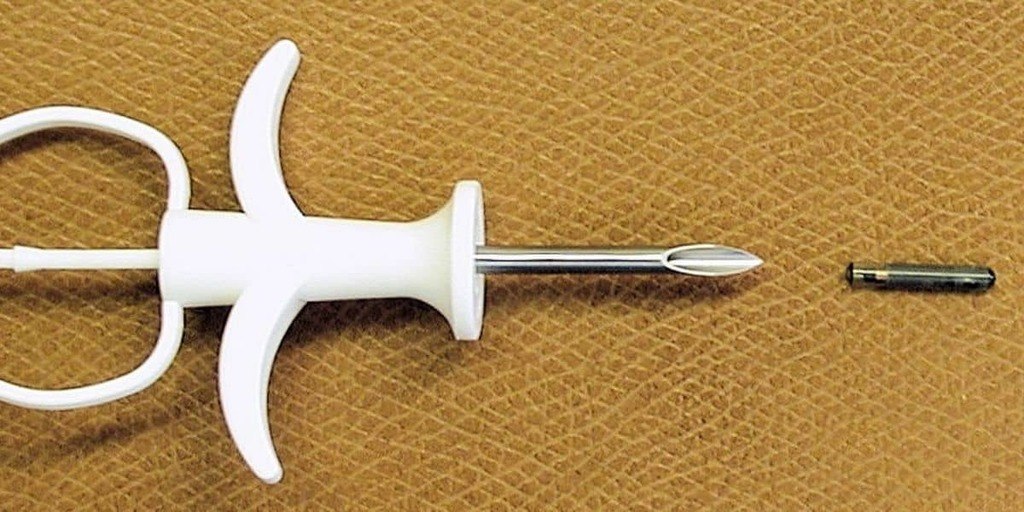
 Tracking
 4. Any time is playtime