Although pet insurance might sound like an unfamiliar concept to you, it’s getting popular with every passing year. For example, the number of people that bought pet insurance in the UK increased from2.8 to 3.8 million from 2013-2017, with about2.1 million GBP being paid daily in insurance claims.
Rising vet bills in recent years have given popularity to insuring your pet. But before you jump in, there are some things you need to know to answer the main question: “Is insuring your husky puppy really worth it?”
Pet insurance basics
When shopping around for pet insurance you will come across some terms which are key to understanding and comparing insurance options:
Recurring cost – which is your cost-per-month for insurance. Most insurers will offer a yearly payment option that offers a discount over the monthly rate.
Deductible – known as the excess in some countries, this is the minimum amount in dollars that you contribute to a claim. If your deductible is $500 then you must pay the first $500 of a claim, regardless of whether your claim is for $550 or $5000, and regardless of the reimbursement rate.
Reimbursement – this is usually presented as a percentage such as 80% and represents how much of the total bill you will get back from the insurer. So if the reimbursement is 80%, and the cost of treatment is $10,000, you will get a check from your insurer for $8000 if the claim was approved. Note that there might be different rates for different treatments so be careful.
Maximum claim – You might be limited to a maximum amount (in dollars) claimable in the pet’s life, in a year, or even for a single accident or illness. You should look through the insurance policy fine print to find this information because it might not be presented upfront when shopping.
Exclusions – Again you need to look at the fine print. These are the services or treatments not covered by insurance. Hereditary conditions are commonly excluded.
Pet insurance price differences
Many factors influence price differences between insurers. These include:
Differences in deductible and reimbursement rates. Often you can tweak these numbers to lower your monthly insurance cost, such as raising the deductible.
What services, treatments, and products are excluded.
The breed and age of the dog: older dogs tend to cost more for insurance, and some breeds are more prone to injury or health issues than others.
Your location.
The insurer itself: their reputation, their costs, who underwrite them, and many other factors that you have no control over. Simply put: some insurers cost more than others, even for the same policy.
Unfortunately, when comparing pet insurance it is very difficult to compare options. It might help to draw up a chart (or use a spreadsheet) when comparing potential insurers, taking note of what each policy is offering. If you can reduce the policy features to just the ones you are interested in it will make it easier to narrow the choice down.
What to look out for when choosing pet insurance?
If you buy pet insurance, you’ll have to pay a monthly fee. But in case your Husky gets sick, the insurance company will pay for its treatment according to its terms and conditions. But we wish it would be as simple as it sounds.
Pet insurance Exclusions are probably should be your biggest concern, and this information is likely to be in very fine print and not well advertised. Some typical exclusions include:
Certain tests or diagnostics are not included.
Pre-existing health conditions that the animal had prior to taking out insurance, whether or not you knew of those conditions.
Different treatments may have different rates of reimbursement, and even different deductibles.
After-hours and weekend emergency care may be excluded.
Choice of vet might also be an issue.
The amount paid for specific treatments. Some policies have a schedule of treatments and payout amounts, which might be substantially less than what your local and trusted vet might charge you.
Furthermore, when making a claim on pet insurance, almost all insurers will require you to pay your vet first, and you claim the money back from the insurer. It is of little use to take out an insurance policy if you can’t obtain funds in a hurry to pay a bill. It may take a number of weeks for your insurer to accept your claim.
With so many variances between insurance policies, how can you expect to make the best decision?
How to choose the right pet insurer?
As with any insurer, the primary consideration is will they pay out if I make a claim?
You can and should talk to other Siberian Husky owners in your local club, or talk to your vet, or even dog-owning friends and relatives, to find out if they have made a claim and how easy or difficult it was. Search the internet for reviews of insurance policies – just be aware that you tend to only read about the horror stories, not the many thousands of successful claims that happen each year.
Price is also a factor to consider and balance off between the deductible and reimbursement rates. What price you are comfortable with depends on your own personal financial situation.
However, if you have 5 policies in front of you and 1 is abnormally cheaper than the others, you might want to try and figure out why. It could be some key features are missing. Similarly, if a policy is unusually expensive it could be there are features you may never need such as pregnancy care for a female pet.
Alternatives to pet insurance
If insurance seems expensive, and it can be especially if you have multiple pets, there are some alternatives you might want to consider:
Savings Fund
For some, the cost of pet insurance is too much, and they prefer to keep a savings fund for that ‘rainy day’. This can often work out cheaper than insurance. If your husky is kept in a secure yard all day, and when out is restrained and not let off-leash, then the chances of him or her being involved in an accident are quite low.
Furthermore, if you did your homework when selecting your puppy from a reputable breeder, who gave assurances as to the health of the animal, there is a good chance you will never incur any significant vet bill for the life of the dog.
There are two big problems with savings accounts that you need to be aware of:
It starts at $0. If your pet develops a problem early in life then the savings account is unlikely to cover all the bills. A pet insurance policy is likely to have a very short or no waiting period.
You have to be disciplined to keep topping it up, each and every week. If you forget, or can’t afford to keep depositing, then the fund may not be there when you most need it.
If you are already a disciplined saver then this option might work out for you.
Other fund types
There are lower insurance levels that cover injuries but not conditions, however as we just mentioned the chance of injury might be very low for your husky. Sometimes these policies are offered almost like a guilt trap if you can’t afford the full-priced policy, and offer little benefit to your dog.
Cheaper services
There might be lower-cost vet clinics in your area, possibly not-for-profit and/or tied to rescue organizations. Universities can also be looked into – some offer services cheaper in return for providing training for students (under supervision of course!).
Euthanasia
It might not be a popular option but it is one we need to mention. For some it might just make more sense to put your pet down instead of paying expensive vet bills, only to have the animal continue to live in discomfort.
Conclusion
Pet insurance is a booming industry – and is it any wonder with vet bills running into $100s or $1000s for a single incident? When shopping around take note of the deductible, the reimbursement, and especially the exclusions in the fine print that will affect your claim. So is it worth purchasing pet insurance for a husky puppy?
If you can afford the monthly fees and have spare cash to pay the vet bills right away, and your husky might have some health issues, AND your insurer will pay out for these issues, then YES! Insurance could save you money.
In all other cases, we suggest NO! You are better off saving money and accepting the risk. The general health of the Siberian Husky population is getting very good and if you take care of your pet, there is no reason he or she can’t live a long and happy life. You can always take out insurance later in life if your husky seems accident-prone, and spend the first few months saving for a rainy day.
With the tremendous rise in Siberian Husky registrations (AKC quote Huskies as the 14th most popular breed in 2013, and still rising) comes a wave of interest in the breed, and a desire to own one. Unfortunately that also means unscrupulous breeders are profiteering from this popularity, operating puppy mills to maximize profit rather than improve the breed. Here we look at puppy mills, and how to identify one, so you can avoid supporting such businesses.
What is a puppy mill?
A puppy mill, or puppy farm, is a breeder that aims to profit from the breeding of dogs, rather than improve the breed. Typically they minimize costs and cut corners on animal welfare to maximise their profit. Animals are sometimes bred frequently and recklessly. The term backyard breeder means much the same thing, and might refer to an individual operating on the same principles.
The ASPCA quotes there could be as many as 10,000 puppy mills in the USA alone. Note that some of them are licensed breeders – but are still in it for the money, not the love.
Why you should avoid puppy mills?
When the primary goal of the puppy mill operator is to make money, corners are cut such as:
Breeding a female too frequently.
Not taking care to match dogs suitable for breeding, based on temperament or genetic traits that cause health issues.
Supplying minimal accommodation to the dogs that might not be particularly sanitary.
Not getting dogs checked out by vets (which cost money, of course), and not getting the proper vaccinations.
Warning signs
Although there is no single warning sign that indicates you are about to purchase a Husky through a puppy farm, some or a combination of these factors might come in to play:
A large number of dogs on site; 30 or more is a warning sign.
The breeder has different breeds for sale; Huskies and something else. Genuine breeders tend to specialize in one breed.
The parents of the puppies are not on site, or not able to be presented.
The breeder advertises heavily in newspapers and other classifieds. Advertising increases around holiday times such as Christmas.
The breeder is willing to let puppies go before 8 weeks, and perhaps before vaccinations have been administered.
The breeder is known to supply pet shops.
There appears to be a constant supply of puppies from this breeder, all year round.
The breeder will bring the puppy to you in another location, and/or avoid showing you around his property.
The property is not sanitary, or dogs are kept in confined cages.
Finally the biggest warning sign: the breeder does not ask you questions about your environment, lifestyle, reason for a buying puppy or the breeder tries to let you take the puppy home right away. Responsible breeders do not let their puppies go “nobodies”. They try to match puppies with suitable and similarly responsible homes.
Questions to ask to identify puppy mills
A lot of the above issues can be questioned over the phone. If not directly, then indirectly with questions such as:
We might not be ready now, when do you expect the next litter of puppies to become available?
Many breeders do not plan ahead until the current litter is all taken care of.
We are not sure what dog food we should be buying. What do you feed the puppies?
To keep costs down, puppy mills feed the cheapest dog food available.
Are the puppies vaccinated and checked out by a vet?
If the answer is ‘no’, be very suspicious.
Is there any guarantee on the health of the puppy?
Responsible breeders always provide a guarantee that the puppy is healthy, and will detail any potential long term health issues.
A word about pet shops
Pet shops are notorious ‘front ends’ to puppy mills. We recommend going directly to the breeder rather than paying a premium to the retailer and encourage the practice. You can locate breeders in our breeder directory, and also the SHCA Referral Directory. In either case, there is no guarantee you are dealing with somebody responsible so keep your eyes and ears open for suspicious behavior!
What you can do to avoid puppy mills?
Ask a lot of questions, and if you are unsure, be prepared to walk away. We know puppies are irresistible, and Siberian Husky puppies are frighteningly cute, but you have to be strong enough to walk away and not support this terrible industry.
If you suspect you have spotted a puppy mill you can report it. The Humane Society provides advice on what steps to take.
By keeping your ears and eyes open for certain behaviors of a puppy mill operator, you can avoid them and instead buy your Husky puppy from a genuine, responsible breeder. Even better you can consider adopting a Husky instead – perhaps from a rescue shelter. We also have some tips on adoption and what to expect.
The Siberian Husky is gorgeous to look at and a bundle of fun. Here are ten fun and interesting things about Huskies you may not know:
1. Siberian Huskies are not wolves but evolve from a common ancestor
Huskies originate from Siberia many hundreds of years ago and they belong to the Spitz genetic family which, at least for the last 5000 years has not been influenced by wolves. But as high-arctic dogs, they share some genetic similarities with Taimur Wolf. They may look similar to wolves, but their behaviors are very different.
2. Huskies would rather lick than bite you
A Husky’s behavior is typically fun-loving and energetic. They do not make good guard dogs. In fact, the presence of somebody is likely to excite them and invite play, rather than protect them. They are great with kids and, if you can keep up with their energetic nature, can be great family pets.
3. Siberian Huskies are fast
Huskies were bred to pull sleds and hunt, and need a lot of exercises to fulfill this need in domestic environments. Unleashed they can run 30mph, which is why lead training is so important, and having them off-leash is sometimes frowned upon, or at least risky. Huskies have been bred to run for long periods of time across the wilderness. You might have trouble keeping up.
4. Siberian Huskies shed a lot
And by a lot, we mean A LOT!! Luckily their grooming requirements are quite minimal and shedding only happens once or twice a year.
5. Siberian Huskies are escape artists
Their nature to be out and about can play havoc if left alone unattended for periods of time. Huskies will work independently to find a way out of the yard, so you better make sure the latches can not be undone. Playing with your Husky, especially from an early puppy stage, will help satisfy some of that itch to move about.
6. Siberian Huskies thrive in both cold and warm climates
Originating from Siberia the Husky can survive in extreme cold down to minus 70 F. They can also live quite happily in warmer environments, sub-tropical and even tropical where their coat insulates them from the heat. However, you do need to be aware that they need more water and may not do so well with extended, vigorous exercise sessions.
7. Siberian Huskies have ears that stand up
Whilst you may think of Labrador Retrievers or Golden Retrievers as larger dogs with floppy ears, the AKC breed standard specifies ears that stand up. But if your Husky’s ears flop down, no need to frown! Every dog is different and it is these little things that make them special.
8. Siberian Huskies may have eyes of different color
Brown and icy blue are the typical colors of a Husky eye, but sometimes you get one of each! This is sometimes known as ‘parti-eye’ and is quite normal and acceptable for the breed. Even more amazing is they are all born with blue eyes but can change color after a few weeks!
9. History Lesson: Huskies saved the town of Nome Alaska
The famous 1925 Serum run to Nome Alaska saw teams of Huskies pull sleds and vital medicine across Alaska. Balto and Togo were two of the dogs that helped save the town. Now, how’s that for an impressive feat for man’s best friend?
10. Siberian Huskies are one of America’s most popular breeds
The AKC registration statistics reveal Siberian Husky as America’s 16th most popular breed in 2020, and now consistently in the top 20. Who can resist a cute Husky?
Husky Facts For Kids (In Video)
We know that getting your kids to read this post is next to impossible, so we made a short husky fact for kids video to help them enjoy it too. Just click play!
Wrapping Up
Huskies are really cool dogs, and we hope that this list of husky facts gave you some new insight into what Siberian Huskies are and what they like to do. Check out some other awesome husky articles below!
Whilst nobody can put a true price on love, purebred puppies can attract a pretty penny. How much does a Siberian Husky cost, and why the large variance? Read on…
If you are purchasing a Siberian Husky from a reputable breeder you can expect to pay between $500 and $800 for a puppy. If the parents of the puppy are winning shows or sled dogs then this will be closer to $1500-$2500, even as high as $10000!
Why Siberian Huskies are so expensive and what determines the price?
Siberian Husky combines natural beauty, devotion, affection. With their smart, understanding gaze, they win the hearts of many pet lovers. But not everyone is ready to buy a puppy because of the high cost. So what determines the price and what should I look for when buying husky puppies?
First, you need to decide for what purpose you want to have a husky. Do you want to get a pet companion or build a dog career? The price of a husky will depend on the pedigree and breed standards.
In order to understand why a purebred husky puppy is worth the money they ask for, you need to familiarize yourself with the costs for the breeder. Before selling husky puppies, responsible breeder invests a lot of labor and money in quality food, vitamins, vaccinations, vet visits, which accumulate and create a real price for Siberian Husky puppy.
The AKC Breed Standard for Siberian Husky is quite specific about the size, weight, and physical appearance of what a Husky should look like. If the parents of a puppy both meet the standard and have been winning shows, there is a good chance the puppy will also be of such a high standard.
There is similar reasoning for sled/racing dogs. If the parents are successful at winning races, built for endurance and power, then the puppies are also likely to be suitable for sledding competitions. There is no guarantee that the offspring of champion parents will themselves be champions, but will have a better chance than mating two domestic Huskies.
What if I don’t need a show dog?
Great! No problem at all with that. Most dogs ever owned will be loving members of the family and never be put on stage or put in a race. For this reason, you can look at breeders who are still keen and capable of matching animals to better the breed but might not be attracting the show’s parents. Some breeders might lower their prices to $300 to help find their puppies home. Keep in mind that the breeder still has to pay for housing, food, vaccinations, and other vet bills, not to mention their time in training and socializing the pups. $300 is pretty cheap for the service offered.
Are there any alternatives?
Believe it or not, pet shops are likely to charge more for puppies because they have rents and retail margins to make. We would generally not recommend buying from a pet shop as many are fronts for puppy mills and dogs are not necessarily bred for the betterment of the breed. That is, to improve the physical qualities, health, and temperament of the animals.
We have put together a guide on alternatives to buying from a breeder which should give you some ideas about where to look. These include classifieds, agencies, and local breeders who might not advertise.
Just remember that over the course of Husky’s twelve to fourteen-year life, the purchase price is going to be relatively insignificant compared to food, health checkups, and other costs associated with keeping animals. So while you might be tempted at the start to save a couple of hundred dollars, perhaps you are better off purchasing from a reputable breeder with a track record of producing healthy, happy, and ideal puppies.
Siberian Husky puppies desire a lot of attention to prevent boredom. Exercising them is a great way to help them stay entertained, not to mention grow up healthy, but how much exercise should they get? Here are our top five tips on exercising your Husky puppy.
1. Exercise every day
It is really important that Huskies, particularly younger ones, exercise every day. This is a form of training where you teach your puppy healthy habits, discipline, and encourage socialization. Doing it every day keeps the routine up: if you miss a day you will ‘feel’ it and not lapse into more than a day of inactivity. Your puppy will love you for it as well. Exercise helps build their strength and endurance – characteristics that Siberian Huskies are bred for.
2. Go slow for the first year
Your Husky grows rapidly during its first few months, reaching adult size after about a year. The joints, ligaments, and muscle mass of your puppy need time to develop, so don’t overdo it early on. If you push too hard, especially with repetitive-motion activities such as walking and running, you might put too much stress on the puppy’s ligaments which can lead to soreness, tiredness, and inflammation.
3. The 5-minute-month rule for walking
Walking is a great exercise activity: it is free, easy, and good for both your puppy and yourself! We recommend the ‘5-minute-month’ rule:
Walk your puppy each day, increasing 5 minutes each month.
For example, if your puppy is three months old, walk him or her for up to 15 minutes every day. If your puppy is six months old, walk up to 30 minutes every day. If you follow this simple formula you will build up the necessary walking exercise gradually and in sync with your puppy’s natural growth over the first year.
After your puppy reaches his or her first birthday, you will be up to an hour of walking each day and can stay at this level. You might also graduate to jogging or running, or go for longer sessions, but only if your dog is used to walking and ready for the extra effort.
4. Any time is playtime
15 minutes for a puppy does not sound like much, and it isn’t. However, you can take on other exercises in the form of playing games. Simply ‘playing ball’ with your puppy will mix up the physical movements: starting, sprinting, slowing, stopping, turning, etc. You can easily squeeze a few minutes in here and there of play to fill out the day and tackle boredom. Check out my Five Play Time Ideas for Husky puppies, to help fight the boredom of your dog.
5. Stay cool
You know already that all dogs need clean drinking water available at all times to stay hydrated. The coat of the Siberian Husky might be dense but this also acts as an insulator in warmer weather, helping to regulate body temperature. So although the Husky might have originated in arctic climates, they should do fine in warm weather. Just make sure water is on hand, and if your Husky shows any signs of tiredness, take it easy. If you live in a hot environment you might want to consider walking your puppy in the morning before the heat builds up, and makes everyone just want to laze back and go to sleep.
If you start slow and build up exercise over the first year of life, mix in lots of play, and remember to keep your puppy hydrated, you will give your puppy a great start to a long healthy life. Just as important, you will get some exercise out of the deal as well!
Sounds too good to be true? You are after a Siberian Husky puppy and see an advertisement in the local paper or online classifieds giving them away for free or a nominal charge. What could the catch be? Read on…
There is no catch
First, and we hope probably, there is no catch. Puppies of all breeds are adopted out all over the country for little or no charge. Owners change lifestyle, can not afford to keep the pet, or move. Rescue organizations pick up animals and are looking for homes. Check out our advice on adopting a Husky for what you should be looking for.
An unwanted offspring
Cross-breeding can create wonderful new and ideal variations on a breed, but only by experienced breeders who understand the genetics and health issues, they are trying to encourage or suppress.
Many thousands, if not hundreds of thousands of dogs and cats each year are born to owners unable to care for them. Often this is a result of a lack of birth control through spaying and neutering. You can read more about this problem at the Peta website.
While not a reason itself to avoid taking on board an unwanted pet, you should be aware of potential false claims being made about the bloodline of the pet or its ancestry. This is particularly true if the person giving the animal away does not show signs of being a competent breeder. You should avoid taking pets from unscrupulous breeders who might be encouraged to continue the practice if you do.
Health Issues
You must always get a dog checked out by somebody trained to identify current and potential health issues in Siberian Huskies. Your local vet is your friend when it comes to assessing the health of a dog. Anyone trying to offload a puppy for free who refuses to let your vet check out the dog is likely to be hiding something, so beware!
Socialization issues
It can be difficult to assess how social a puppy is, but there are some clues. If the puppy is “scared to death” of strangers that isn’t a good sign. Conversely, if the puppy is aggressive towards you (or your shoes!) that can indicate some mishandling or lack of supervision on the owner’s side. Again, neither is necessarily a bad thing if you have the patience and dedication to train the puppy. If you like to know more about husky training, check out our articles to learn more on how to manage your husky in your home – Husky Training.
Those new to the Siberian Husky breed, however, are likely to find it a better option to go with a well-socialized puppy that is inquisitive, playful, and has a temperament likely to match the owner’s lifestyle.
Still looking for a cheap or free Siberian Husky puppy?
Why not try rescuing one? There are Siberian Husky rescue organizations in many US states and countries across the globe. They are committed to matching the puppy to the right home and you can trust they are not simply offloading problems on to somebody else. A small fee might be involved which covers the survival of the organization, and maybe some basic health checks, vaccinations, flea treatments, etc.
Free or cheap Huskies advertised in the paper or online should be treated with caution, just as you would be careful in selecting a puppy from a breeder. Try not to be dazzled by the cheap price: in the long run, with pet food and vet bills for the life of the dog, any savings upfront are going to be relatively insignificant. Ask a lot of questions, take your time, and get some assistance from your vet. With this advice, you should be able to find a Siberian Husky puppy that matches your lifestyle and is going to be a healthy, happy friend for a long time.
Siberian Huskies and Alaskan Malamutes; both look similar, and as their names suggest, originate from colder northern areas, but how similar or different are they? Read on…
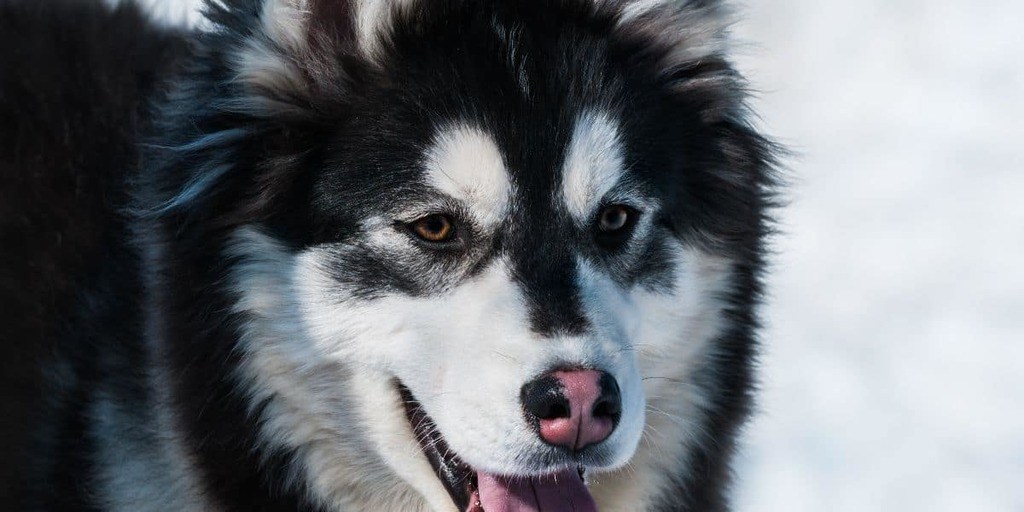
Alaskan Malamute
The fundamental difference between Huskies and Malamutes are their size. Malamutes are true sled-pulling dogs, built larger, with more muscle mass, and bred for pulling heavier loads over long distances. Huskies, on the other hand, are a medium sized dog that are better at pulling lighter loads over shorter distances. The AKC breed standard for Alaskan Malamute puts males at around 85 pounds in weight and females at 75 pounds. In contrast the Siberian Husky standard puts males between 45 and 60 pounds, females 35-50 pounds, and a couple of inches shorter. For more information on how large a Husky can grow check out our previous research on this topic.
For this difference in size and function you would expect Huskies to be a little more energetic, and Malamutes a little more laid back.
Siberian Husky
In other physical characteristics both have similarly colored and similarly patterned coats; thick to repel snow and ice. Malamutes will tend to have brown eyes but Huskies might have brown, blue, or a mixture of both. The Malamute tail is going to curl more and the Husky is straight, but both can be bushy in nature to help them curl up and keep their faces warm in the cold snow at night.
Both the Husky and the Malamute are born to run and be outdoors. They are both “pack” animals meaning they need firm direction. As an owner you will need to be the “alpha dog” and command them through solid training from an early age, or they might run amuck.
Also in similarities is their loveable nature. Neither will make a good guard dog (unless the intruder is afraid of being licked to death). Neither will bark so much as howl, whine, or moan to attract attention. Groomed appropriately both can be very attractive and pretty.
So if you are considering adopting or acquiring a Siberian Husky or Alaskan Malamute, you now know how to tell them apart and their differences. Malamute puppies will grow in to a larger, stronger dog, built for pulling heavier loads over long distances. Husky puppies will grow in to a medium sized dog, less bulk, and more energetic over shorter distances. Whichever breed you choose both are loveable dogs who will test your training skills!
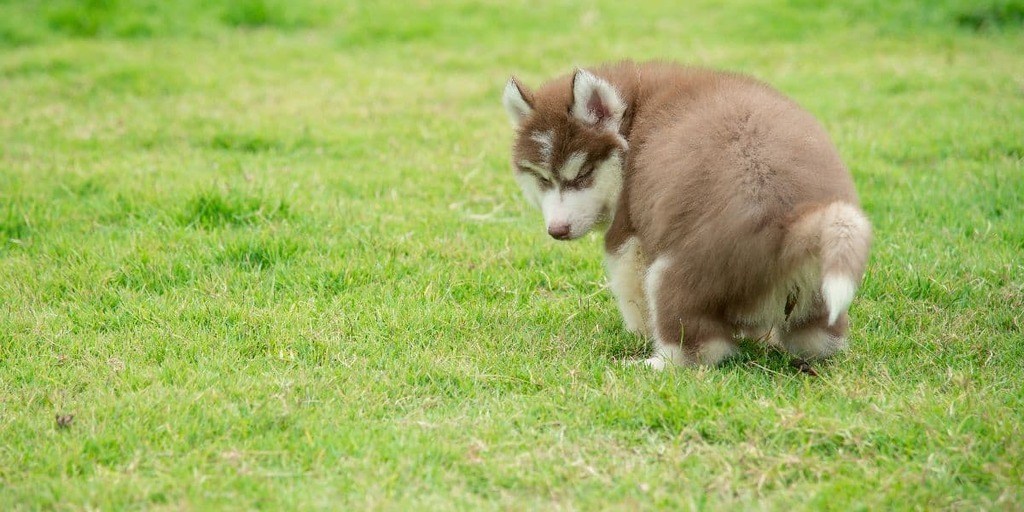
If you would like to keep your Siberian Husky puppy indoors at times, then housebreaking is an early and essential training activity to perform. Whether you call it housebreaking, toilet training, or potty training, all Husky puppies can be trained to do their business outside, and not all over your nice clean floors.
When to start potty training husky puppy?
You are probably going to start housebreaking your Husky puppy at around 8 weeks old (2 months old). It is about this time that puppies develop muscle behavior to control themselves. Attempting to train younger puppies could prove futile. This will be amongst the first formal training you will do with your puppy and if you can get this right, you will earn his or her trust for future training.
Find a spot
Head outside and find a spot in the garden where you would prefer your dog to do its business. Your puppy will prefer to return to a spot that it has already ‘marked’. Make sure it’s out of the way of human foot traffic so that you don’t start stepping in things you don’t want to!
Have realistic expectations
Housebreaking can take a little time. You should hopefully start seeing results after a couple of weeks, but if not do not give up! Siberian Huskies are independent dogs and can bea little stubborn to train.
Once the routine is setting in there is likely to be occasional accidents for a little while longer. You need to be patient.
Also be aware that puppies are growing in their first few months – which means lots of food going in, and a lot has to come out!
Crate Training
A dog crate is a closed container (typically plastic) that the dog can be confined to. Think ‘cage’ but use the more politically correct term ‘crate’. Don’t worry, crate training is recognized by the Human Society as an effective aid to housebreaking a pet.
The crate will be used as a training device for short periods of time. It is most definitely not a jail used to punish your puppy! The purpose of the crate is to confine your dog when you can not keep an eye on it, such as doing a chore around the house or ducking out for an errand. Because of the likelihood of the dog resting or sleeping in the crate, they are unlikely to do their business in there. If you let your puppy roam the house they could make their ‘deposits’ anywhere they feel like it.
Obviously you need to get a crate large enough for your puppy to fit in to, with room to grow. For a Siberian Husky that might mean going for an extra-large sized crate. You also might want to floor the crate with newspaper or absorbent material to aid in any little mistakes. A small amount of water and a toy could help comfort your pet. Huskies might be used to the cold but if you have a spot in the house that isn’t too drafty that would be ideal. They prefer a relatively warm and still place to rest.
Initially, you might only keep your puppy in the crate for 30 minutes. Over time, say from 8 weeks to 18 weeks of age, you can build up the maximum confinement from 30 minutes to 5 hours. That is approximately an extra 30 minutes each week.
After opening the crate, put a leash on your puppy and take him or her out to ‘their spot’ in the garden. They might not need to use it but they will learn the routine of restraining themselves while indoor and relieving outdoors. If you would like to know more read our full article on How to Crate Train A Siberian Husky Puppy.
Positive feedback only
If you see your puppy begin positioning itself to do its business, a firm ‘NO!’ will grab the dog’s attention. You can pick your puppy up and move him to the spot outdoors to complete the job.
After your puppy does its business be sure to give strong positive feedback – ‘good dog!’ with scratches behind the ear and cuddles. This should be done immediately (within seconds) so that the encouragement is linked to the behavior.
Avoid negative feedback – the added attention will confuse the dog. If a mistake is made, never push your dog’s face into a ‘mistake’ made indoors. The puppy doesn’t know any better while it is learning. Just take your dog outdoors to remind him or her of their place, and in your own time quietly clean up the mess indoors. You can check a more detailed explanation on positive feedback right here – Feedback When Training Husky Puppy
Watch the schedule
You will probably notice that your puppy likes to relieve him/herself when it wakes up, after meals, and perhaps after exercise. You can aid in the training by taking the puppy out to its spot after these times to encourage routine behavior.
If your puppy shows signs he/she wants to head outside, that’s great! They are learning. So take them out, let them do their thing, and again lots of positive encouragement. You might need to do a few trips out at night but rest assured, as the puppy grows larger and behaviors are learned, they will be able to restrain themselves for longer periods of time.
That’s pretty much all there is to it! Start at around 8 weeks, and use a crate for 30 minutes at a time, adding 30 minutes each week up to 5 hours. Give lots of positive feedback, no negative feedback, and most of all, be patient. The effort you put in now will pay off for the life of your Siberian Husky puppy.
Still need more help? Check out Doggy Dan’s online training course. We found it is very easy to implement and perfectly suitable for our huskies. They currently offer a variety of options, starting from 1$ trial for 3 days and also a yearly subscription for nearly 190$. Here’s one of his training video to give you more ideas of how to effectively potty train a puppy:







 4. Any time is playtime