Tag Archives for " breed "

Husky Health Issues

Husky Health Issues

Siberian Huskies are robust dogs and can be expected to live for 12 to 14 years. However, their lifespan may be cut short due to several health problems that we’ll discuss in this section. Some of them are older Husky problems, while many others develop early on.

Hip dysplasia and a number of eye issues are the main ones to look out for when selecting a husky puppy.

Here is a summary of these problems and what you can do to help select a healthy puppy.

Hip Dysplasia in Huskies

Hip Dysplasia is relatively common in larger dog breeds. It is a genetic fault resulting in an abnormal formation of the hip socket. The head (top) of the thigh bone does not fit snugly into the pelvic joint socket, causing pain and arthritis. The effects can be anywhere from mild to debilitating for the animal. Hip dysplasia affects both male and female huskies and can affect either or both hip joints.

Hip dysplasia develops over the husky’s early life, and by 18 months is usually present if it were to occur. Identification in young puppies is not possible, but because it is a genetic defect you can minimize the chances of acquiring a puppy prone to dysplasia.

The good news is that through careful breeding the complaint has had a marked reduction over the past decade and is not the widespread problem it once was.

The Orthopedic Foundation For Animals has a registry with a free search facility on its home page. You can look up information on a dog you are potentially acquiring to see if it might be prone to dysplasia.

A dog that has acquired hip dysplasia will need to be carefully managed via weight control (keeping the dog from growing overweight) and exercise control (not too strenuous to cause discomfort or inflammation). There is medical treatment available, and even surgery, which has good success rates but the costs can be high.Sleeping husky puppies

Eye Issues

There are a number of eye issues affecting Siberian Huskies.

  • Hereditary cataracts (also known as juvenile cataracts) affect puppies as young as three months old and cause anything from a mild decrease in vision to complete blindness.
  • Corneal Dystrophy starts to affect young adult dogs and affects female dogs more than males.
  • Progressive retinal atrophy is another problem that initially decreases the effectiveness of night vision, followed by day vision and blindness ensues.

Detection is not possible for newborn puppies. Eye issues affect a small percentage of huskies (less than 10%) and you can minimize the chance of acquiring a puppy with eye issues by talking to the breeder before adoption.

Related: How to Choose a Husky Puppy From the Litter?

Hypothyroidism

Hypothyroidism in dogs is an autoimmune, genetic disease that reduces the thyroid function in the body. If you’re not aware of that, the thyroid gland regulates the body’s metabolism. So, messing it up can lead to lots of problems.

Dogs that suffer from hypothyroidism show hair loss, dullness in their coat, lethargy, and weight gain. For a Husky that’s supposed to have a beautiful coat with a dynamic personality, Hypothyroidism would be the worst-case possible.

What You Can Do to Avoid Health Problems?

Husky puppies should be acquired from a reputable breeder – one that has a history of producing healthy animals and does not shy away from answering all of your questions. Ask about the health of the animals and what the breeder has been doing to minimize genetic defects.

A good breeder will be upfront and honest and although no breeder can say their animals are 100% perfect, they might be able to provide some sort of guarantee against certain conditions. Any breeder you deal with should be able to supply paperwork to establish the bloodline of your animal as well as genetic test results explaining potential defects present in the puppy.

If you are looking for a husky breeder check out our breeder directory to see if there is a breeder near you. There is a breeder directory for those within the USA, plus another for our international visitors.

Don’t forget the Orthopedic Foundation For Animals free search facility for animals prone to hip dysplasia, but if your animal is not listed you should get in contact with a local Siberian Husky dog club for some local advice. 

Siberian Husky Origin

Siberian Husky Origin

Siberian Husky Origin

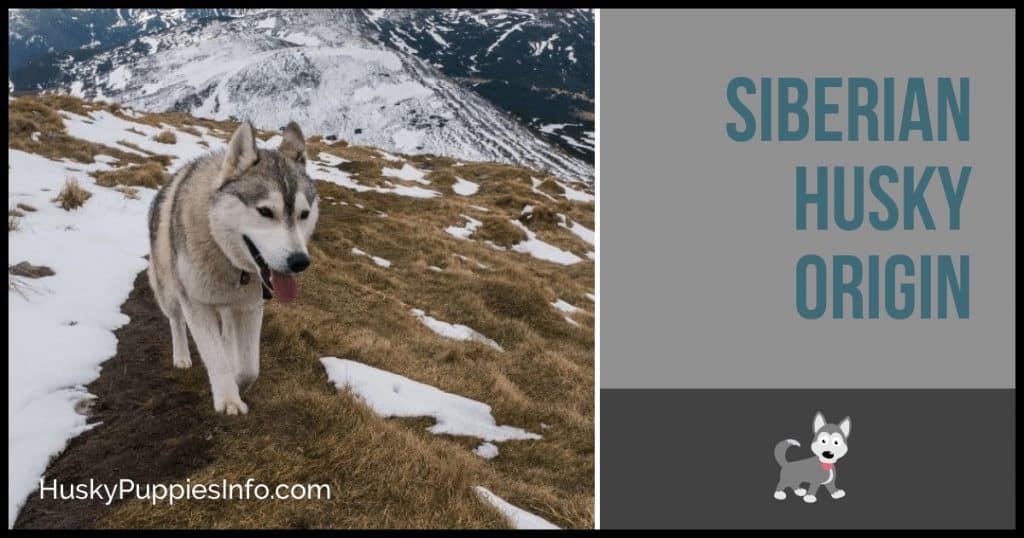
The Siberian Husky, as the name suggests, originates from the Siberia region of far north-east Russia. The Chukchi people of this region developed the dog over many hundreds of years. The dog was bred to pull heavy loads over long distances in the extreme cold and wind. A team of Huskies would enable men to head out hunting and fishing many miles from home, and return the same day before dark fall. The dogs were part of everyday family life; friends for the children, and at night keeping the family warm inside living quarters.

How did Huskies come to America

Siberian huskies pulling a sled

The Siberian Husky was introduced to America via way of Alaska in 1909. A fur trader named Gdosak acquired a team of dogs and brought them over from Siberia for dog racing. The Alaskan gold rush of the early 20th century brought people to the region. Racing was a way of adding excitement to the often difficult and gritty work of digging for gold. Over the next two decades, more Siberian dogs were imported until the Soviet Government stopped the trading of dogs in 1930. By then a suitable number of breeding stock was present and the breed thrived. The American Kennel Club officially recognized the breed in 1930.

Over in Europe, the Siberian Husky made sporadic appearances also in the early 20th century, but it was not until the 1960s and 70s that introduction of more dogs and breeding stock established. Further away in places like Australia it took until the late 20th century for Huskies to gain popularity, but are now one of the more popular breeds in the country.

Nowadays most Huskies just pull a leash with the owner behind them :), but if you are keen, you can train your Husky to pull a sled or load. If you are interested in this topic and want to learn basic tips and commands to train your Husky puppy to pull a sled, you really should read this – Pull training for Siberian Husky puppies

More Cool Husky Info!

siberian_husky_big

How Big Do Siberian Huskies Get?

Siberian Huskies can be so small and cute as puppies, but how big does a Siberian Husky get?Small, Medium, Large Siberian Husky

The AKC Siberian Husky Standard quotes an acceptable range for an adult male to be between 21 and 23.5 inches tall (53 to 60cm) and weighing 45 to 60 pounds (20 to 27kg). Females are a little smaller, between 20 and 22 inches tall (51 to 56cm), and weight between 35 and 50 pounds (16 to 23kg).

However this is the AKC standard, and of course, dogs sometimes exceed this. Some people report Huskies growing to 100 pounds (45kg) although this would be an extreme and could suggest an overweight and under-exercised dog! If you are not sure about your husky normal weight, check the weight chart for Siberian Husky

In comparison, a male Golden Retriever is 23-24 inches tall and 65-75 pounds, and a male Labrador Retriever is 22-24 inches tall and 65-80 pounds. That is to say, the Husky is a touch shorter and lighter, but not by much.

A Siberian Husky big enough to reach a woman's waistHuskies can expect to live for 12 to 15 years, but they have reached adult height more or less by the end of their first year. From then on, they increase mass as muscle builds up around their frame. That means the little cute puppy you see at the breeder is going to grow really fast in the coming months.

Also, consider the size as it relates to grooming. Being a larger dog with a double coat, Huskies will shed a LOT of fur each year and leave it EVERYWHERE around your house and garden! Keep this in mind if considering a Husky puppy for your household and you like your place to be spotless. If you want to know, how to deal with a coat shedding of your husky, here you can find some tips –  How to deal with Coat Shedding of Siberian Husky

Miniature Huskies

Some selective breeding has developed a smaller Siberian Husky called the Alaskan Klee Kai. These range from toy size (9 pounds in weight, 13 inches tall) to miniature (10-15 pounds, 15 inches) to a standard (16-23 pounds, 17 inches). Because they are a relatively new breed from a smaller gene pool, the breed is still being developed and is relatively rare to see out and about.

They share many of the traits that full-sized Siberian Huskies exhibit: shedding, an abundance of energy, and a life span of around 14 years. Expect prices from breeders to be at a premium because of the rarity – think $1000+ for a puppy. The smaller size is likely to increase in popularity over time but it will take a number of years of experienced breeding to develop a population of healthy Klee Kais.

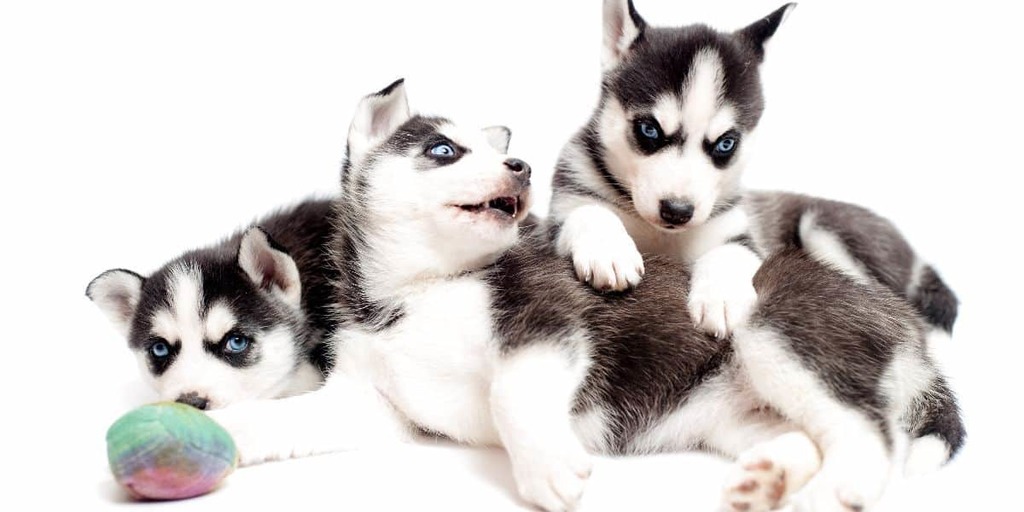
Siberian Husky puppy chewing on a toyIn addition, there is a Miniature Siberian Husky which you can read about in detail in a separate article. These are essentially a smaller Husky, sharing similar behavior and temperament to a standard husky, bit much smaller!


So there you go – Siberian Huskies will grow almost to the size of a Golden or Labrador retriever, and they will grow very fast in their first year of life. Keen to learn more about the breed? Check out our breed information articles that cover all you need to know about Huskies and their characteristics.

Eight shades of husky coat collage

Husky Colors: 8 Colors a Siberian Husky’s Coat Can Be

Looking at Instagram feeds that feature huskies, you cannot help but notice that the colors of their coats add to the "aww!" factor or their overall appearance and demeanor. 

A Siberian husky's coat can have all colors from pure white to mostly black, with a variety of markings and patterns. In addition to black and white, common colors found on Husky coats include agouti, tan, brown, grey, red, and sable. 

Read on as we describe eight most common standard colors there are and learn about some of the rare husky colors that you can find on a Siberian husky.

What Are the Different Colors of Siberian Huskies?

From coats that make them look like a wolf to something softer in tones and hues, you can expect to see Siberian huskies in a wide array of different colors. 

According to the American Kennel Club, standard colors of Siberian Huskies include:

  • Agouti and White
  • Black 
  • Black and White
  • Black Tan and White 
  • Brown & White
  • Gray & White
  • Red & White
  • Sable & White
  • White

The Federation Cynologique Internationale writes that all colors from white to black are found on Siberian huskies. They have a double coat that can grow to medium length without obscuring the outline of your dog. Siberian huskies also have markings on the head, including striking patterns that you can only find in this particular breed of canines.

Siberian huskies have coats with two layers: the topcoat and the undercoat. Their coats can have different colors, such as black, white, gray, brown, red, and cream, or a combination of any of these colors.

Huskies usually have white paws and legs, a wide variety of facial markings and color patterns, white-tipped ears and tails. Which together withNot to mention their striking eyes, which also contributes and make this dog one of the most desirable to own 

Black and white is the most common combination of coat colors for Siberian huskies. Copper red and white, as well as grey and white, are also quite common. Agouti-colored coats are rare. 

Let’s take a look at these notable coat colors and combinations:

Agouti

 While it is common for mammals such as wild rodents to have this color, agouti is rather rare in huskies. It involves a dominant dark mask that can make your dog's face look dirty. The agouti hues can reach down a husky’s entire body. It is caused by the agouti gene and usually gives the dog a wolf-like and wild appearance. 

Related article: Are Huskies Related To Wolves?

Siberian husky agouti color on the leash lying down on the ground

via Instagram: @vesterelva_viddashusky

Agouti is generally grayish in appearance, but it also has a salt and pepper look. Agouti usually has a mixture of tan, gray, red, and black colors.

Husky puppy agouti color collage

via Instagram: @agouti_logan

Mostly Black

A pure black color of the Siberian Husky is considered rare. The color allows scattering of white patches, mostly on the legs, face, chest, and tip of the tail. To be classified as this color, the dog's body must have a minimum of 75% black. Many huskies that are close to pure black will still have some markings in white. Pigmentation of the nose, lips and eye strokes should be strictly black.

Jet black husky with white paws resting in the living room

via Instagram: @satoris

Black and White

You can find three shades of black on Siberian Huskies:

  • deep jet black
  • black 
  • diluted black

Other huskies have more colors accentuating their black coat. Some have an undercoat of white, beige, or any shade of gray, and there are also some with red hues. 

Black and white husky in natural habitat
1 month 8 days old white and black husky puppy

Black, Tan, and White

Black and tan coloring is extremely rare, but it does exist. You’ll usually need to visit a breeder who specializes in this color combination if you want a Husky with this collection of hues.

Black tan and white husky with blue eyes

via Instagram: @hellerkantri.huskypark

Black, tan and white husky in snow

Brown 

When you say brown in terms of Siberian husky colors, it can mean two different shades of brown: copper and sable.

Copper

Copper has tinges and shades ranging from yellow to brown. It might be monochromatic or banded, with liver-colored points. The undercoat may be copper, brown, or light red, while creme is also found in banded dogs. Copper may be:

  • Chocolate copper, which has a deeper and darker brown color
  • Red copper, which has a tone that is more red than yellow
  • Orange copper, which is more yellow than red
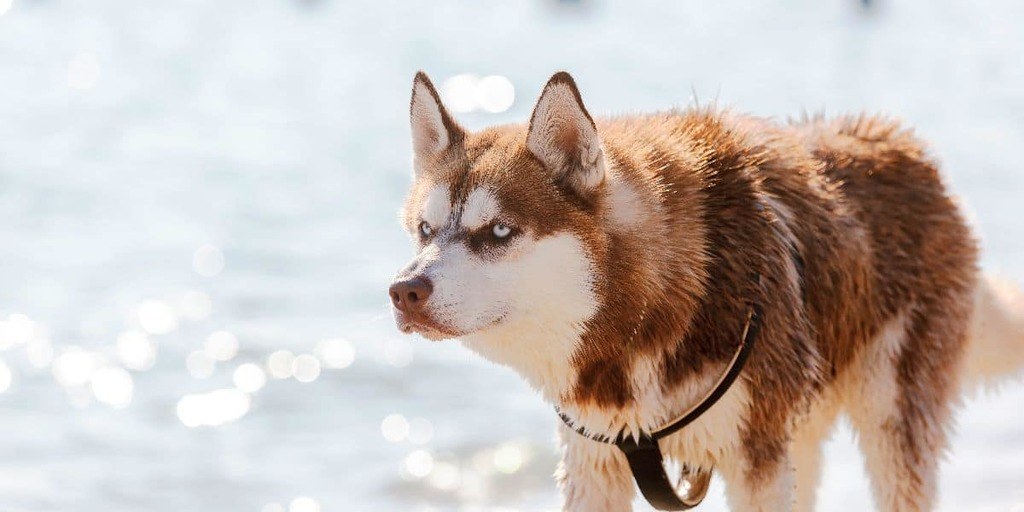
Red copper husky wearing harness

via Instagram: @hellerkantri.huskypark

three shades of copper husky color: chocolate copper on the lest, red copper in the center and yellow copper husky on the right side

Chocolate (on the left), red (at the center) and yellow (on the right) huskies

Sable

Sable coats in Huskies are always banded and have black points and tips. The undercoat may be orange, chocolate, or red. One difference between this and wolf-gray is that the undercoat is never beige.

Sable colored husky outside winter time

Red and White

Red and white coloration is related to the liver points, or the nose, eye rims, and lips. It's also characterized by the total absence of black hair.

Red husky with white undercoat in snow

Gray and White

Gray and white Siberian huskies have three possible shades of gray: wolf-gray, silver, and darker shades of gray.

Wolf-gray mixes a warm shade of gray with red, tan, or beige colors around the ears, back, and legs. The gray topcoat mixes very well with the beige undercoat.

Wolf grey husky standing on the side of the road

Silver gray is the result of restricting the agouti gene, and you have coats with a tinge of silver or blue, or any of the colder shades, unlike wolf-gray, which has warmer brown to red hues. What's more, silver huskies have white undercoats.

Grey silver husky stand in snow

Medium to dark gray, on the other hand, is the most common among gray Siberian huskies. It can have a tinge of warm hues and tones, but it's most muted. The undercoat is a combination of silver and beige.

Dark grey almost black husky

White

While most Siberian huskies have white markings and undercoats, it is very rare to have one that is pure white in color, but it does not indicate albinoism. Having a pure white topcoat and undercoat means that the hues were completely restricted.  

white husky resting next to the flowers

Markings and Patterns

When it comes to markings, black points and piebald are standard. Meanwhile, merle coat patterns are not permitted when breeding Huskies due to the health issues the associated genes can cause.

Pinto patterns are when there is an overabundance of white where other colors should be, especially over the front legs and shoulders.

white and black pinto husky in snow

Piebald Siberians will have mostly white fur with some irregular patches of color.

merle, piebald and splash coat husky markings and pattern

Merle Coat Patterns

Merle is a pattern gene, according to the Siberian Husky Club of America. The presence of this gene alters the base coat color that results in lighter patches. The Merle coat pattern either has a mottled look or a combination of spots or color smears, like on the picture below.

merle husky wearing yellow colar shedding

Photo via Instagram by Spatails

The SHCA says that Merle patterns can only come from impure breeding. The main issue with Merle patterns is that they can signify that the dog may have problems with its sight or hearing. The problem becomes more pronounced when two Merle dogs are bred, where there is a one in four chance that there will be a double Merle dog.

Double Merle puppies may be born deaf, blind, or both. Others may have smaller than normal-sized eyes, or they may not have eyes at all. In other double Merle dogs, there would be eccentric pupils, underdeveloped iris, or irregularly shaped pupils. Double Merle dogs may also have other vision-related problems.

Why Are Huskies have Different Coat Colors?

The varied colors you see on huskies are brought about by genetics. Genes can produce a certain color in their coats or restrict the formation of other colors. 

These genes are usually denoted by symbols. Here are some examples of genes and their effect on coat colors include:

  • Ag, which gives a husky their agouti color
  • ach, which restricts red and yellow, giving your dog a silver coat
  • ay, which restricts dark colors and produces tan or sable coat colors
  • B, which is required for black colors to appear anywhere
  • Cc, which results in total albinism
  • D, which can intensify coat color or give the dog's coat a full color
  • T, which gives the husky a single color throughout
  • Ty, which gives your husky a yellowish or sable coat
  • Sw, which gives the dog a pure white coat

What is the Best Color for Husky?

Just like the hair on humans, there is no best!

When huskies are responsibly bred, their color is of least importance to good breeder. The same goes for eye color. The AKC Standard states that any color is acceptable, and indeed their color codes for registration cover a broad spectrum of shades.

Any breeder who places more attention on coat color instead of the overall health and wellbeing of the animal might be a sign that they are a backyard breeder or puppy mill and to be avoided. 

  When selecting a puppy you should be on the lookout for a healthy animal that has passed vet checks and is likely to meet your family's lifestyle.

Can Husky Puppy's Coat change color?

When a husky is born the general coat color is apparent but can change over time. There is no way to predict if, when or how the coat will change color.

Change is often natural and unavoidable. It can happen during shedding, as a topcoat may be different color to the undercoat. Of cource, this is nothing to be concerned about! It is to be expected of any animal that sheds hair. Also exposure to sunlight, or simply the physical growth of the animal. 

Why Focus on Siberian Huskies?

When you talk about huskies, two different breeds come to mind: Alaskan and Siberian huskies. 

There are noticeable differences such as Alaskan huskies being shorter and more lightweight, as well as differences in temperaments. 

However, Alaskan huskies are mixed breeds between Alaskan malamutes and Siberian huskies, and they can have any color. Unlike Siberian huskies, breeding Alaskan huskies is not regulated by organizations such as the American Kennel Club.

Conclusion


Whether you are purchasing a puppy from a breeder or adopting from a rescue organization, Siberian Huskies come in all sorts of colors, markings, and patterns. It isn't something you should be concerned about because color has no indication as to temperament or behavior. Just keep an open mind and take your time selecting a companion that will fit you and your family!

P.S. If you want to make sure your Husky’s coat maintains a healthy sheen, I recommend reading an article on the Best Shampoo for Huskies. Using the right shampoo is essential in keeping your Husky’s coat as beautiful as possible. You can also read Best Brush for Huskies if you’re invested in keeping your pup’s coat maintained at the highest level of quality. 

Find-a-Husky-Puppy-Breeder

How to Find a Husky Breeder Near You?

Want to buy a Siberian Husky puppy from a breeder and not sure where to find one? Here’s how…

Ways to find a good husky breeder near you

If you are new to the breed you will want to look for breeders close to home. You will be able to visit a few of them and pick one that you feel comfortable with. Being able to physically visit means you can quickly identify any potential puppy mills or backyard breeders. Being local means you are not pressured to make a decision on the first visit and can come back again after you have time to think about what you saw, or to visit other breeders.

1. Use breeder directories

Directories of Husky breeders are a great place to start. We have our own breeder directory or you can use the Siberian Husky Club of America’s directory here, or the American Kennel Club breeder search here. Please note that just because a breeder appears on a reputable web site, or is registered, it does not give you a guarantee that they aren’t a puppy farm. You should always do your homework – and we have some specific advice on choosing a Siberian Husky breeder.

2. Use search engines

Head over to your favorite search engine (Google, Bing, Ask, Yahoo, whatever you prefer) and use the term: husky breeders in <your state>, or husky puppies in <your state>. You can put in your state name or your 2-letter state code. Examples:

  • husky breeders in California
  • husky puppies in CA

You might be able to find some breeders this way, but like referral directories, a good breeder web site does not guarantee anything. You need to make contact and talk to the staff. Many breeders do not have web sites, simply because they don’t breed as a business, they do it for love. So to find these people you need to ask around…

Finding a Siberian Husky breeder near you3. Talk to local dog clubs

You can make contact with your local dog clubs, or just turn up when they meet and ask around. If there is a Siberian Husky dog club in your area that is a great place to start. Alternatively, you could expand the search a little and look for alternative but similar breeds such as Alaskan Husky or Alaskan Malamute.

If you are in a smaller town and do not have specialist dog clubs, try the general dog club and ask if they know anyone who breeds Huskies. Good dog breeders don’t work in isolation: rather they actively participate in the local community to share knowledge and news.

4. Talk to other dog owners

Your best bet is to find dog obedience or training school and have a look at who turns up. If anyone has a Husky then you can approach and find out where they got their puppy from. This is also a great way of checking out the reputation of local breeders and steering clear of any bad ones.

If walking down the street and you pass a Husky you can also ask the owner for advice. Most dog owners are more than happy to stop and talk about their dogs and share advice!

5. Ask local vets

Breeders have to get their puppies checked out by experts, and generally, have a preferred veterinarian to assist. Vets in the area might know of some breeders and can pass on contact details.

5. Check at rescue shelters

Shelters and rescue organizations sometimes need to place dogs in the temporary care and are likely to be aware of local breeders who have the facility and expertise to look after a stranded dog.

6. Ask other dog breeders

Good breeders will be happy to talk about other breeders in the area. If you know of at least one Husky breeder near you, chances are if there are more than that breeder knows who they are.

7. Do NOT ask pet shops

Whilst some pet shops are brilliant, many are not and are just front to puppy farms. Unless you have a pet shop that is very reputable and doesn’t keep puppies in small glass cages, you might want to steer clear of getting advice from one.

Conclusions

Looking to buy a Siberian Husky puppy from a breeder and not sure where to find one? Try using web directories and search engines to find breeders near you. If that fails try talking to people in your community such as dog clubs, vets, other Husky owners, and breeders, for a referral to breeders that they know of. It might take a while but the more effort you put in now, the better chance you have at finding a breeder that has a puppy perfect for you!


Alaskan-Malmute

Siberian Husky vs Alaskan Malamute: Similarities and Differences

Siberian Huskies and Alaskan Malamutes; both look similar, and as their names suggest, originate from colder northern areas, but how similar or different are they? Read on…

Alaskan Malamute, 2 years old

Alaskan Malamute

The fundamental difference between Huskies and Malamutes are their size. Malamutes are true sled-pulling dogs, built larger, with more muscle mass, and bred for pulling heavier loads over long distances. Huskies, on the other hand, are a medium sized dog that are better at pulling lighter loads over shorter distances. The AKC breed standard for Alaskan Malamute puts males at around 85 pounds in weight and females at 75 pounds. In contrast the Siberian Husky standard puts males between 45 and 60 pounds, females 35-50 pounds, and a couple of inches shorter. For more information on how large a Husky can grow check out our previous research on this topic.

For this difference in size and function you would expect Huskies to be a little more energetic, and Malamutes a little more laid back.

Siberian Husky

Siberian Husky

In other physical characteristics both have similarly colored and similarly patterned coats; thick to repel snow and ice. Malamutes will tend to have brown eyes but Huskies might have brown, blue, or a mixture of both. The Malamute tail is going to curl more and the Husky is straight, but both can be bushy in nature to help them curl up and keep their faces warm in the cold snow at night.

Both the Husky and the Malamute are born to run and be outdoors. They are both “pack” animals meaning they need firm direction. As an owner you will need to be the “alpha dog” and command them through solid training from an early age, or they might run amuck.

Also in similarities is their loveable nature. Neither will make a good guard dog (unless the intruder is afraid of being licked to death). Neither will bark so much as howl, whine, or moan to attract attention. Groomed appropriately both can be very attractive and pretty.

So if you are considering adopting or acquiring a Siberian Husky or Alaskan Malamute, you now know how to tell them apart and their differences. Malamute puppies will grow in to a larger, stronger dog, built for pulling heavier loads over long distances. Husky puppies will grow in to a medium sized dog, less bulk, and more energetic over shorter distances. Whichever breed you choose both are loveable dogs who will test your training skills!

Red-Siberian-Husky

Red Siberian Huskies

Red Huskies

Siberian Huskies come in a variety of colors, from black/grey and white, to red and white, to pure white. Whilst the darker colors are more common, red Huskies are increasing in popularity. Here is the lowdown on the red coloring and what it means if you are considering adopting a Husky puppy.

4 month old red Siberian Husky puppyFirstly there is not one definitive red color out there. You will find that ‘red’ covers everything from a lighter orange color to a darker chocolate color. In puppies the color that the coat will end up as might not be apparent. However, like many dogs, you can look at the color around the ears to get an idea of how dark the coat will get in an adult dog.

The red color itself is the result of a recessive gene passed through generations of Huskies. Whilst the black coloring is caused by a dominant gene, and hence more common, parents may be carrying the “red gene” and pass it on to their pups. If at least one of the parents is carrying this gene then the pups produced may be colored red, even if both parents are black.

It is important to note that color is not considered in the AKC standard for Siberian Husky coats. The AKC standard recognizes all coat colors from black to red to pure white. Color is of least importance when judging Huskies at dog shows. For these reasons, responsible Siberian Husky breeders will not breed for a particular color and rather breed to eliminate health issues such as eye and hip problems. Any breeder that breeds to encourage a red color should be avoided.

So if you are searching for a Husky puppy, or simply observing Huskies in clubs and at shows, the red coloring can be quite striking. But in the bigger scheme of things the coat color is not as important as a healthy dog resistant to longer term health issues.

For a more technical description of the genetics involved, you can read about it in Todd Wood’s article.